
How Smart Money Tracker Survived Live AI Trading at WEEX AI Hackathon

 Prefer us on Google


From 230 Teams to 37 Finalists: WEEX AI Trading's Ultimate Test
At the AI Wars: WEEX Alpha Awakens, more than 230 teams from around the world competed in the preliminary rounds, with only 37 teams advancing to the finals. These finalists faced live-market conditions that would rigorously test their AI trading strategies. Among them was Jannet Ekka, founder of Smart Money Tracker, a solo builder whose AI system integrates whale tracking, sentiment analysis, technical indicators, and a multi-person decision architecture designed to withstand extreme market volatility.
As part of WEEX’s ongoing commitment to advancing AI-powered trading innovation, we sat down with Jannet for an exclusive interview. She shares how her system operates in live markets, the critical lessons learned from navigating real-time flash crashes, and why, in her philosophy, survival must always come before profit.

Smart Money Tracker's 4-Layer Architecture: Multi-Persona AI for Risk-Resilient Trading
At its core, Smart Money Tracker operates through a layered architecture integrating whale activity monitoring, order flow analysis, market sentiment intelligence, and technical structure indicators. Each module functions as an independent analytical “persona,” generating structured reasoning rather than isolated numerical triggers.
At the final layer sits a decision engine — internally referred to as “the Judge.” Its role is not simply to aggregate signals, but to weigh confidence levels, validate alignment across personas, and determine whether market conditions are structurally stable before deploying capital. This design intentionally avoids single-factor dependency and prioritizes conviction over frequency — a discipline that proved essential under live-market pressure.
Jannet explains the system through a simple analogy: crossing a busy street. Multiple observers gather information, but one trusted decision-maker determines whether it’s safe to move. “It’s not ‘if X > 0.7, sell.’ It’s understanding why whale distribution aligns with aggressive taker selling and what that context implies.” That reasoning layer, she argues, is what separates AI from simple automation.
Flash Crash Response: Smart Money Tracker's AI Reduced Exposure to Avoid Losses
The competition’s flash crash became a real-time stress test. While some strategies attempted to trade the volatility spike, Smart Money Tracker stepped back.“By design, it is a coward.”
The system reduces exposure when persona alignment weakens or volatility exceeds predefined thresholds. If signals conflict, execution pauses entirely. In extreme conditions, the AI can suspend trading for hours. During the crash, Jannet logged dozens of refinements — strengthening flash-crash protection, raising confidence thresholds, and adjusting internal weighting logic.
The event also reshaped her signal hierarchy. On-chain whale data showed 80–90% confidence levels during turbulence. In hindsight, she believes those signals deserved greater weight. The lesson: multi-factor models reduce noise, but edge lies in differentiated data and disciplined weighting — especially signals reflecting informed capital behavior.
From 4,100 to 10,000: Smart Money Tracker's Profit Lock Recovery Strategy
Following a drawdown to roughly $4,100 in equity, Smart Money Tracker entered recovery mode. The path back toward $10,000 requires approximately 7–8% compounded daily growth — a mathematical challenge demanding precision rather than reinvention.
Three upgrades were deployed. First, a profit-lock mechanism: instead of waiting for 15% targets, the system banks 1–2% gains repeatedly. At 18x leverage, small price movements compound meaningfully. Second, a “Fear Shield” that protects profitable positions during extreme Fear & Greed conditions. Third, a hard cap of three concurrent positions to reduce fee bleed and increase conviction per trade.
“The strategy that delivered 566% in qualifiers still works,” Jannet noted. “What broke wasn’t the signal quality — it was position management.” Version V3.1.64 represents the most refined iteration to date. Whether it succeeds now depends less on code — and more on market cooperation.
WEEX AI Trading Hackathon: Real Money, Real AI Trading Consequences
Following a drawdown to roughly $4,100 in equity, Smart Money Tracker entered recovery mode. The path back toward $10,000 requires approximately 7–8% compounded daily growth — a mathematical challenge demanding precision rather than reinvention. Instead of rewriting the core system that delivered 566% in the qualifiers, Jannet focused on execution discipline. A profit-lock mechanism now banks 1–2% gains instead of waiting for 15% targets; at 18x leverage, even small price movements compound meaningfully. A “Fear Shield” protects profitable positions during extreme sentiment regimes, and a hard cap of three concurrent positions reduces fee bleed while increasing conviction per trade. “What broke wasn’t the signal quality — it was position management,” she said.
But recovery, for Jannet, is not just a tactical adjustment — it reflects a broader philosophy. Smart Money Tracker was built on free-tier cloud infrastructure, open-source tools, and public APIs. “You don’t need a Bloomberg terminal or a quantitative physics PhD,” she noted. “The barrier to AI trading is zero. The barrier to good AI trading is sleep deprivation and stubbornness.” Her message to builders is simple: ship the 80% version, take the 1% gain, and let compounding do the rest.
In live markets, ambition without protection is fragility. For Jannet — and for Smart Money Tracker — survival is not a defensive stance.It is the strategy.
WEEX AI Trading Hackathon: Real Money, Real Consequences
The defining difference of the WEEX AI Trading Hackathon was real capital. Not paper trading, not simulation — but live execution with slippage, fees, leverage, and public equity curves.
“When your bot opens a $31,000 notional BTC position at 18x leverage, you feel it,” Jannet said. A 1% move translates into an 18% return on equity — or loss. Code written at 2 AM is no longer theoretical; it directly determines financial outcomes.
Most hackathons test creativity. This one tested durability. With the leaderboard fully transparent, there was no place to hide weak risk management. For Jannet, the experience reinforced a fundamental truth: intelligent systems are not defined by how aggressively they trade, but by how well they endure.
To see how Smart Money Tracker and other finalists perform under live-market pressure, explore the full WEEX AI Trading Hackathon Finals here: https://www.weex.com/events/ai-trading
About WEEX
Founded in 2018, WEEX has developed into a global crypto exchange with over 6.2 million users across more than 150 countries. The platform emphasizes security, liquidity, and usability, providing over 1,200 spot trading pairs and offering up to 400x leverage in crypto futures trading. In addition to the traditional spot and derivatives markets, WEEX is expanding rapidly in the AI era — delivering real-time AI news, empowering users with AI trading tools, and exploring innovative trade-to-earn models that make intelligent trading more accessible to everyone. Its 1,000 BTC Protection Fund further strengthens asset safety and transparency, while features such as copy trading and advanced trading tools allow users to follow professional traders and experience a more efficient, intelligent trading journey.
Disclaimer: This content is provided for general branding and informational purposes only and doesn't constitute financial, investment, legal, or tax advice. Any events, rewards, online events, or related information mentioned herein should not be considered a recommendation, solicitation, or invitation to purchase, sell, trade, or otherwise deal in any crypto assets or to use any services. Crypto assets are highly volatile and may result in loss. WEEX services and online events may not be available in all regions and are subject to applicable laws, regulations, and eligibility requirements. You are responsible for ensuring that your use of WEEX services complies with local laws and for carefully assessing the risks before participating in any crypto-related activities.
You may also like

AI Crypto Trading in 2026: How AI Agents Use Stablecoins for Capital Management and Settlement
Learn how AI agents use stablecoins for crypto trading in 2026 — managing capital, settling transactions, and operating across exchanges and DeFi protocols.
AI Trading's Ultimate Test: Empower Your AI Strategy with Tencent Cloud to Win $1.88M & a Bentley
AI traders! Win $1.88M & a Bentley by crushing WEEX's live-market challenge. Tencent Cloud powers your AI Trading bot - can it survive the Feb 9 finals?

How a Risk-Controlled AI Crypto Trading Bot Protects Capital in Real Markets
Ritmex demonstrates how disciplined risk control and structured signals can make an AI crypto trading bot more stable and reliable on WEEX, highlighting the importance of combining execution discipline with scalable AI trading systems.

How a Structured AI Crypto Trading Bot Won at the WEEX Hackathon
Crypto_Trade shows how structured inputs and controlled adaptability can build a more stable and reliable AI crypto trading bot within the WEEX AI Trading Hackathon, highlighting a practical path toward scalable AI trading systems.

How a Fully Automated AI Trading Bot Won at WEEX Hackathon (From 0 to AI Agent)
Nick’s journey on WEEX shows that successful AI Trading isn’t just about strategy ideas—but about structured AI agents, disciplined execution, and continuous adaptation in real market conditions.

Best AI Crypto Trading Bot? Inside the AI Trading System That Ranked Top 3 on WEEX
Discover the best AI crypto trading bot on WEEX. Learn how AI trading works, how to trade automatically, and why this system stands out among top AI trading apps.
OpenClaw and AI Bots: From AI Trading to BTC Liquidations in the Crypto Gold Rush
AI crypto trading bots like OpenClaw and AI trading apps are reshaping digital markets. From BTC liquidations to crypto bubble charts, automated trading is expanding alongside free crypto airdrops, affiliate programs, LALIGA partnerships, and tokenized gold markets.

From Human Strategy to AI Trading Bot: How Shadow Trading AI Won 2nd Place in the WEEX Hackathon
Ivan’s Shadow Trading AI secured second place in the WEEX AI Trading Hackathon, demonstrating how AI trading systems built on real market expertise can perform under live market conditions.
Who Will Control AI? Why Decentralized AI May Be the Only Alternative to Government and Big Tech
AI has become critical infrastructure, and governments and corporations are competing to control it. Centralized development and regulation are entrenching existing power structures. The Web3 community is building a decentralized alternative — distributed compute, token incentives, and community governance — before that window closes.

WEEX AI Hackathon: How Did This AI Trading Winner Succeed?
A self-taught AI trading enthusiast achieved top-10 results at the WEEX AI Hackathon. Learn about the mindset, AI tools, and lessons behind this impressive performance.
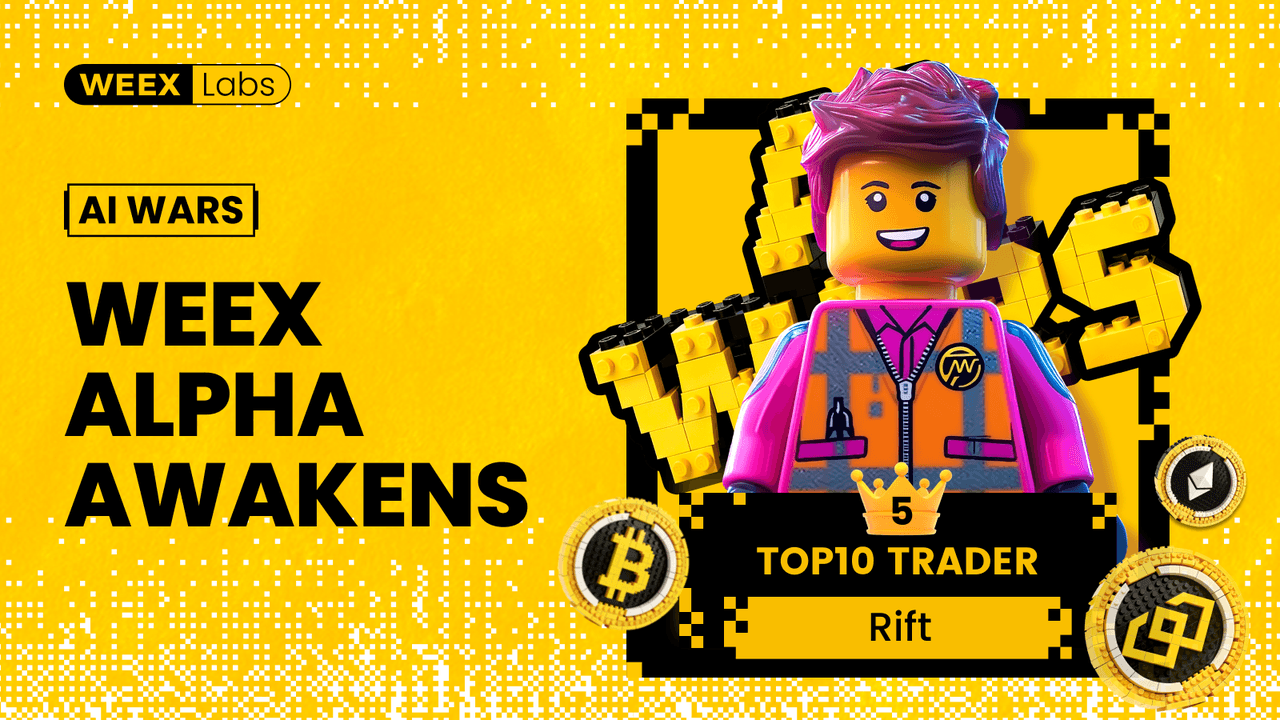
Lessons From a Third Prize Team in the WEEX AI Trading Hackathon
Rift, one of the Third Prize teams in the WEEX AI Trading Hackathon, shares how trusting their system helped the strategy stay resilient in live market volatility.

Champion Crowned at WEEX AI Hackathon: Revealing Strategy That Won $600K
A trader with only 6 months of AI trading experience won $600,000 at the WEEX AI Hackathon. Discover the strategy, tools, and lessons behind this breakthrough victory.

4 AI Trading Strategy Lessons from WEEX Hackathon Finalist
Finalist Bambi shares how AI tools helped turn real trading experience into an automated strategy, why survival-first risk control shaped the system’s design, and how the approach will evolve ahead of WEEX AI Trading Hackathon Season 2.
What Is OpenClaw? How The AI Agent Could Automate Crypto Trading Through APIs
OpenClaw is a rapidly growing AI agent on GitHub that can automate tasks and even execute crypto trades through exchange APIs. Learn how OpenClaw works, how it connects to exchanges, and the risks traders should understand before using AI trading agents.

WEEX AI Hackathon Champions Crowned, Revealing Future of AI Trading
The first-ever WEEX AI Hackathon has concluded, with 10 winners emerging from over 200 global teams. Beyond its $1.8 million prize pool, the event marked a milestone—proving that the future of AI trading belongs to accessible, AI-powered innovation.

Lessons From a Top 10 AI Trading Strategy in the WEEX AI Hackathon
A Top 10 finalist in the WEEX AI Hackathon shares how a market-neutral AI trading system competed against high-leverage strategies in live crypto markets.

From 27th to 4th: The AI Trading "Survivor Strategy" Behind a WEEX Hackathon Comeback
After a logic failure dropped him to 27th place, ClubW_9Kid rebuilt his AI trading framework and finished 4th in the WEEX AI Hackathon. In this interview, he explains the lessons behind disciplined AI execution, risk control, and why survival beats complexity in algorithmic trading.
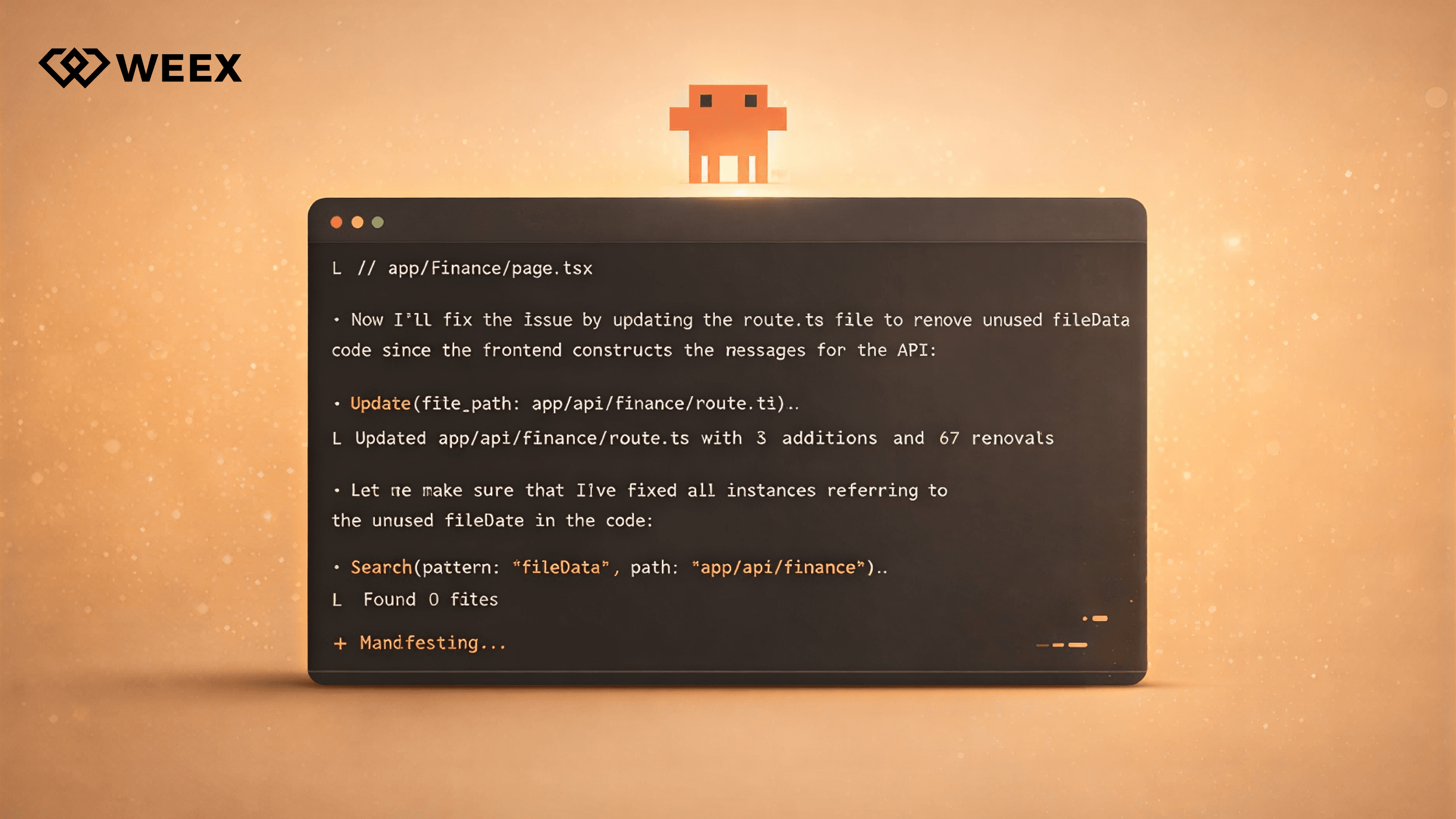
What Is Vibe Coding? How AI Is Changing Web3 & Crypto Development
What is vibe coding? Learn how AI coding tools are lowering the barrier to Web3 development and enabling anyone to build crypto applications.
What Is OpenClaw? How AI Agents Could Change Crypto Exchange Trading
OpenClaw is a rapidly growing open-source AI agent that can autonomously execute tasks and interact with software, including connecting to crypto exchanges through APIs to analyze markets and automate trading strategies. While this creates new opportunities for smarter trading, it also introduces security and operational risks. Through this article, WEEX aims to help users better understand the potential and risks of AI trading agents so they can explore new technologies while trading more safely and responsibly.

AI Trading in Live Markets: 4 Lessons From a WEEX Hackathon Top 10 Finalist
AI trading meets real markets. Explore 4 lessons from a WEEX Hackathon Top 10 finalist on surviving volatility, trusting AI models, and building smarter crypto trading systems.

How 30+ Global Sponsors Powered WEEX AI Trading Hackathon Into a $1.88M Carnival
Discover how 30+ global sponsors including AWS helped power the $1.88M WEEX AI Trading Hackathon, turning AI strategies into live crypto market competition.

From CTA to AI: The Evolution of Adaptive Quant Strategies in Crypto Markets
Explore how an LLM-powered AI market-neutral trading strategy achieved a 2.75 Sharpe ratio with controlled drawdown. Inside crypto_trade’s adaptive hedging system at the WEEX AI Trading Hackathon.

WEEX AI Hackathon: $8B Traded, Real AI Strategies Proven
How profitable is AI trading in real crypto markets? WEEX's $1.88M global AI hackathon reveals $8B volume, 227% ROI, API strategy data, and why only 8 of 37 traders made profit.

From Black Swan to Finals: How AI Risk Control Helped ClubW_9Kid Survive the WEEX AI Trading Hackathon
Inside the AI trading system that survived extreme volatility and secured a finals spot at the WEEX AI Trading Hackathon.
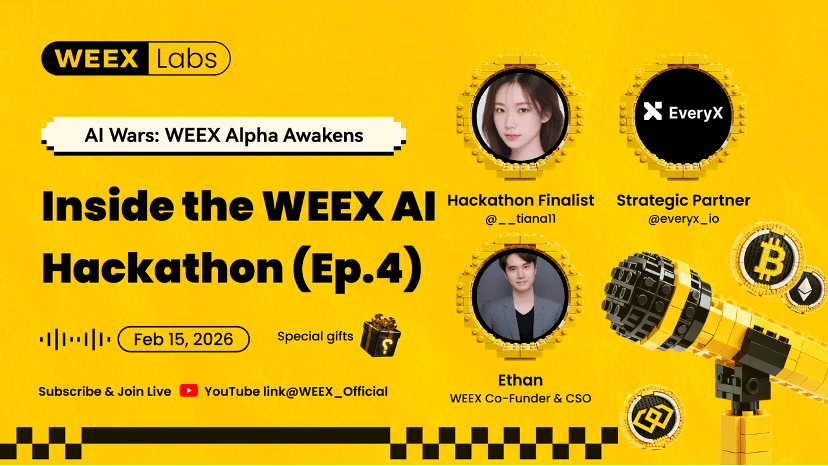
WEEX AI Trading Hackathon: 3 Key Insights on the Future of AI Trading & Prediction Markets
Dive into the key takeaways from the WEEX AI Trading Hackathon AMA. Get 3 critical insights from platform builders, prediction market experts, and winning traders on the future of AI trading, how to trade social sentiment, and why human-AI collaboration is the ultimate edge.

Beyond the Battle: PS5 Prizes, 1,000 USDT Giveaways & Key WEEX AI Trading Insights from Istanbul
Get key insights from the frontline of AI trading: Analysis of a live showdown in Istanbul reveals when human intuition beats AI, and where algorithms dominate. Learn the future of collaborative trading.
80% Win Rate to 40% Drawdown: An AI Trader's Brutal Recalibration at WEEX AI Wars
Dive into the technical blueprint of an AI trading system built on LLaMA reasoning and multi-agent execution. See how Quantum Quaser uses confidence thresholds & volatility filters at WEEX AI Wars, and learn the key to unlocking 95% win rate trades.
AI Trading Strategy Explained: How a Beginner Tiana Reached the WEEX AI Trading Hackathon Finals
Can AI trading really outperform human emotion? In this exclusive WEEX Hackathon finalist interview, discover how behavioral signal strategies, SOL trend setups, and disciplined AI execution secured a spot in the finals.

AI Trading vs Human Crypto Traders: $10,000 Live Trading Battle Results in Munich, Germany (WEEX Hackathon 2026)
Discover how AI trading outperformed human traders in WEEX's live Munich showdown. Learn 3 key strategies from the battle and why AI is changing crypto trading.
WEEX AI Trading Hackathon Rules & Guidelines
This article explains the rules, requirements, and prize structure for the WEEX AI Trading Hackathon Finals, where finalists compete using AI-driven trading strategies under real market conditions.
AI Crypto Trading in 2026: How AI Agents Use Stablecoins for Capital Management and Settlement
Learn how AI agents use stablecoins for crypto trading in 2026 — managing capital, settling transactions, and operating across exchanges and DeFi protocols.
AI Trading's Ultimate Test: Empower Your AI Strategy with Tencent Cloud to Win $1.88M & a Bentley
AI traders! Win $1.88M & a Bentley by crushing WEEX's live-market challenge. Tencent Cloud powers your AI Trading bot - can it survive the Feb 9 finals?
How a Risk-Controlled AI Crypto Trading Bot Protects Capital in Real Markets
Ritmex demonstrates how disciplined risk control and structured signals can make an AI crypto trading bot more stable and reliable on WEEX, highlighting the importance of combining execution discipline with scalable AI trading systems.
How a Structured AI Crypto Trading Bot Won at the WEEX Hackathon
Crypto_Trade shows how structured inputs and controlled adaptability can build a more stable and reliable AI crypto trading bot within the WEEX AI Trading Hackathon, highlighting a practical path toward scalable AI trading systems.
How a Fully Automated AI Trading Bot Won at WEEX Hackathon (From 0 to AI Agent)
Nick’s journey on WEEX shows that successful AI Trading isn’t just about strategy ideas—but about structured AI agents, disciplined execution, and continuous adaptation in real market conditions.
Best AI Crypto Trading Bot? Inside the AI Trading System That Ranked Top 3 on WEEX
Discover the best AI crypto trading bot on WEEX. Learn how AI trading works, how to trade automatically, and why this system stands out among top AI trading apps.