
 Buy Crypto
- Markets
 Futures
- Spot
- Copy Trade
- Earn
- More
Traditional Brokerage Enters Crypto: Interactive Brokers Surges Into Crypto Market in Three Months

Original Article Title: "Interactive Brokers 2026 First Battle, Choosing to Open Up the Crypto Market"
Original Article Author: Mach, Foresight News
In 2026, Interactive Brokers took only three months to bring the low-cost, professional execution of traditional brokerage business into the crypto market.
Interactive Brokers, listed on Nasdaq in 2007, currently has a market capitalization of $113.7 billion. The brokerage platform is known for its low commissions, best execution prices, and advanced trading technology, providing diversified product trading services such as stocks, options, futures, forex, bonds, and funds in over 170 markets, 200 countries, and regions for individual investors, active traders, and institutional clients through an integrated platform.
Such a traditional US stock market giant chose to open up a new battlefield in the cryptocurrency field in 2026.

Interactive Brokers Current CEO Milan Galik
Interactive Brokers first targeted the deposit channel—stablecoins.
In January, Interactive Brokers launched a stablecoin 24/7 account funding service, where eligible customers can send USDC from their personal crypto wallets to a secure address provided by Zero Hash (supporting Ethereum, Solana, and Base networks). The funds are automatically converted to USD and credited to the brokerage account within minutes, available around the clock, including weekends and holidays. In the following weeks, support for Ripple's RLUSD and PayPal's PYUSD will also be added.
Interactive Brokers does not charge deposit fees; only low conversion fees are charged by Zero Hash in tiers, with clients only needing to bear blockchain network fees.
This directly addresses the constraints of traditional wire transfers' banking hours and cross-border delays, allowing global investors to instantly inject USD value capital into their accounts, enabling immediate participation in multi-asset trading.
Next, Interactive Brokers turned its focus to BTC/ETH trading and deposits.
In February this year, Interactive Brokers introduced Coinbase Nano Bitcoin and Ethereum futures for 24/7 trading. On March 25, users can directly transfer BTC/ETH from external wallets to Interactive Brokers-linked crypto accounts without the need to first sell and liquidate.
This feature eliminates technical barriers, allowing investors to trade crypto assets on the same platform with lower commissions, achieving unified risk management for stocks, options, futures, and crypto.
Furthermore, the company has expanded its crypto footprint to the European market.
Interactive Brokers, through its Irish subsidiary, has opened crypto asset trading to eligible individual investors in the European Economic Area. Users can trade 11 mainstream crypto assets including BTC, ETH, SOL, XRP, and DOGE alongside stocks, options, futures, forex, bonds, funds, and more on the existing platform, with support for 24/7 trading.
Today's foray into the crypto market is the latest testament to Interactive Brokers’ stance as a traditional brokerage firm that "embraces crypto without losing its essence."
As early as September 2021, when Bitcoin had just surpassed $60,000 and crypto was still considered a high-risk fringe asset, Interactive Brokers partnered with the New York State-regulated Paxos Trust Company to pioneer spot trading for Bitcoin, Ethereum, Litecoin, and BCH. Customers do not need to open a separate crypto account but can request permission in their existing brokerage account to trade 24/7 and withdraw to an external wallet. This "low-cost + unified platform" model was initially aimed at serving professional investors rather than chasing retail speculation hype.
In the following years, Interactive Brokers steadily expanded its product line. By 2025, through Paxos or Zero Hash, they added coins such as Avalanche, Cardano, Chainlink, Dogecoin, Ripple, Solana, and Sui, supporting over 11 mainstream assets.
This "steady expansion followed by accelerated integration" path reflects the unique logic of traditional brokerages exploring crypto. Unlike pure crypto platforms pursuing traffic and leverage, Interactive Brokers sees crypto as an organic part of a multi-asset platform: Stablecoins are no longer just a "digital dollar" but an efficient settlement rail that can be directly converted into trading funds, margin, or idle capital. The CEO team has repeatedly emphasized the goal of making "crypto trading as professional and low-cost as stock trading."
Perhaps the intent behind Interactive Brokers is not difficult to understand. Crypto assets are transitioning from an early speculative narrative to an essential part of institutional portfolio allocation. Clients increasingly need to efficiently manage traditional securities, futures, options, and digital assets on a unified, professional, and low-cost platform to achieve more effective risk hedging, liquidity management, and capital allocation. Without these services, some high-net-worth and institutional clients are likely to shift their crypto-related business to pure crypto trading platforms, leading to reduced overall platform stickiness and fund outflows.
Through initiatives such as 24/7 deposits with stablecoins, direct transfers from external wallets, and innovative products like derivatives, Interactive Brokers has not only significantly reduced the frictional costs of cross-border fund flows and asset migration but has also transformed stablecoins into efficient settlement and margin tools, significantly enhancing customer fund maneuverability and utilization efficiency. This strategy aligns precisely with the company's core strengths — advanced automated trading systems, seamless access to 100+ global markets, and ultra-low-cost execution.
In the crypto market's shift from narrative-driven to institutionally led allocation in 2026, this strategy is proving competitive — clients can monitor stock volatility's impact on their crypto positions on the same screen or swiftly seize global opportunities with stablecoins without the need to switch between multiple apps.
The story of Interactive Brokers is essentially a microcosm of Wall Street's traditional brokerage firms reshaping their positioning through technology and execution capabilities.
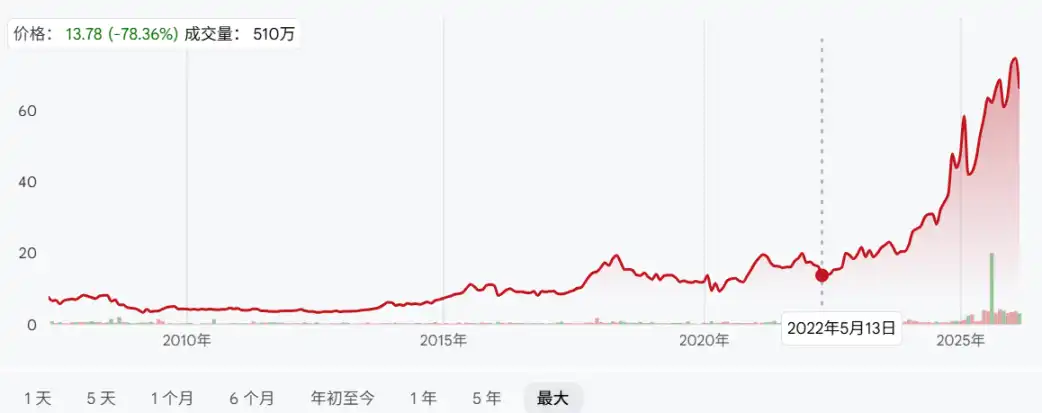
Since Thomas Peterffy founded Interactive Brokers in 1978, the company has been focused on developing automated trading systems. According to the latest publicly available data for Q4 2025, Interactive Brokers has reached 4.4 million customer accounts, a 32% year-over-year growth. The net addition of customer accounts exceeded 1 million for the full year 2025, setting an annual record. The full-year commission revenue was approximately $2.1 billion (+27%), with full-year net revenue around $6.205 billion (+20%), and strong average customer returns (individual clients around 19.2%, hedge fund clients around 28.91%).
These hardcore figures validate the contribution of "low commissions + global access + all-in-one platform" to long-term returns and have positioned Interactive Brokers firmly at the intersection of TradFi and Crypto.
You may also like

What Is an XRP Wallet? The Best Wallets to Store XRP (2026 Updated)
An XRP wallet lets you safely store, send, and receive XRP on the XRP Ledger. Learn what wallets support XRP and discover the best XRP wallets for beginners and long-term holders in 2026.

What are the Top AI Crypto Coins? Render vs. Akash: 5 Gems Solving the 2026 GPU Crisis
What are the best AI crypto coins for the 2026 cycle? Beyond the hype, we analyze top tokens like RNDR, AKT, and FET that provide real-world solutions to the global GPU shortage and the rise of autonomous agents.

What Is a Token in AI? What Is an AI Token + 3 Gems You Can't Miss in 2026
The era of AI hype has transitioned into an era of utility. As we move through Q2 2026, the market is no longer rewarding "narrative-only" projects. At WEEX Research, we are seeing a massive capital rotation into Decentralized Compute (DePIN) and Autonomous Agent coordination layers. This guide analyzes which AI tokens are capturing institutional liquidity and how to spot high-conviction setups in a maturing market.

Consumer-grade Crypto Global Survey: Users, Revenue, and Track Distribution

Prediction Markets Under Bias

Stolen: $290 million, Three Parties Refusing to Acknowledge, Who Should Foot the Bill for the KelpDAO Incident Resolution?

ASTEROID Pumped 10,000x in Three Days, Is Meme Season Back on Ethereum?

ChainCatcher Hong Kong Themed Forum Highlights: Decoding the Growth Engine Under the Integration of Crypto Assets and Smart Economy

Why can this institution still grow by 150% when the scale of leading crypto VCs has shrunk significantly?

Anthropic's $1 trillion, compared to DeepSeek's $100 billion

Geopolitical Risk Persists, Is Bitcoin Becoming a Key Barometer?

Annualized 11.5%, Wall Street Buzzing: Is MicroStrategy's STRC Bitcoin's Savior or Destroyer?
An Obscure Open Source AI Tool Alerted on Kelp DAO's $292 million Bug 12 Days Ago

Mixin has launched USTD-margined perpetual contracts, bringing derivative trading into the chat scene.
The privacy-focused crypto wallet Mixin announced today the launch of its U-based perpetual contract (a derivative priced in USDT). Unlike traditional exchanges, Mixin has taken a new approach by "liberating" derivative trading from isolated matching engines and embedding it into the instant messaging environment.
Users can directly open positions within the app with leverage of up to 200x, while sharing positions, discussing strategies, and copy trading within private communities. Trading, social interaction, and asset management are integrated into the same interface.
Based on its non-custodial architecture, Mixin has eliminated friction from the traditional onboarding process, allowing users to participate in perpetual contract trading without identity verification.
The trading process has been streamlined into five steps:
· Choose the trading asset
· Select long or short
· Input position size and leverage
· Confirm order details
· Confirm and open the position
The interface provides real-time visualization of price, position, and profit and loss (PnL), allowing users to complete trades without switching between multiple modules.
Mixin has directly integrated social features into the derivative trading environment. Users can create private trading communities and interact around real-time positions:
· End-to-end encrypted private groups supporting up to 1024 members
· End-to-end encrypted voice communication
· One-click position sharing
· One-click trade copying
On the execution side, Mixin aggregates liquidity from multiple sources and accesses decentralized protocol and external market liquidity through a unified trading interface.
By combining social interaction with trade execution, Mixin enables users to collaborate, share, and execute trading strategies instantly within the same environment.
Mixin has also introduced a referral incentive system based on trading behavior:
· Users can join with an invite code
· Up to 60% of trading fees as referral rewards
· Incentive mechanism designed for long-term, sustainable earnings
This model aims to drive user-driven network expansion and organic growth.
Mixin's derivative transactions are built on top of its existing self-custody wallet infrastructure, with core features including:
· Separation of transaction account and asset storage
· User full control over assets
· Platform does not custody user funds
· Built-in privacy mechanisms to reduce data exposure
The system aims to strike a balance between transaction efficiency, asset security, and privacy protection.
Against the background of perpetual contracts becoming a mainstream trading tool, Mixin is exploring a different development direction by lowering barriers, enhancing social and privacy attributes.
The platform does not only view transactions as execution actions but positions them as a networked activity: transactions have social attributes, strategies can be shared, and relationships between individuals also become part of the financial system.
Mixin's design is based on a user-initiated, user-controlled model. The platform neither custodies assets nor executes transactions on behalf of users.
This model aligns with a statement issued by the U.S. Securities and Exchange Commission (SEC) on April 13, 2026, titled "Staff Statement on Whether Partial User Interface Used in Preparing Cryptocurrency Securities Transactions May Require Broker-Dealer Registration."
The statement indicates that, under the premise where transactions are entirely initiated and controlled by users, non-custodial service providers that offer neutral interfaces may not need to register as broker-dealers or exchanges.
Mixin is a decentralized, self-custodial privacy wallet designed to provide secure and efficient digital asset management services.
Its core capabilities include:
· Aggregation: integrating multi-chain assets and routing between different transaction paths to simplify user operations
· High liquidity access: connecting to various liquidity sources, including decentralized protocols and external markets
· Decentralization: achieving full user control over assets without relying on custodial intermediaries
· Privacy protection: safeguarding assets and data through MPC, CryptoNote, and end-to-end encrypted communication
Mixin has been in operation for over 8 years, supporting over 40 blockchains and more than 10,000 assets, with a global user base exceeding 10 million and an on-chain self-custodied asset scale of over $1 billion.

$600 million stolen in 20 days, ushering in the era of AI hackers in the crypto world
Vitalik's 2026 Hong Kong Web3 Summit Speech: Ethereum's Ultimate Vision as the "World Computer" and Future Roadmap
On the same day Aave introduced rsETH, why did Spark decide to exit?
Full Post-Mortem of the KelpDAO Incident: Why Did Aave, Which Was Not Compromised, End Up in Crisis Situation?
What Is an XRP Wallet? The Best Wallets to Store XRP (2026 Updated)
An XRP wallet lets you safely store, send, and receive XRP on the XRP Ledger. Learn what wallets support XRP and discover the best XRP wallets for beginners and long-term holders in 2026.
What are the Top AI Crypto Coins? Render vs. Akash: 5 Gems Solving the 2026 GPU Crisis
What are the best AI crypto coins for the 2026 cycle? Beyond the hype, we analyze top tokens like RNDR, AKT, and FET that provide real-world solutions to the global GPU shortage and the rise of autonomous agents.
What Is a Token in AI? What Is an AI Token + 3 Gems You Can't Miss in 2026
The era of AI hype has transitioned into an era of utility. As we move through Q2 2026, the market is no longer rewarding "narrative-only" projects. At WEEX Research, we are seeing a massive capital rotation into Decentralized Compute (DePIN) and Autonomous Agent coordination layers. This guide analyzes which AI tokens are capturing institutional liquidity and how to spot high-conviction setups in a maturing market.



 App
App