
Pantera Capital: How has Crypto as a Service affected us?





Original Title: 2026: The Invisible Revolution
Original Author: Paul Veradittakit, Pantera Capital
Original Translation: AididiaoJP, Foresight News
2026 will be a pivotal year. We will see "crypto as an industry" evolve into "crypto as a service".
Over the past decade, the crypto world has been full of various gimmicks. The approval of the Bitcoin ETF in 2024 gave it mainstream financial recognition. In 2025, everyone was busy building the underlying infrastructure. By 2026, real value will belong to companies that use blockchain to solve entrenched problems in traditional industries while making users completely unaware of the presence of blockchain.
The future crypto unicorns will no longer rely on hype. They will be the kind of companies that use blockchain technology to significantly increase product efficiency, tap into multi-billion-dollar markets, and completely hide the complex technology.
Crypto Tech Beats "Weekend"
During the Iran conflict outbreak, the US stock market was closed for the weekend and unable to respond to sudden global risks. However, the crypto market did not stop, with Bitcoin briefly rising to $74,000. Commodities were the first to complete price discovery on the decentralized prediction market Hyperliquid, even before the traditional markets opened. This is not an isolated case—similar situations occurred last month when China announced policies.
Traditional hedge funds are increasingly pouring into this field. The crypto market's "24/7 non-stop" is no longer just a slogan but a structural advantage that traditional finance cannot match.
Nevertheless, the current valuation of the crypto market is still far below the level its fundamentals should reach. Without a doubt, we are once again in a bear market (the fourth one I've experienced), but this time is entirely different: regulations are becoming clearer, institutional funds have entered, and the infrastructure is improving.
This sentiment was particularly strong at the recent Hong Kong Consensus conference. The vibrancy of the Asian market contrasts sharply with the West. There, the support of both the incumbent and opposition parties, new institutional funds, and a strong focus on consumer applications are driving bullish sentiments.
Key Highlights for Asia in 2026:
· Cross-Border Payments through Stablecoins, especially in the B2B sector. For the more fragmented Asian economy, crypto payments are a natural choice.
· Tokenization of Gold, Stocks, and Real Estate. Asian banks and fintech companies are catching up to the U.S.
· Perpetual Contract Trading on DeFi. Fueled by retail investors, the development speed may surpass that of the West.
· Prediction Markets are expected to become a key track, although the form may differ from the West.
Core Trend: "Crypto as a Service"
The core theme of 2026 is transitioning from "Crypto as an industry" to "Crypto as a service." The goal is no longer to show users the blockchain but to make them completely forget about the existence of blockchain.
Over the past decade, we have been eager to create the "Crypto Wonder" — Gas Fee Wars, TPS Races, Modular Stacks, ZK Proofs. The ETF in 2024 was mainstream institutional acknowledgment. In 2025, we laid down all the underlying infrastructure. In 2026, it's time to turn the page.
Saying Goodbye to the "Casino" Era
The new generation of unicorns will not be the kind of "L3 network built for AI-NFT." They will be the ones leveraging blockchain to improve product efficiency tenfold, while completely hiding the technology and thus unlocking billion-dollar markets.
This perfectly explains our recent investment logic:
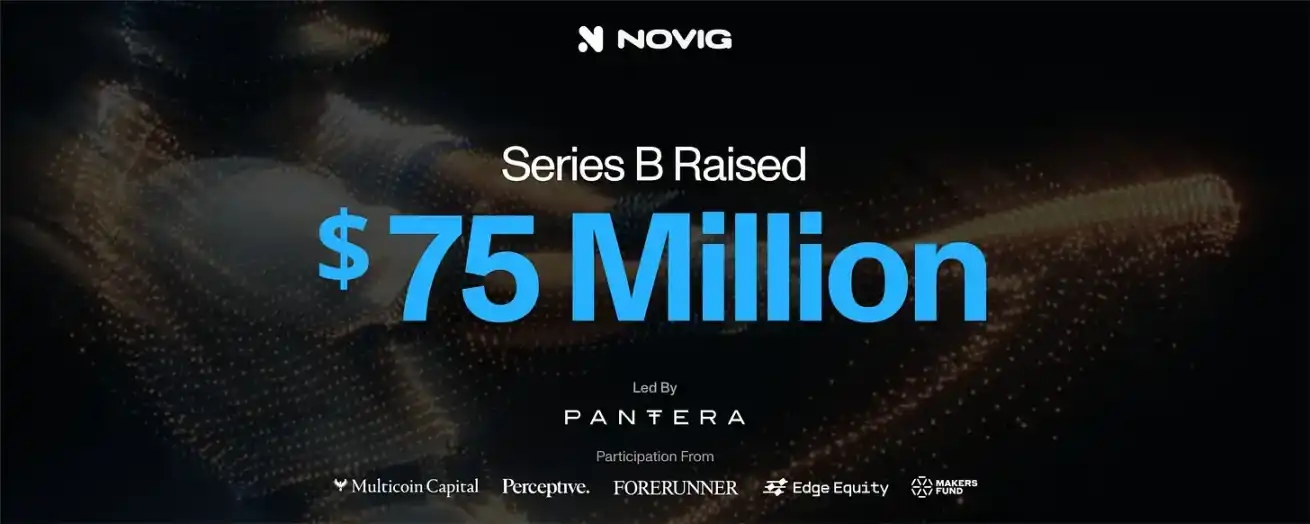
Novig: Farewell to the "Rake" Era ($75 Million Series B)
Traditional sports betting is a monopolistic distorted market. The house edge extracts high commissions from each bet, resulting in a user profitability rate of only 2%. Our $75 million lead investment in Novig is because they treat sports betting as a high-frequency financial product. Through a peer-to-peer trading model, Novig users have an average profitability rate of 23%. Most users don't care if there's a decentralized order book in the background; they only know they can get the best odds in the U.S. here. This is a vivid example of "Crypto as a Service."
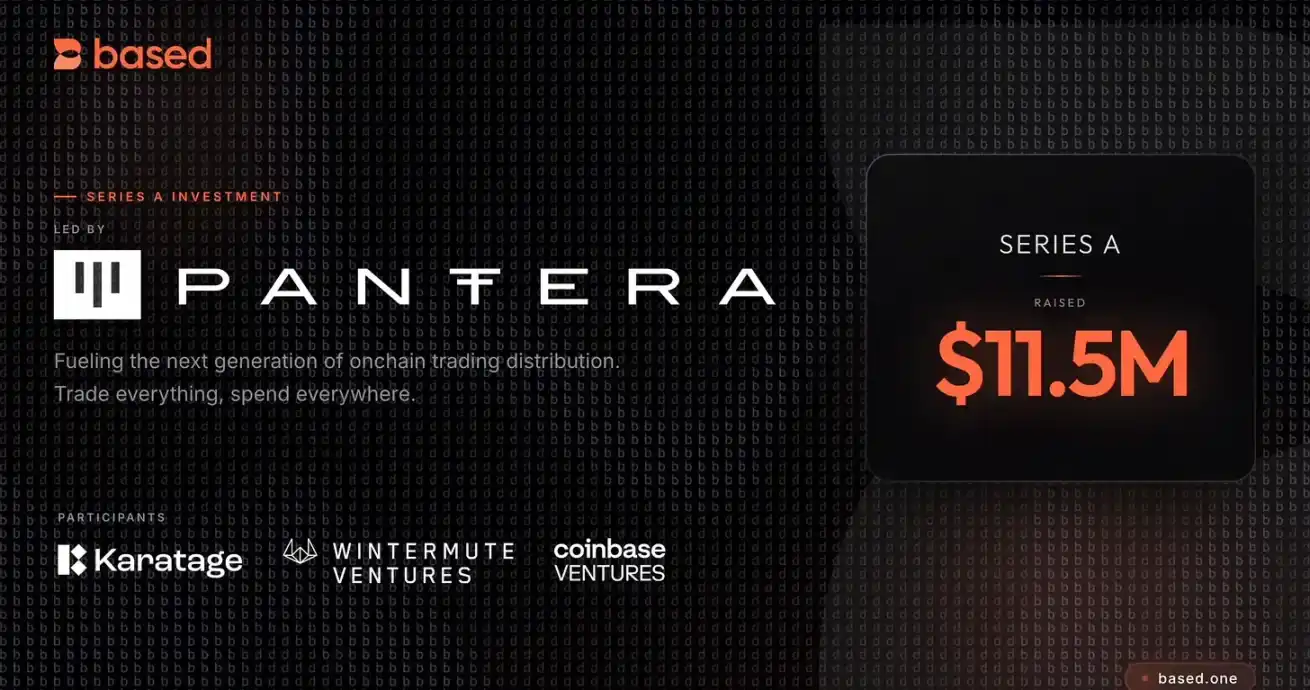
Based: Consumer-Grade Super App ($11.5 Million Series A)
We recently led Based's Series A funding round. This is a composable Web3 consumer-grade super app built on the Hyperliquid ecosystem. In the past, "consumer-grade crypto" was often equated with "clumsy user experience." Based is changing that by making on-chain interactions feel as smooth as top-tier fintech apps. Cross-chain bridging, gas fees, and other complex operations have been abstracted away, making users unaware of the underlying complexities. They can simply focus on the social and financial value their assets bring.
Doppler: Default Asset Issuance Infrastructure ($9 Million Seed Round)
If Based and Novig are cool new cars, then Doppler is the high-performance fuel system. We led Doppler's $9 million seed round, aiming to become the default infrastructure for on-chain asset issuance. It allows developers to issue assets with institutional-grade security and compliance standards without having to build everything from scratch. Doppler is like the Stripe of on-chain assets—pure utility packaged behind a clean API.
Why "Invisibility" Is More Important Than "Viral Spread"
This trend of "invisibility" is also prevalent throughout our entire investment portfolio:
· Real-World Assets: Tokenized government bonds are no longer an experiment in the crypto world; they are becoming the backend liquidity cornerstone of global trade.
· AI Agents: Blockchain provides AI agents with a trusted "truth layer" through predictive markets and verifiable data, enabling them to autonomously and credibly interact with digital assets.
· Agent-Based Payments will accelerate all of this. Payment standards like x402 enable AI agents to transact directly using crypto assets. The gradual clarity in stablecoin regulation further smoothes this payment track.
Advice for Entrepreneurs
If you are planning to start a business in 2026, my advice is simple: Stop focusing solely on technology and talk more about the practical problems you can solve. If the page in your pitch deck explaining the consensus mechanism comes before discussing customer ROI, it means your mindset is still stuck in 2022.
What we are looking for are teams that are building the next Novig, Based, or Doppler — those who truly understand what “mass adoption” means: It is only when a technology becomes so seamless that people completely forget it exists that it truly enters the mainstream.
You may also like

The impossible triangle is simply a pseudo problem

Stablecoins Finally Find Real Returns: On-Chain Reinsurance Re Explained | Interview with Re Founder Karan Saroya

The AI gamble of mining companies: Valuations enter a phase of differentiation, and it's hard to turn the tide

A letter from Alliance to entrepreneurs: Written on the occasion of Cursor selling for 60 billion dollars

Will MicroStrategy fall into a death spiral? What will the macro trend be in the second half of the year?

Blockchain Capital Partner: The Core Secret of Arbitrage

STRC unanchored by 11%, can the perpetual motion machine of Strategy still operate?

Bitcoin Market Analysis 2026: Can BTC Reach $150K by Year-End?

Bitcoin ETF Outflows Hit a Record $4.4 Billion: What Are Traders Doing With Their Cash?

WEEX App Just Got Smarter – New Tabs for Faster Trades & Easy Asset Management

WEEX All-New Search Features: Find, Trade & Earn Faster Than Ever

Morning Report | Illinois signs the strictest digital asset tax law in the U.S.; RWA tokenization market size surpasses $43 billion, institutions accelerate the migration of on-chain assets

Full version of the debut Q&A! Federal Reserve Chairman Waller: Sticking to the 2% inflation target, establishing five special working groups, individual did not submit the dot plot

From Disruptor to Shadow Market: The Crypto Market is Becoming a Colony of Traditional Finance
Dalio's important long article: How to position in the current market environment?
OKX Star analyzes Binance's competitive advantages: when regulation levels the playing field, competition has just begun

New gameplay for participating in initial offerings on cryptocurrency exchanges
Why Is Bitcoin Down Today? What the Hawkish FOMC Means for SpaceX, Gold and Nasdaq
The impossible triangle is simply a pseudo problem
Stablecoins Finally Find Real Returns: On-Chain Reinsurance Re Explained | Interview with Re Founder Karan Saroya
The AI gamble of mining companies: Valuations enter a phase of differentiation, and it's hard to turn the tide
A letter from Alliance to entrepreneurs: Written on the occasion of Cursor selling for 60 billion dollars
Will MicroStrategy fall into a death spiral? What will the macro trend be in the second half of the year?
Blockchain Capital Partner: The Core Secret of Arbitrage


