
Large companies buying Bitcoin has become a trend, but Asian companies hold less than 1% of the total supply


Original Article Title: "Big Companies Buying Bitcoin Is Trending, But Asian Enterprises Hold Less Than 1% of BTC"
Original Source: Tiger Research Reports
Key Points Summary
· The Trend of Corporate Bitcoin Investment is Expanding: Since the approval of a Bitcoin spot ETF by the U.S. Securities and Exchange Commission (SEC), corporate investment strategies have been heating up. This trend is not limited to Western markets and is extending to the Asian region.
· Why Companies Choose Bitcoin: Bitcoin has shown significant appeal in diversifying asset allocation, improving fund management efficiency, and enhancing corporate value.
· Participation and Development Prospects in the Asian Market: Asian enterprises' investment in Bitcoin is still in its early stages, but successful cases like Metaplanet indicate tremendous market expansion potential. However, regulatory uncertainty and lack of institutional support remain major barriers.
1. Introduction
This year, the U.S. Securities and Exchange Commission (SEC) approved a Bitcoin spot ETF. This move became a milestone event in the institutionalization of crypto assets. Since then, an increasing number of companies have started incorporating Bitcoin into their investment strategies. For example, MicroStrategy has already made Bitcoin one of its key financial assets. This trend is rapidly expanding from Western markets to Asian markets, gradually becoming a global phenomenon. This article will analyze the key strategies driving companies to adopt Bitcoin and the underlying factors.
2. The Craze of Corporate Bitcoin Investment
As Bitcoin's value is gradually being recognized, its attractiveness is also constantly increasing. At the national level, some governments have begun discussing Bitcoin investments. For example, El Salvador has taken proactive action by continuously purchasing Bitcoin. In the U.S., discussions about President-elect Trump's plan to reserve Bitcoin have become a focal point. Additionally, Poland and Suriname are also exploring the possibility of using Bitcoin as a strategic asset.
However, except for El Salvador, most countries' Bitcoin investments are still in the policy discussion or election promise stage, with some time before actual implementation. The U.S. has not directly invested in Bitcoin yet but holds some Bitcoin to recover proceeds from crime. Furthermore, due to significant price volatility of Bitcoin, many central banks still prefer choosing gold as a more stable reserve asset.
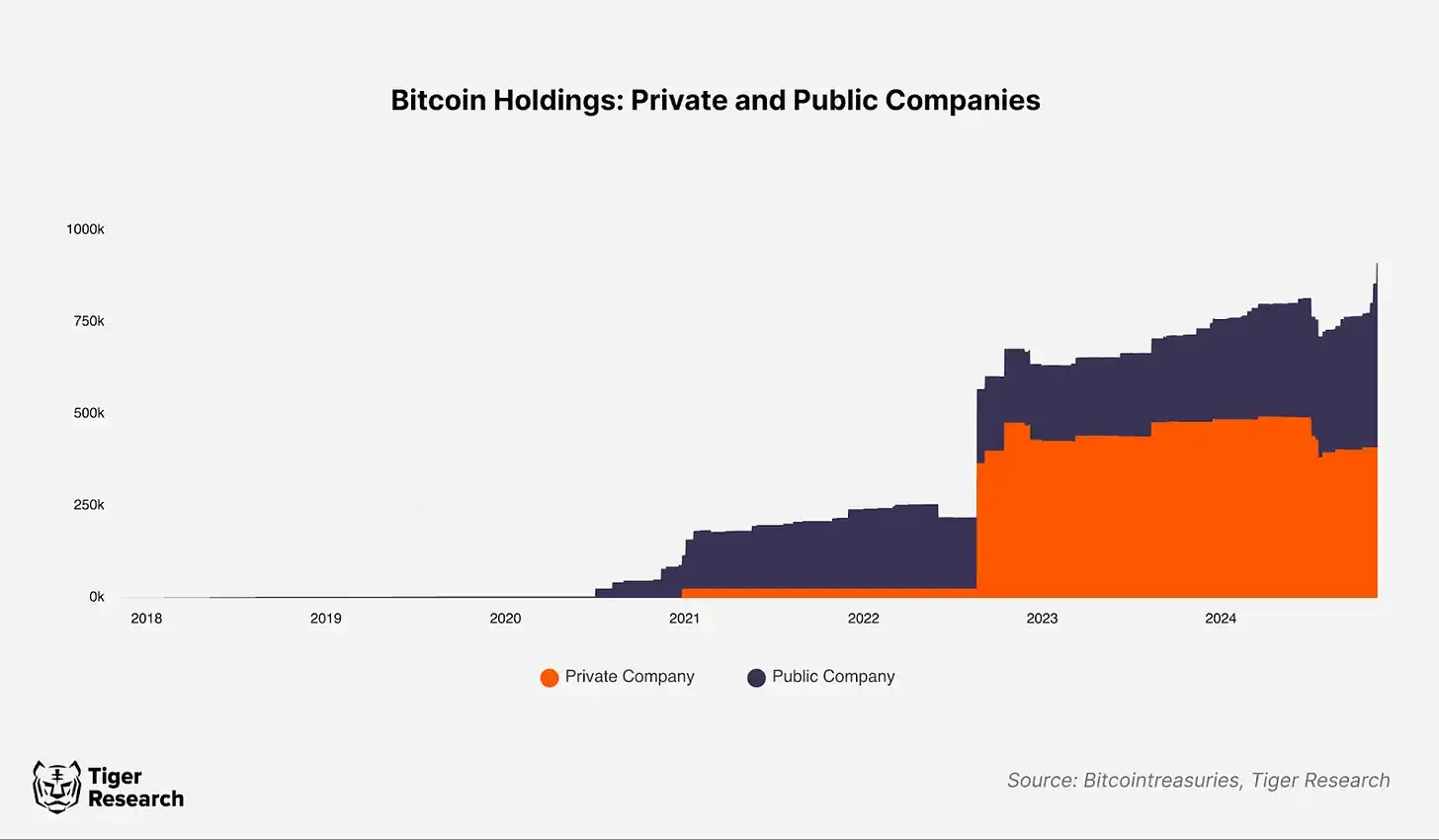
The government's action on Bitcoin has been slow and limited, but corporate involvement is accelerating. Companies such as MicroStrategy, Semler Scientific, and Tesla have made bold investments in the Bitcoin space. This contrasts sharply with the cautious approach taken by most governments.
3. Three Key Reasons Corporations Are Interested in Bitcoin
Investing in Bitcoin is no longer just a trend; it is gradually becoming a core financial strategy for corporations. Bitcoin has attracted corporate attention due to its unique characteristics, with its value primarily manifesting in the following three areas:
3.1. Achieving Asset Diversification
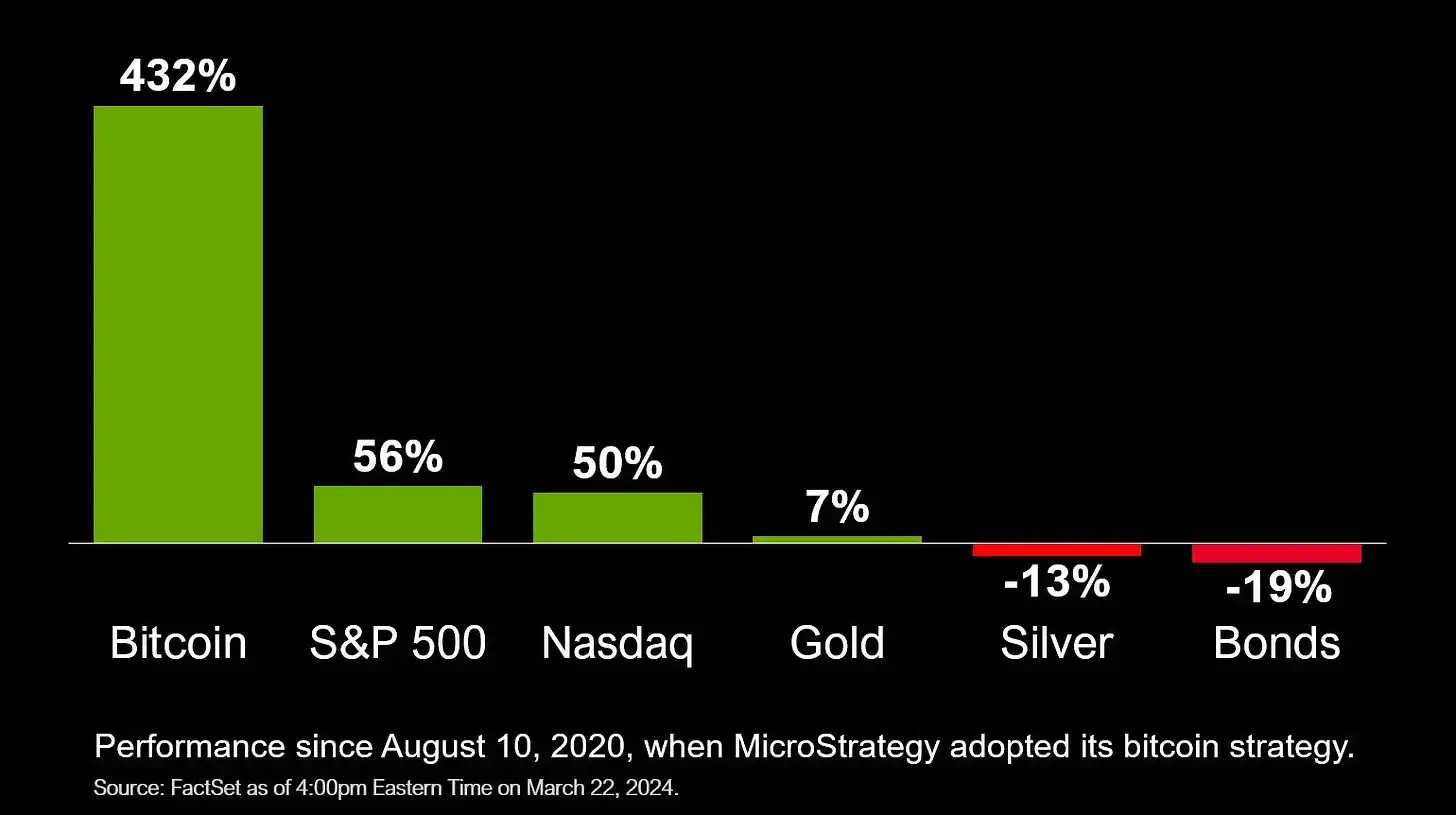
Traditionally, a company's financial assets are typically allocated around stable options such as cash and government bonds. These assets can ensure liquidity and help mitigate risks, but their low yield often struggles to outpace inflation, potentially leading to a shrinkage in real asset value.
Source: Michael Saylor X
Bitcoin, as an emerging alternative asset, can effectively address these shortcomings. It not only has high return potential but also can diversify investment risks, providing companies with a new asset allocation choice. Over the past five years, Bitcoin has significantly outperformed traditional assets such as the S&P 500 Index, gold, and bonds, even surpassing junk bonds considered high-risk high-return. This indicates that Bitcoin is not only an alternative option but also a crucial tool in corporate financial strategy.
3.2. Enhancing Asset Management Efficiency
Another significant reason Bitcoin attracts companies is its efficient asset management characteristics. Bitcoin supports 24/7 trading, providing companies with great flexibility to adjust asset allocations at any time. Furthermore, compared to traditional financial institutions, Bitcoin's liquidation process is more convenient, not restricted by bank hours or cumbersome operational procedures.
Source: Kaiko
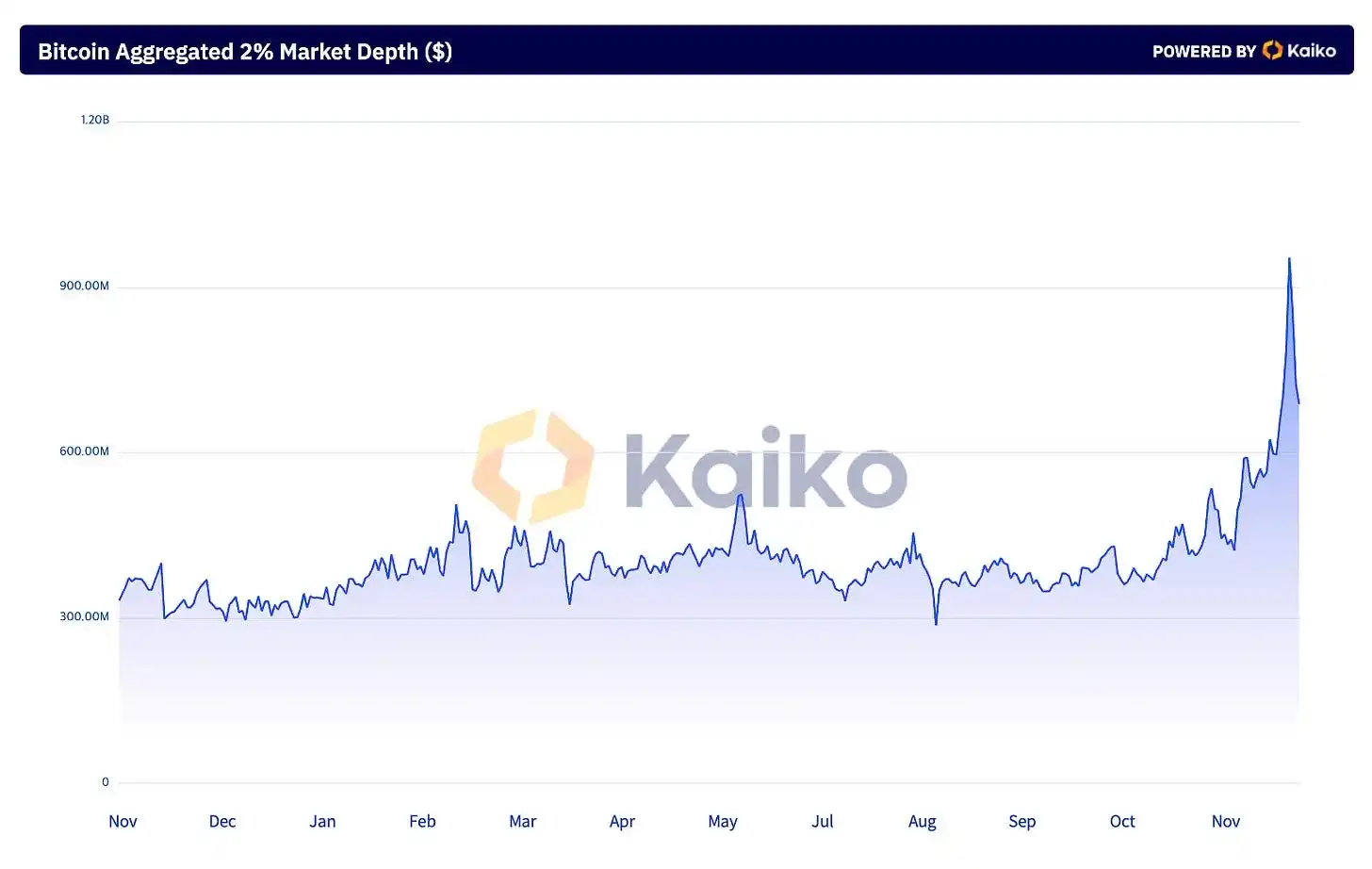
While companies remain concerned about potential price impact when liquidating Bitcoin, this issue is gradually being alleviated as market depth increases. According to Kaiko data, Bitcoin's "2% market depth" (the total amount of buy and sell orders within a 2% range above and below the current market price) has steadily grown over the past year, with the daily average market depth reaching around $4 million. This indicates that the liquidity and stability of the Bitcoin market are continuously improving, creating a more favorable environment for companies to use Bitcoin.
3.3. Enhancing Enterprise Value
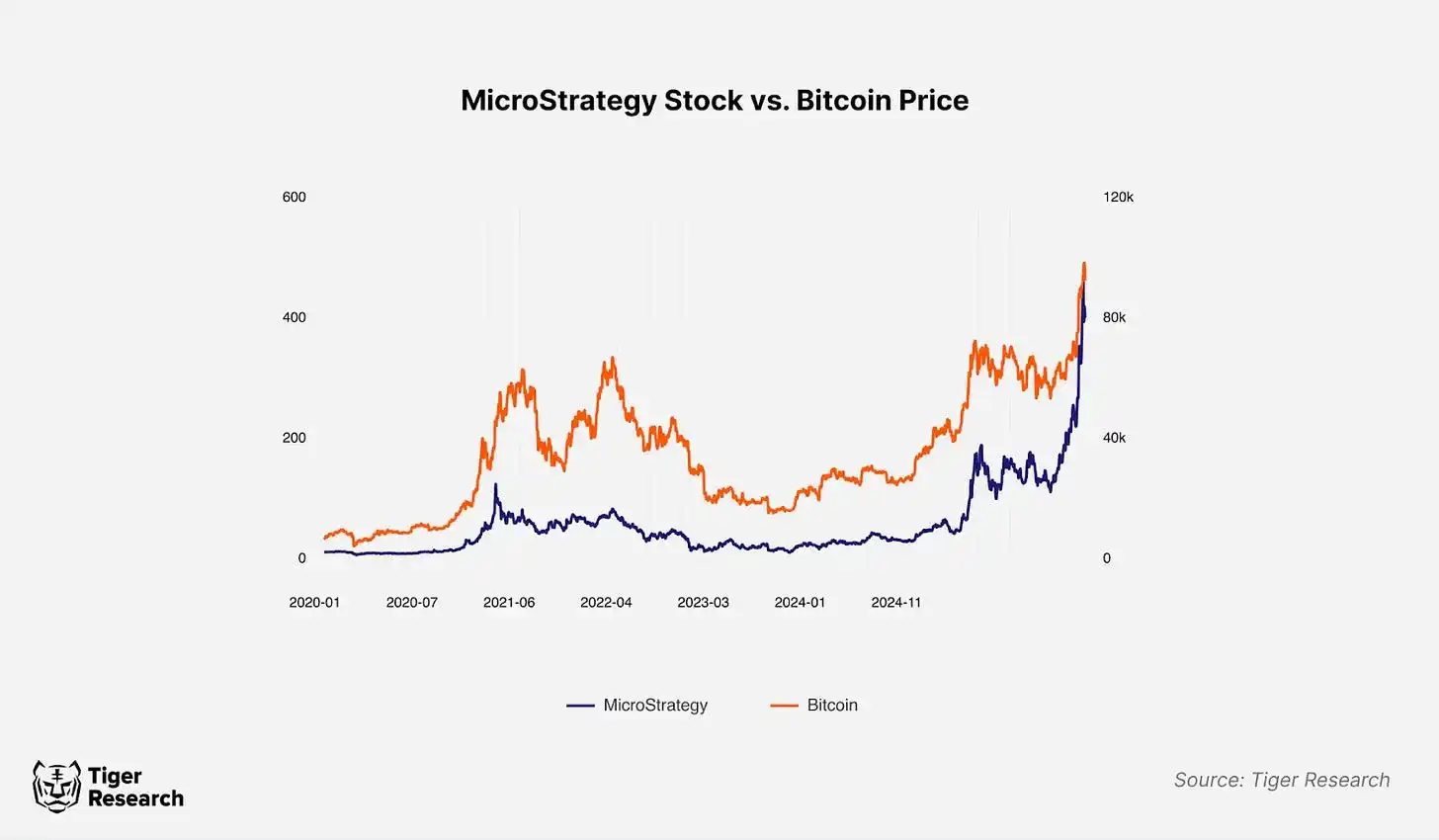
Holding Bitcoin is not only a financial choice, but it can also significantly enhance enterprise value and stock price. For example, after announcing the acquisition of Bitcoin, both MicroStrategy and Metaplanet saw a substantial increase in their stock prices. This strategy is not only an effective marketing tool in the digital asset industry, but also provides a way for enterprises to seize the growth opportunity in this field.
4. Increasing Investments in Bitcoin by Asian Enterprises
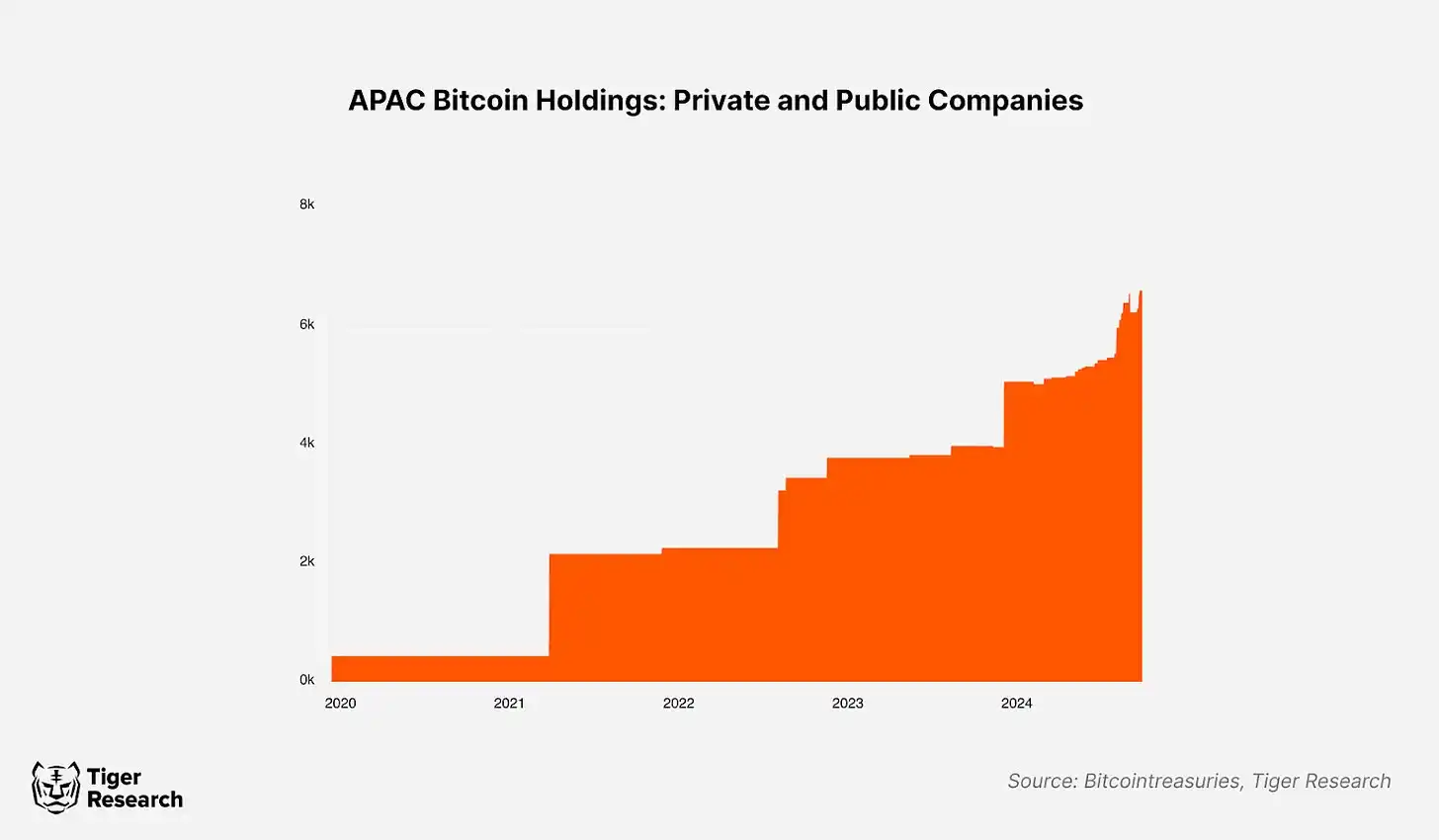
Although Asian enterprises are still in the early stages of Bitcoin investment, they are gradually increasing their holdings. For example, companies like Meitu in China, Metaplanet in Japan, and Brooker Group in Thailand have considered Bitcoin as a strategic financial asset. Nexon has also made large-scale Bitcoin purchases. Metaplanet, in particular, has been very active, acquiring 1,142 Bitcoins in the past six months.
However, the current level of participation of Asian enterprises in the Bitcoin market remains relatively low. According to statistics, the total amount of Bitcoin held by Asian companies accounts for less than 1% of the global total, primarily due to regulatory restrictions in many countries. For instance, in South Korea, companies are unable to open accounts on cryptocurrency exchanges and face numerous obstacles to investing in overseas Bitcoin ETFs or launching funds related to cryptocurrency trading. Consequently, these companies can hardly invest in Bitcoin through official channels.
Despite the challenges posed by the regulatory environment, the potential for Asian enterprises to participate in the Bitcoin market is still promising. Some companies have set up overseas subsidiaries to bypass regulatory restrictions for investment. Meanwhile, countries like Japan have made some progress in relaxing relevant policies. Leading enterprise investment cases like Metaplanet are attracting more market attention. These positive changes may pave the way for broader Asian enterprise participation in the Bitcoin market in the future.
5. Conclusion
Bitcoin investment is gradually becoming a popular financial strategy adopted by enterprises. However, its price volatility remains a significant challenge for enterprises, especially under the influence of external factors like international politics. The market crash event in 2022 clearly exposed the potential risks of enterprises holding Bitcoin. Therefore, enterprises should exercise caution when investing in Bitcoin and strategically diversify it with safer assets to mitigate overall risk.
Furthermore, for Bitcoin to further develop in enterprise portfolios, a clear institutional framework is needed. Currently, there is a lack of clear guidance on the holding and accounting of cryptocurrency assets, which often leads enterprises to confusion in practical operations. Once these uncertainties are resolved, Bitcoin may play a more significant role in enterprise asset diversification.
You may also like

The AI gamble of mining companies: Valuations enter a phase of differentiation, and it's hard to turn the tide

A letter from Alliance to entrepreneurs: Written on the occasion of Cursor selling for 60 billion dollars

Stablecoins Finally Find Real Returns: On-Chain Reinsurance Re Explained | Interview with Re Founder Karan Saroya

The impossible triangle is simply a pseudo problem

Will MicroStrategy fall into a death spiral? What will the macro trend be in the second half of the year?

Blockchain Capital Partner: The Core Secret of Arbitrage
STRC unanchored by 11%, can the perpetual motion machine of Strategy still operate?

Bitcoin Market Analysis 2026: Can BTC Reach $150K by Year-End?
Bitcoin ETF Outflows Hit a Record $4.4 Billion: What Are Traders Doing With Their Cash?
WEEX App Just Got Smarter – New Tabs for Faster Trades & Easy Asset Management

WEEX All-New Search Features: Find, Trade & Earn Faster Than Ever

Morning Report | Illinois signs the strictest digital asset tax law in the U.S.; RWA tokenization market size surpasses $43 billion, institutions accelerate the migration of on-chain assets
Full version of the debut Q&A! Federal Reserve Chairman Waller: Sticking to the 2% inflation target, establishing five special working groups, individual did not submit the dot plot

From Disruptor to Shadow Market: The Crypto Market is Becoming a Colony of Traditional Finance
Dalio's important long article: How to position in the current market environment?
OKX Star analyzes Binance's competitive advantages: when regulation levels the playing field, competition has just begun

New gameplay for participating in initial offerings on cryptocurrency exchanges
Why Is Bitcoin Down Today? What the Hawkish FOMC Means for SpaceX, Gold and Nasdaq
The AI gamble of mining companies: Valuations enter a phase of differentiation, and it's hard to turn the tide
A letter from Alliance to entrepreneurs: Written on the occasion of Cursor selling for 60 billion dollars
Stablecoins Finally Find Real Returns: On-Chain Reinsurance Re Explained | Interview with Re Founder Karan Saroya
The impossible triangle is simply a pseudo problem
Will MicroStrategy fall into a death spiral? What will the macro trend be in the second half of the year?
Blockchain Capital Partner: The Core Secret of Arbitrage


