
 Buy Crypto
- Markets
 Futures
- Spot
- Copy Trade
- Earn
- More
Do Kwon Pleads Not Guilty in U.S. Court, Faces Up to 130 Years in Prison


Original Title: "Do Kwon Extradited to the U.S. for Trial, Smiling but Not Pleading Guilty"
Original Author: jk, Odaily Planet Daily
On January 2nd local time in the U.S., Do Kwon, the former founder of Terra and co-founder of Terraform Labs, officially appeared in the public eye of the U.S. court. At a hearing in the Manhattan Federal Court, Do Kwon pleaded not guilty, and the case will proceed to trial.
Earlier, Odaily reported that Milojko Spajic, the Prime Minister of Montenegro, stated on Tuesday, "Montenegro has completed the extradition process of Do Kwon, co-founder of Terraform Labs, to the U.S." Spajic posted on Platform X, saying, "This extradition demonstrates our unwavering commitment to international justice and the rule of law."
Do Kwon faces charges in New York and Seoul related to the collapse of the $40 billion TerraUSD stablecoin in 2022. Last year, he was arrested in Montenegro for traveling with a forged passport. In April of this year, following a civil trial on charges by the U.S. Securities and Exchange Commission (SEC), Terraform and its founder Do Kwon were found guilty of fraud. Terraform has agreed to pay $4.5 billion to settle with the SEC.
Background: Terra Collapse, Do Kwon's Extradition, and Trial Outlook
Terra's Collapse
In May 2022, the Terra ecosystem experienced an unprecedented collapse in the history of cryptocurrency, with the value of its two core cryptocurrencies, TerraUSD (UST) and LUNA, nearly plummeting to zero, resulting in approximately a $40 billion loss.
UST was the flagship algorithmic stablecoin of that year, maintaining a 1:1 peg to the U.S. dollar through an algorithm and market incentive mechanism, while LUNA was the governance token supporting UST stability. However, in early May, as Terra's protocol upgrade and capital outflow occurred, UST lost its peg to the dollar, leading to a rapid price decline and triggering market panic. To address this crisis, Terraform Labs attempted to support the UST price through a reserve fund but was unsuccessful. Meanwhile, the dual-token mechanism of the Terra protocol led to the minting of a large amount of new LUNA, further depressing LUNA's price, creating a vicious cycle.
Ultimately, LUNA's price plummeted from a high of around $119 to almost zero, causing the entire ecosystem to collapse. Simultaneously, Terra's collapse triggered a market chain reaction, impacting other cryptocurrencies such as Bitcoin and leading to the complete loss of funds for millions of investors. Subsequently, algorithmic stablecoins almost disappeared from the market, directly causing subsequent primary market rug pulls like 3AC.
Extradition to the U.S. or South Korea?
Do Kwon was caught in a tug-of-war earlier this year: both the U.S. and South Korea wanted to try Do Kwon domestically. In March, it was rumored that Do Kwon would be extradited to South Korea, but the decision was postponed by the Supreme Court of Montenegro, eventually confirming his extradition to the U.S. in December.
Previously, there were rumors in the market that when Do Kwon was arrested by Montenegrin police, a Trezor hardware cold wallet containing over 10,000 bitcoins was found in his rectum. Today, these bitcoins are worth over a billion dollars.
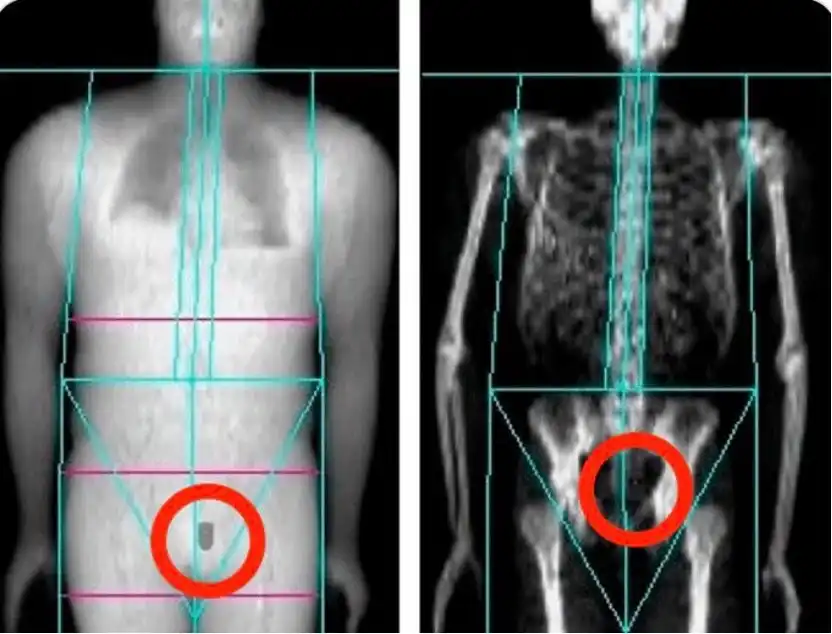
Source: X
Preview of the Trial Process
In court, Do Kwon pleaded not guilty to the charges against him. What will happen next?
Not guilty plea is a formal statement made by a defendant in a criminal case in the U.S. judicial system, indicating a denial of committing the crimes alleged. This does not mean the defendant is automatically declared innocent but requests the prosecution to provide sufficient evidence to prove the charges. The case will proceed to trial, where the court will determine the defendant's guilt.
On January 8, the case will be back in court.
Therefore, we will witness a courtroom drama similar to SBF's at the beginning of this year, from witness testimonies to the final judgment, revealing many insider details of the Terra collapse. Odaily will continue to track and report on this.
He Could Face 130 Years in Prison, but He Smiles
Do Kwon faces multiple charges. According to a press release from the U.S. Department of Justice's Public Affairs Office, the main charges against Do Kwon are as follows:
False Statements Made by Do Kwon:
· Stablecoin False Statement: Kwon falsely promoted the effectiveness of the "Terra protocol" system, which purportedly uses a computer algorithm to maintain the value of Terraform's so-called "stablecoin" TerraUSD (UST) at 1 US dollar-1 UST. However, Kwon knew that in May 2021, the Terra protocol failed to restore UST's 1 US dollar peg, and he reached an agreement with an executive of a high-frequency trading firm to have the firm purchase a large amount of UST to artificially support UST's 1 US dollar peg.
· LFG False Statement: Kwon falsely promoted the governance of Luna Foundation Guard Ltd. (LFG), claiming that the organization was managed by an independent governing body responsible for deploying billions of dollars in financial reserves to defend UST's peg. However, Kwon actually controlled LFG and Terraform, and misappropriated hundreds of millions of dollars of LFG assets.
· Mirror False Statement: Kwon falsely promoted the success of the Mirror protocol on the Terraform blockchain, which purportedly allows users to create, buy, and sell synthetic versions of stocks listed on US stock exchanges. However, Kwon and Terraform actually controlled Mirror and manipulated the prices of synthetic assets through automated trading bots.
· Chai False Statement: Kwon falsely claimed that the Terraform blockchain was used to process billions of dollars in financial transactions for the South Korean payment app Chai, when in reality, Chai used a traditional financial processing network.
· Founding Token False Statement: Kwon used the initially allocated 100 million founding stablecoins intended for reserves in fraudulent transactions, including manipulating Mirror asset prices.
Assistant United States Attorney for the Southern District of New York Daniel M. Gitner stated, "As alleged, this fraudulent conduct, along with the collapse of the Terraform cryptocurrency in May 2022, wiped out over $40 billion in investor assets, causing devastating losses to countless investors in the United States and globally. Kwon will now face justice in the Manhattan federal court."
However, according to Inner City Press, at today's hearing, 「Do Kwon was seen chatting with one of his lawyers, smiling broadly — evidently in good spirits.」

Do Kwon entering the courtroom. Source: Inner City Press
According to The Block, Kwon also faces civil charges filed by the U.S. Securities and Exchange Commission (SEC) in February 2023. The lawsuit between Terraform and the SEC started at the end of March, but he did not participate. In April, the jury ruled that Terraform and Kwon misled investors, were liable for civil fraud, and violated federal securities laws.
Kwon faces two counts of commodities fraud (each carrying a maximum sentence of 10 years), two counts of securities fraud (each carrying a maximum sentence of 20 years), two counts of wire fraud (each carrying a maximum sentence of 20 years), two counts of conspiracy (each carrying a maximum sentence of 5 years), and one count of money laundering conspiracy (carrying a maximum sentence of 20 years). If convicted on all charges, Do Kwon could face up to 130 years in prison, more than five times that of SBF.
You may also like

Why can this institution still grow by 150% when the scale of leading crypto VCs has shrunk significantly?

Anthropic's $1 trillion, compared to DeepSeek's $100 billion

Geopolitical Risk Persists, Is Bitcoin Becoming a Key Barometer?

Annualized 11.5%, Wall Street Buzzing: Is MicroStrategy's STRC Bitcoin's Savior or Destroyer?

An Obscure Open Source AI Tool Alerted on Kelp DAO's $292 million Bug 12 Days Ago

Mixin has launched USTD-margined perpetual contracts, bringing derivative trading into the chat scene.
The privacy-focused crypto wallet Mixin announced today the launch of its U-based perpetual contract (a derivative priced in USDT). Unlike traditional exchanges, Mixin has taken a new approach by "liberating" derivative trading from isolated matching engines and embedding it into the instant messaging environment.
Users can directly open positions within the app with leverage of up to 200x, while sharing positions, discussing strategies, and copy trading within private communities. Trading, social interaction, and asset management are integrated into the same interface.
Based on its non-custodial architecture, Mixin has eliminated friction from the traditional onboarding process, allowing users to participate in perpetual contract trading without identity verification.
The trading process has been streamlined into five steps:
· Choose the trading asset
· Select long or short
· Input position size and leverage
· Confirm order details
· Confirm and open the position
The interface provides real-time visualization of price, position, and profit and loss (PnL), allowing users to complete trades without switching between multiple modules.
Mixin has directly integrated social features into the derivative trading environment. Users can create private trading communities and interact around real-time positions:
· End-to-end encrypted private groups supporting up to 1024 members
· End-to-end encrypted voice communication
· One-click position sharing
· One-click trade copying
On the execution side, Mixin aggregates liquidity from multiple sources and accesses decentralized protocol and external market liquidity through a unified trading interface.
By combining social interaction with trade execution, Mixin enables users to collaborate, share, and execute trading strategies instantly within the same environment.
Mixin has also introduced a referral incentive system based on trading behavior:
· Users can join with an invite code
· Up to 60% of trading fees as referral rewards
· Incentive mechanism designed for long-term, sustainable earnings
This model aims to drive user-driven network expansion and organic growth.
Mixin's derivative transactions are built on top of its existing self-custody wallet infrastructure, with core features including:
· Separation of transaction account and asset storage
· User full control over assets
· Platform does not custody user funds
· Built-in privacy mechanisms to reduce data exposure
The system aims to strike a balance between transaction efficiency, asset security, and privacy protection.
Against the background of perpetual contracts becoming a mainstream trading tool, Mixin is exploring a different development direction by lowering barriers, enhancing social and privacy attributes.
The platform does not only view transactions as execution actions but positions them as a networked activity: transactions have social attributes, strategies can be shared, and relationships between individuals also become part of the financial system.
Mixin's design is based on a user-initiated, user-controlled model. The platform neither custodies assets nor executes transactions on behalf of users.
This model aligns with a statement issued by the U.S. Securities and Exchange Commission (SEC) on April 13, 2026, titled "Staff Statement on Whether Partial User Interface Used in Preparing Cryptocurrency Securities Transactions May Require Broker-Dealer Registration."
The statement indicates that, under the premise where transactions are entirely initiated and controlled by users, non-custodial service providers that offer neutral interfaces may not need to register as broker-dealers or exchanges.
Mixin is a decentralized, self-custodial privacy wallet designed to provide secure and efficient digital asset management services.
Its core capabilities include:
· Aggregation: integrating multi-chain assets and routing between different transaction paths to simplify user operations
· High liquidity access: connecting to various liquidity sources, including decentralized protocols and external markets
· Decentralization: achieving full user control over assets without relying on custodial intermediaries
· Privacy protection: safeguarding assets and data through MPC, CryptoNote, and end-to-end encrypted communication
Mixin has been in operation for over 8 years, supporting over 40 blockchains and more than 10,000 assets, with a global user base exceeding 10 million and an on-chain self-custodied asset scale of over $1 billion.

$600 million stolen in 20 days, ushering in the era of AI hackers in the crypto world
Vitalik's 2026 Hong Kong Web3 Summit Speech: Ethereum's Ultimate Vision as the "World Computer" and Future Roadmap
On the same day Aave introduced rsETH, why did Spark decide to exit?
Full Post-Mortem of the KelpDAO Incident: Why Did Aave, Which Was Not Compromised, End Up in Crisis Situation?

After a $290 million DeFi liquidation, is the security promise still there?
ZachXBT's post ignites RAVE nearing zero, what is the truth behind the insider control?

Vitalik 2026 Hong Kong Web3 Carnival Speech Transcript: We do not compete on speed; security and decentralization are the core
In-depth Analysis of RAVE Events: Short Squeeze, Crash, and Quantitative Financial Models of Liquidity Manipulation

Eve of Ceasefire, US Military Fires on Iranian Vessel | Rewire News Morning Brief

Figma's stock price drops over 7%, will Claude Design be the terminator?

Plunge by 10% Followed by Rebound, Weekend Oil Market Watch

SpaceX Mascot ASTEROID Fast Track $170 million, Stemming from an Unfinished Space Dream
Why can this institution still grow by 150% when the scale of leading crypto VCs has shrunk significantly?
Anthropic's $1 trillion, compared to DeepSeek's $100 billion
Geopolitical Risk Persists, Is Bitcoin Becoming a Key Barometer?
Annualized 11.5%, Wall Street Buzzing: Is MicroStrategy's STRC Bitcoin's Savior or Destroyer?
An Obscure Open Source AI Tool Alerted on Kelp DAO's $292 million Bug 12 Days Ago
Mixin has launched USTD-margined perpetual contracts, bringing derivative trading into the chat scene.
The privacy-focused crypto wallet Mixin announced today the launch of its U-based perpetual contract (a derivative priced in USDT). Unlike traditional exchanges, Mixin has taken a new approach by "liberating" derivative trading from isolated matching engines and embedding it into the instant messaging environment.
Users can directly open positions within the app with leverage of up to 200x, while sharing positions, discussing strategies, and copy trading within private communities. Trading, social interaction, and asset management are integrated into the same interface.
Based on its non-custodial architecture, Mixin has eliminated friction from the traditional onboarding process, allowing users to participate in perpetual contract trading without identity verification.
The trading process has been streamlined into five steps:
· Choose the trading asset
· Select long or short
· Input position size and leverage
· Confirm order details
· Confirm and open the position
The interface provides real-time visualization of price, position, and profit and loss (PnL), allowing users to complete trades without switching between multiple modules.
Mixin has directly integrated social features into the derivative trading environment. Users can create private trading communities and interact around real-time positions:
· End-to-end encrypted private groups supporting up to 1024 members
· End-to-end encrypted voice communication
· One-click position sharing
· One-click trade copying
On the execution side, Mixin aggregates liquidity from multiple sources and accesses decentralized protocol and external market liquidity through a unified trading interface.
By combining social interaction with trade execution, Mixin enables users to collaborate, share, and execute trading strategies instantly within the same environment.
Mixin has also introduced a referral incentive system based on trading behavior:
· Users can join with an invite code
· Up to 60% of trading fees as referral rewards
· Incentive mechanism designed for long-term, sustainable earnings
This model aims to drive user-driven network expansion and organic growth.
Mixin's derivative transactions are built on top of its existing self-custody wallet infrastructure, with core features including:
· Separation of transaction account and asset storage
· User full control over assets
· Platform does not custody user funds
· Built-in privacy mechanisms to reduce data exposure
The system aims to strike a balance between transaction efficiency, asset security, and privacy protection.
Against the background of perpetual contracts becoming a mainstream trading tool, Mixin is exploring a different development direction by lowering barriers, enhancing social and privacy attributes.
The platform does not only view transactions as execution actions but positions them as a networked activity: transactions have social attributes, strategies can be shared, and relationships between individuals also become part of the financial system.
Mixin's design is based on a user-initiated, user-controlled model. The platform neither custodies assets nor executes transactions on behalf of users.
This model aligns with a statement issued by the U.S. Securities and Exchange Commission (SEC) on April 13, 2026, titled "Staff Statement on Whether Partial User Interface Used in Preparing Cryptocurrency Securities Transactions May Require Broker-Dealer Registration."
The statement indicates that, under the premise where transactions are entirely initiated and controlled by users, non-custodial service providers that offer neutral interfaces may not need to register as broker-dealers or exchanges.
Mixin is a decentralized, self-custodial privacy wallet designed to provide secure and efficient digital asset management services.
Its core capabilities include:
· Aggregation: integrating multi-chain assets and routing between different transaction paths to simplify user operations
· High liquidity access: connecting to various liquidity sources, including decentralized protocols and external markets
· Decentralization: achieving full user control over assets without relying on custodial intermediaries
· Privacy protection: safeguarding assets and data through MPC, CryptoNote, and end-to-end encrypted communication
Mixin has been in operation for over 8 years, supporting over 40 blockchains and more than 10,000 assets, with a global user base exceeding 10 million and an on-chain self-custodied asset scale of over $1 billion.






 App
App