
DEX Trading Volume Hits $27 Billion, Visualizing Solana's Supercharged Weekend

Original Author: Ignas | DeFi
Original Translation: DeepTech TechFlow
Last weekend was dubbed one of the cryptocurrency field's wildest weekends. Decentralized Exchange (DEX) trading volume hit a historic high, Solana excelled in multiple dimensions, and fund flows also showed a significant shift in the market.
The following 10 charts will quickly guide you through the data and trends behind this phenomenon.
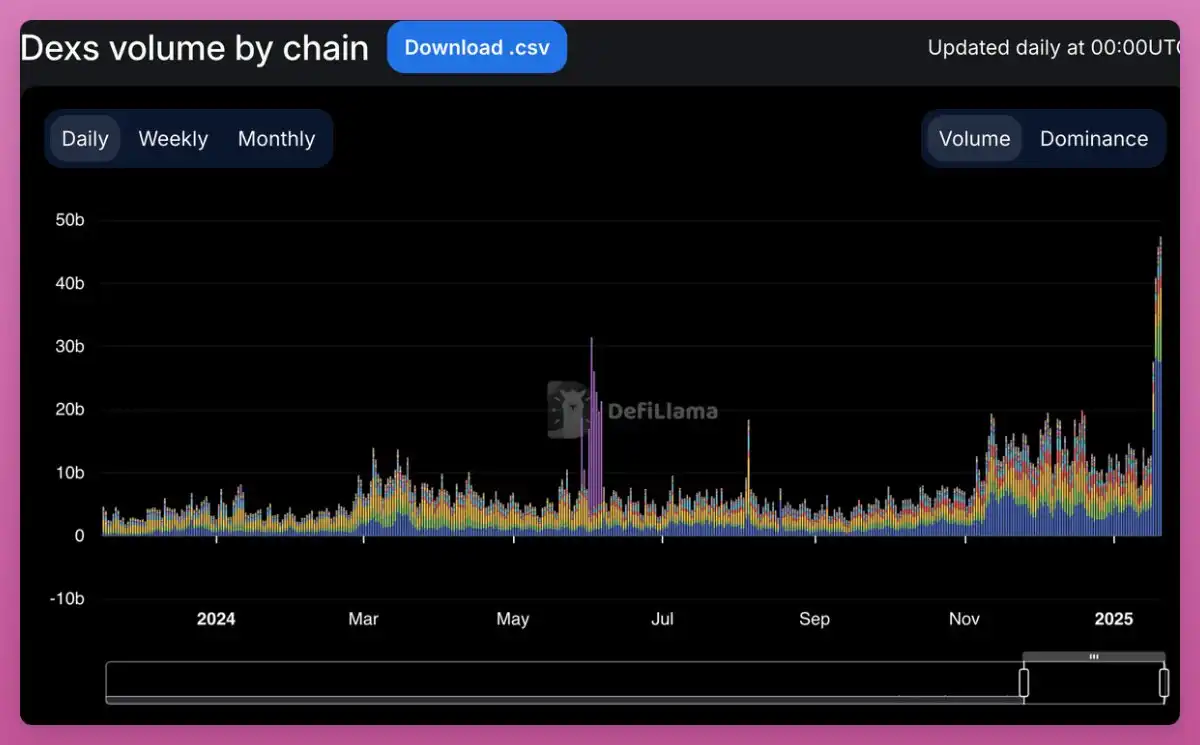
1. DEX Trading Volume Hits Historic High
Solana's Decentralized Exchange (DEX) trading volume reached $27 billion, far surpassing Ethereum's $5 billion.
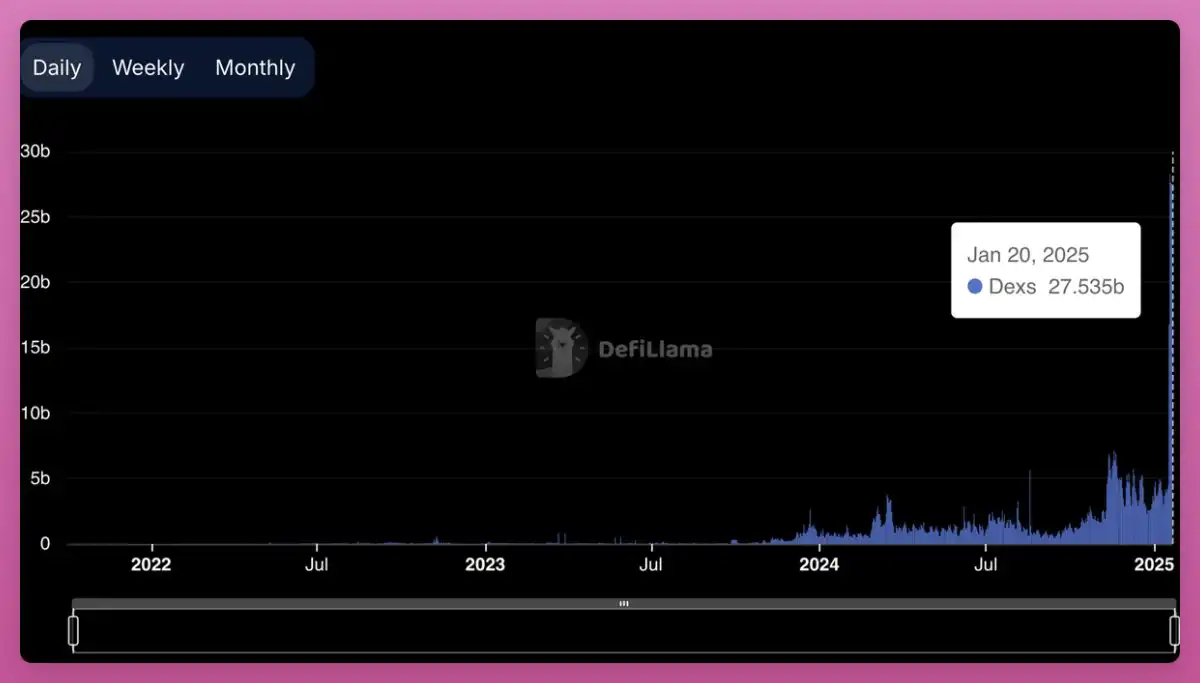
2. Solana DEX Trading Volume Skyrockets
Solana's DEX trading volume surged from an average of about $5 billion to $27 billion, achieving a 5.4x increase.
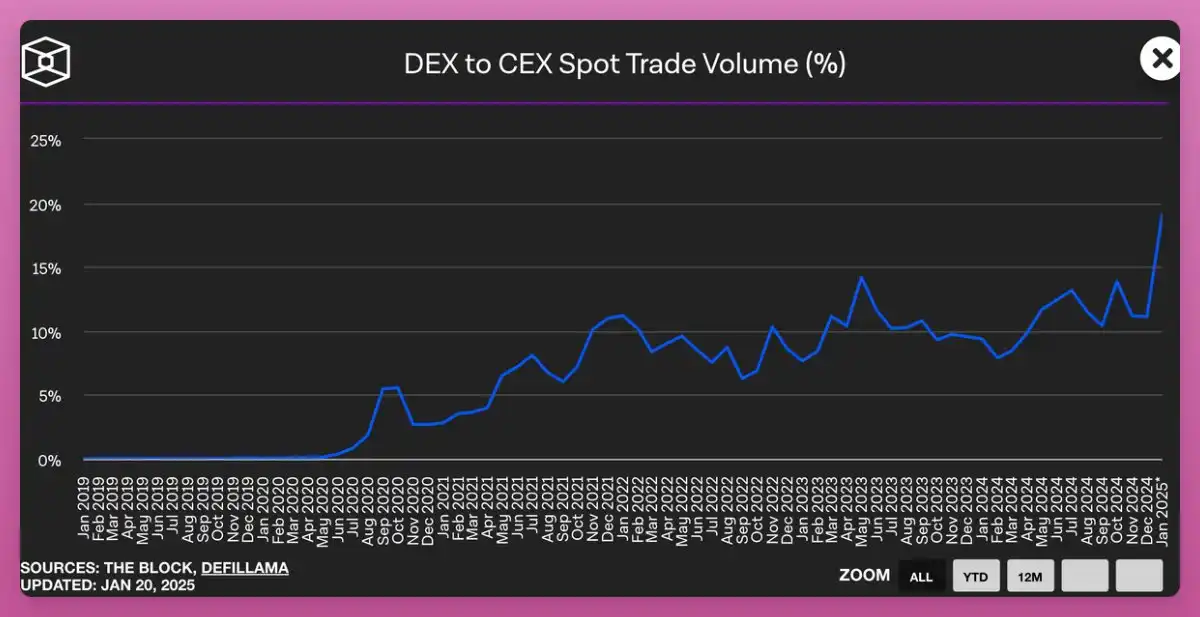
3. DEX to CEX Trading Volume Ratio Reaches Historic High
Due to this phenomenon, the DEX to Centralized Exchange (CEX) trading volume ratio reached a historic high of 19%.
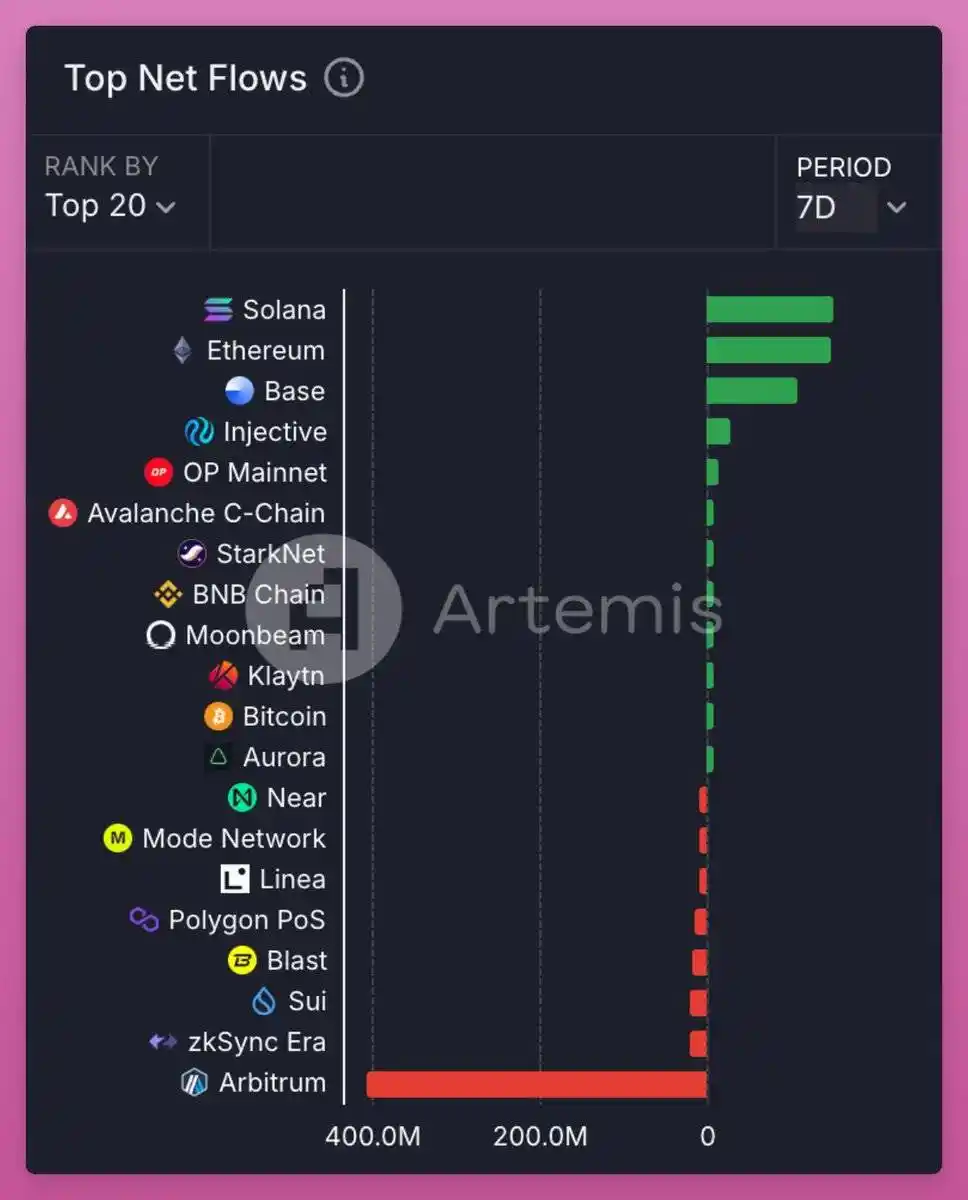
4. Funds Flow from Arbitrum to Solana, ETH, and Base
Data shows that Solana saw a net inflow of $153 million in one week, while Arbitrum lost $405 million.
(Is this situation related to Hyperliquid's cross-chain bridge?)
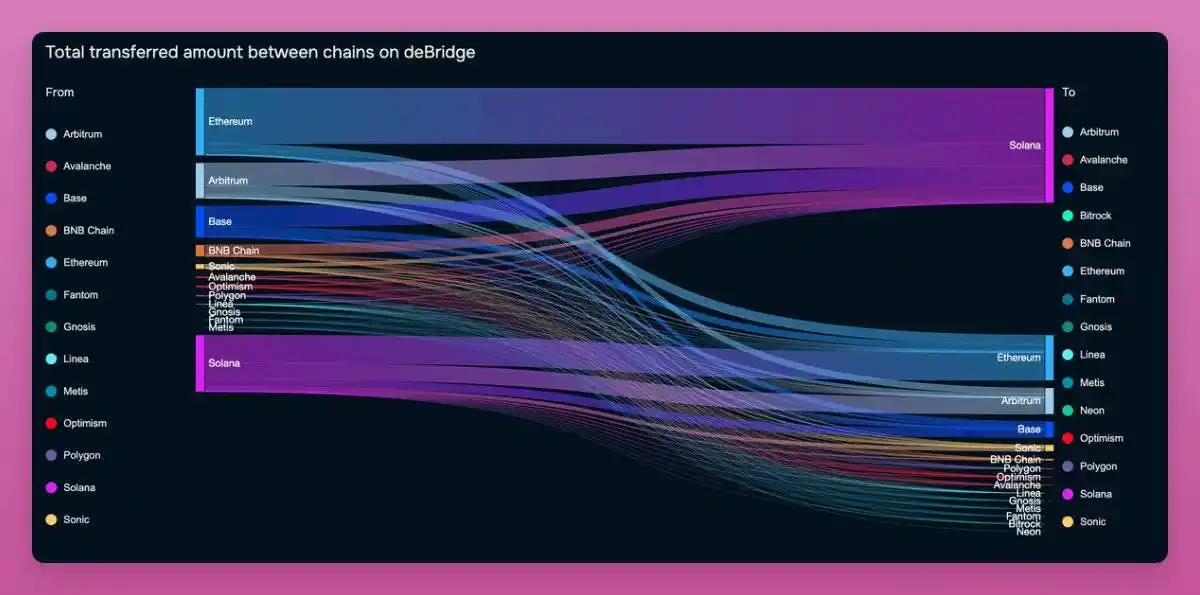
5. Visualized Analysis of Funds Flow to Solana
According to DeBridge's data analysis, Solana saw an inflow of about $300 million in one week, mainly from Ethereum, Base, and Arbitrum.
Meanwhile, Solana's outflow of funds was approximately $140 million.
6. Phantom Activity Surges
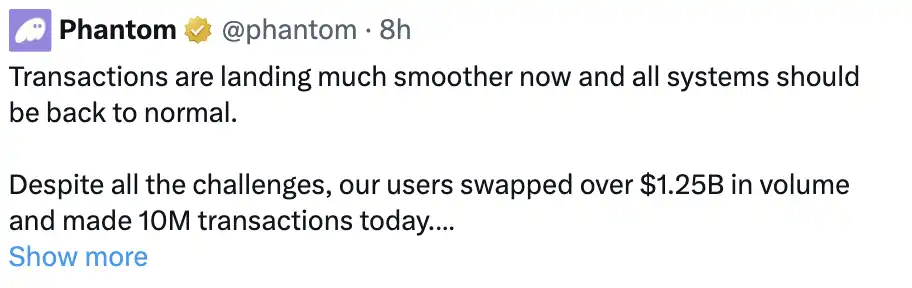
A Phantom report shows that its request volume has exceeded 8 million per minute. The total value of transactions processed through Phantom has reached $1.25 billion, involving 10 million transactions.
Based on the current 0.85% fee rate, Phantom's fee income for this period is approximately $10.6 million.
@phantom: "Transactions are now back to normal, and all systems are functioning properly.
Despite facing significant challenges, our users have achieved over $1.25 billion in transaction volume today and have completed 10 million transactions, demonstrating remarkable performance!"
7. $TRUMP Launch Day Sees Strong SOL Performance
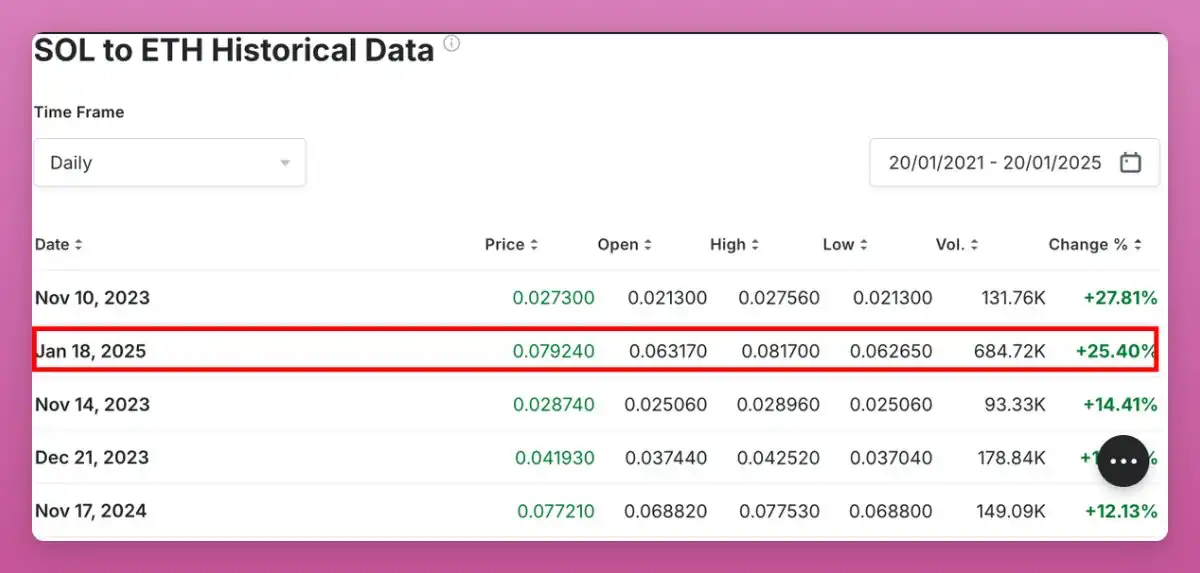
On the day $TRUMP token launched, SOL saw its largest single-day surge against $ETH since 2021, reaching as high as 25%.
This repricing further dampened the morale of the Ethereum community and intensified calls for reform within the Ethereum Foundation.
The possibility of SOL surpassing ETH has become a hot topic of discussion.
8. Solana's Challenge: Soaring Transaction Fees
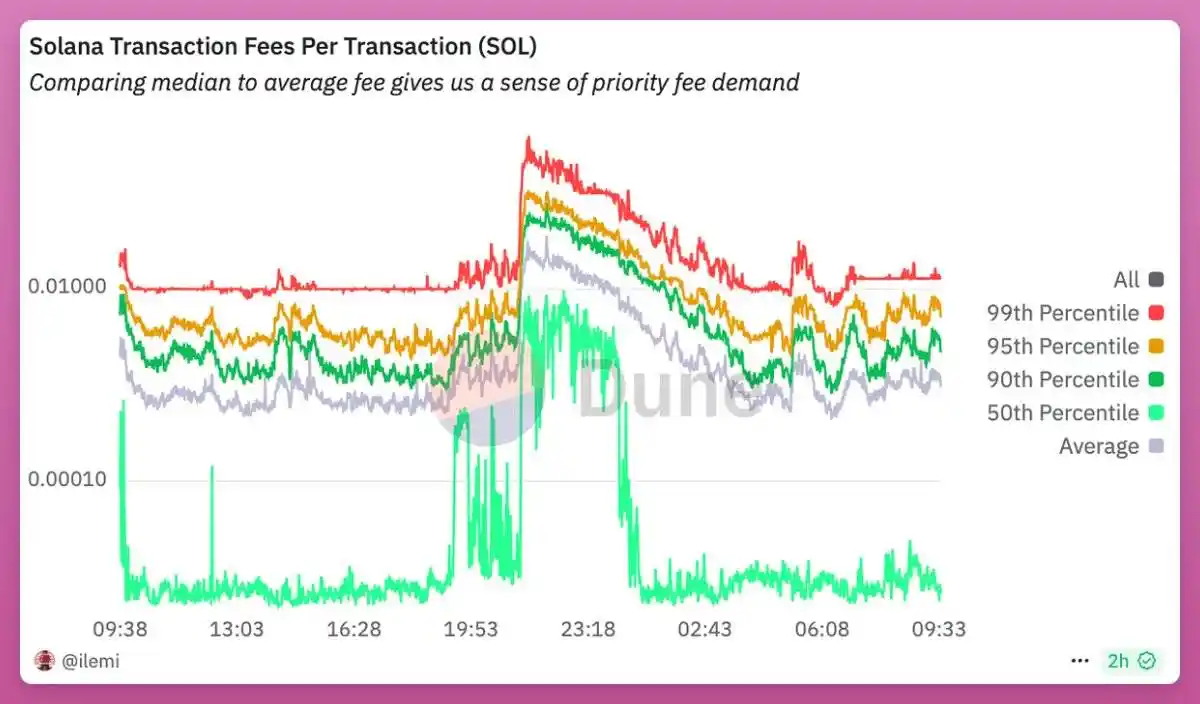
Despite its strong performance, Solana's transaction fees surged an average of 20x during this period, causing many users to experience failed transactions.
9. High Fees Benefit SOL Stakers
The high fees have brought earnings to SOL stakers, with a total fee income of $57 million. Of this, Priority Fees account for $33 million, and Jito Tips for $23.5 million.
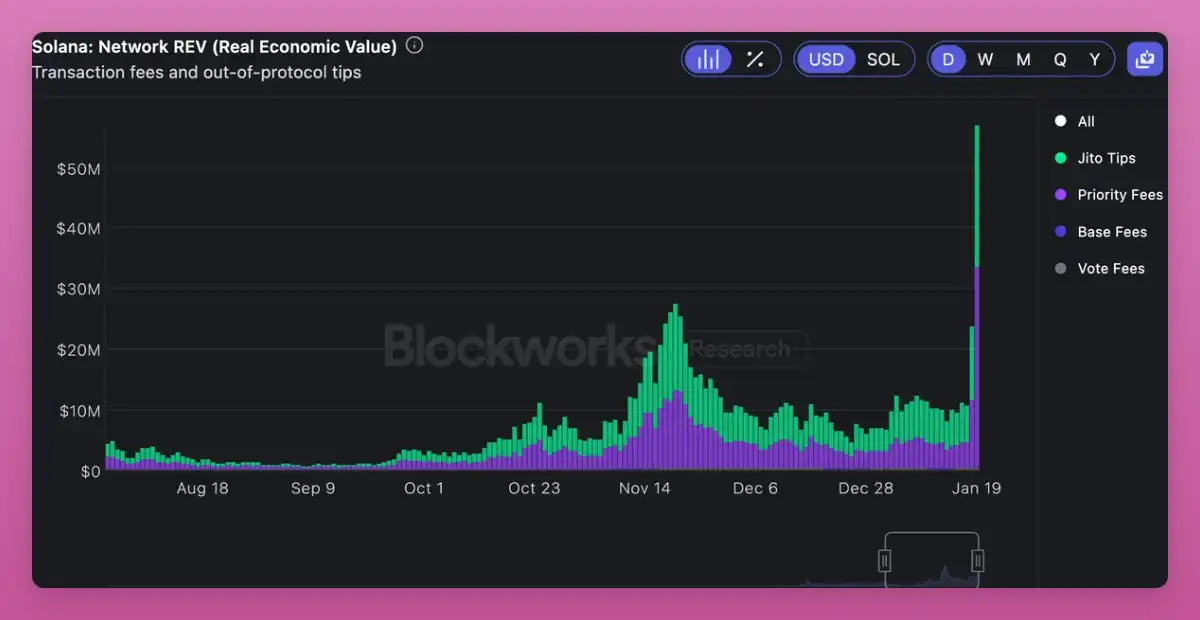
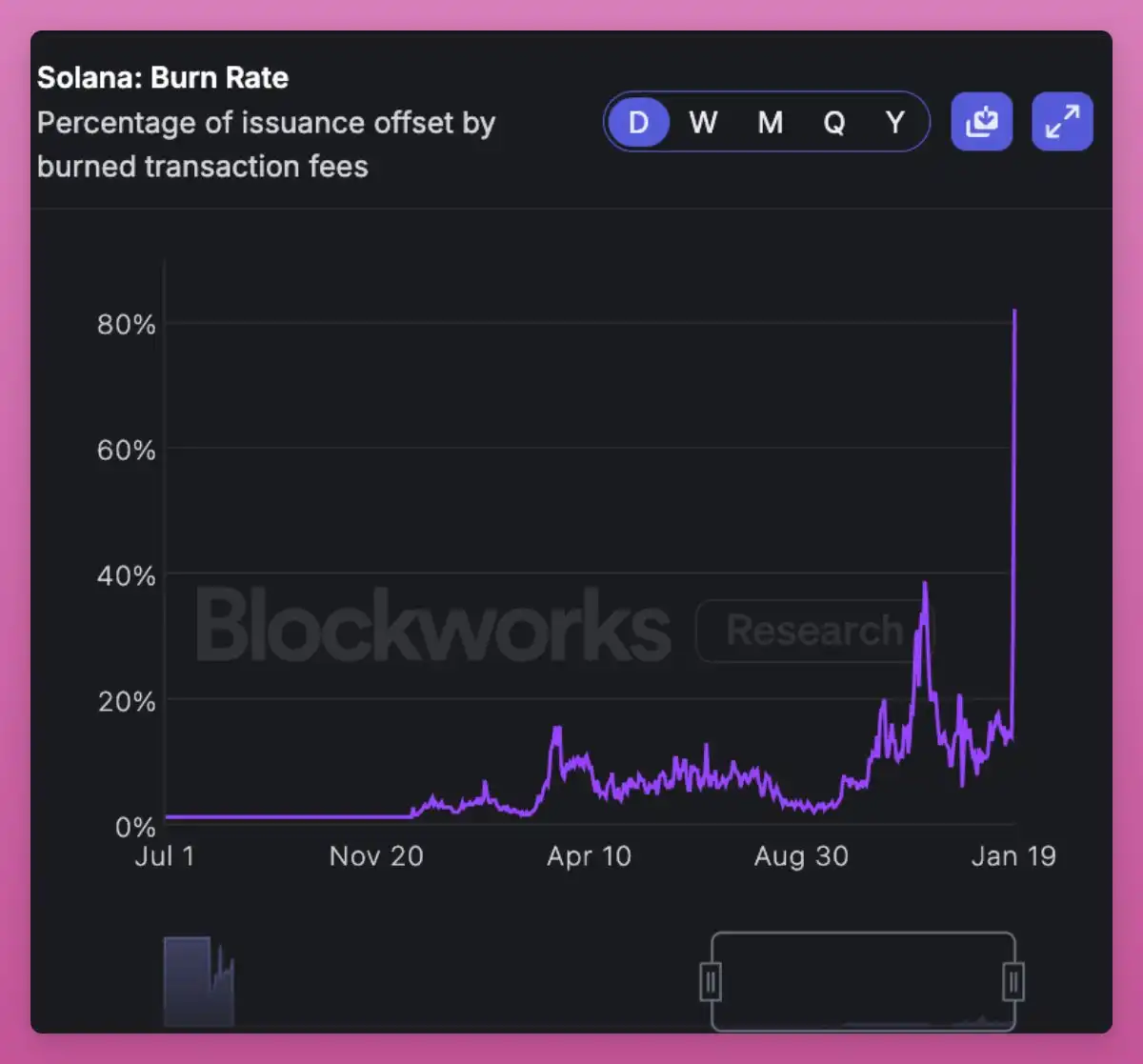
10. Additionally, the amount of $SOL burned has reached a record $16.7 million.
However, don't rush to promote the so-called "ultra-sound money" theory, because even the burn amount of that day is only equivalent to 81% of SOL's daily issuance.
Summary: Solana's Weekend
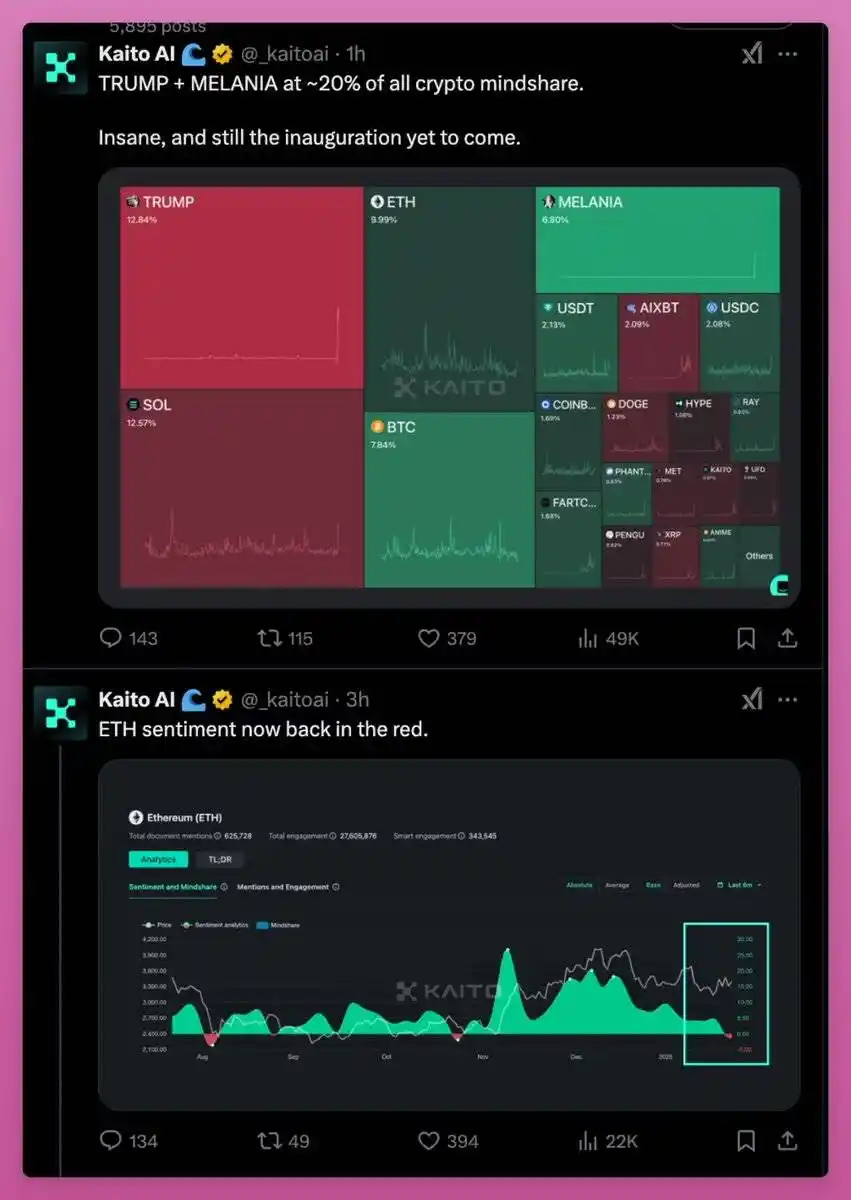
This weekend was undoubtedly Solana's as $TRUMP, MELANIA, and $SOL took center stage in the market. Meanwhile, ETH's market sentiment once again turned negative.
You may also like

Morning News | CME Group launches Nasdaq Cryptocurrency Index futures; Asset management giant Janus Henderson strategically invests in Ethena

Why did Oracle deliver the strongest financial report in history, yet its stock price fell?

Bitcoin Layer 2 Network Botanix: Why Did We Choose to Dissolve?

Morning Report | OpenAI has submitted an S-1 registration statement draft to the U.S. SEC; Morpho completes $175 million financing

Galaxy Deep Research Report: How Hyperliquid's HIP-4 Upgrade Changes the Landscape of Prediction Markets?

Latest research from 13 top universities including Cornell University: The current state, challenges, and misconceptions of the fusion of Crypto and AI
Deconstructing Anthropic: The Best AI Company, Possibly Also a Type of Organizational Invention

Every exchange is a "Universal Exchange."

The counterattack of traditional finance: Alliance chains are quietly reviving
Pantera Capital Partner: How Tokenization is Restructuring the Private Equity and Early Investment Ecosystem?

Mastercard Launches Agent Pay for AI, Plans to Record AI Agent Payment Authorizations on Polygon
Mastercard launched Agent Pay for AI, a new payment protocol designed to help AI agents make small payments such as pay-per-use access to data and APIs. The system plans to record human-granted AI agent permissions on Polygon, focusing on verifiable authorization, identity, and payment controls.

Curve Deploys Llamalend v2 on Optimism With 250,000 OP Incentives
Curve launched Llamalend v2 on Optimism with 250,000 OP incentives from the Optimism Foundation. The upgrade expands Llamalend beyond its earlier crvUSD-focused model, adding broader collateral support, LlamaRisk market reviews, and the ability to use Curve LP tokens as collateral.

Raydium Old Liquidity Pool Reportedly Exploited, With $1.34 Million Moved to Ethereum and Tornado Cash
An old Raydium liquidity pool was reportedly exploited for around $1.34 million in USDC, RAY, and wSOL, with the stolen funds bridged to Ethereum and deposited into Tornado Cash. The incident highlights the tail risks of legacy DeFi pools, old contracts, and cross-chain fund laundering paths.
Kalshi Executive Challenges “SBF Backed AI Unicorns” Narrative, Says Leopold Aschenbrenner Was Key Figure
Kalshi executive John Wang questioned the “SBF backed AI unicorns” narrative, saying Leopold Aschenbrenner was the key figure behind major AI investment decisions.

New York Proposes Stricter Stablecoin Issuer Rules Aligned With Federal GENIUS Act
NYDFS proposed stricter stablecoin issuer rules aligned with the GENIUS Act, covering reserves, custody, redemption timelines, audits, and capital buffers.

CryptoQuant Says Bitcoin Profitable Supply Is Near 45% Pressure Zone as On-Chain Data Points to Market Repricing
CryptoQuant said Bitcoin’s profitable supply is nearing the 45% pressure zone, signaling rising market stress, unrealized losses, and a possible on-chain repricing phase.

Bitcoin Falls Below 200-Week Moving Average as On-Chain Data Shows Over Half of Supply in Loss
Bitcoin dropped below its 200-week moving average as on-chain data showed over 50% of circulating supply is now in loss, signaling rising market stress.

CFTC Reportedly Plans New Prediction Market Rules Focused on Manipulation Risk and Public Interest Review
The CFTC is reportedly preparing new prediction market rules focused on manipulation risk, public interest review, and retail trader protections.
Morning News | CME Group launches Nasdaq Cryptocurrency Index futures; Asset management giant Janus Henderson strategically invests in Ethena
Why did Oracle deliver the strongest financial report in history, yet its stock price fell?
Bitcoin Layer 2 Network Botanix: Why Did We Choose to Dissolve?
Morning Report | OpenAI has submitted an S-1 registration statement draft to the U.S. SEC; Morpho completes $175 million financing
Galaxy Deep Research Report: How Hyperliquid's HIP-4 Upgrade Changes the Landscape of Prediction Markets?
Latest research from 13 top universities including Cornell University: The current state, challenges, and misconceptions of the fusion of Crypto and AI


