
 Buy Crypto
- Markets
 Futures
- Spot
- Copy Trade
- Earn
- More
Counting the Five Major Trends in the AI Wave: The Future Will See 1 Billion Agents On-chain



Original Title: 5 categories to watch for in crypto x AI agents (+ examples)
Original Author: 0x3van
Translation: Azuma, Odaily Planet Daily

AI is the theme of this era, and many believe that it is a track that will continue to exist and evolve. On the other hand, there are also many valid criticisms, arguing that most AI Agents today are superficial, and we still need 3-5 years to make this technology more meaningful.
As a preface, the project categories of Crypto x AI span multiple levels. The true technical prospects of Crypto x AI are mostly related to better reasoning through Crypto-economic incentives or providing decentralized access to computation. Delphi's article is a good starting point to understand the entire stack.
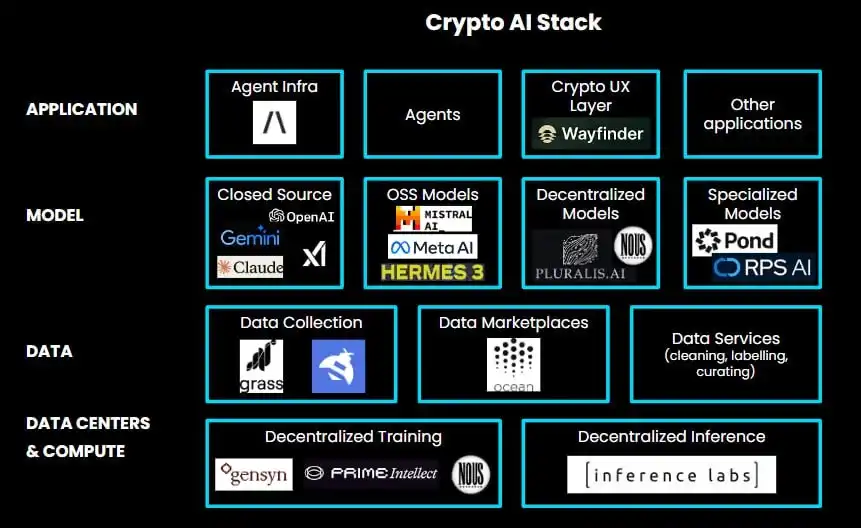
However, this article focuses on the current state of affairs in terms of Agents. While there are exciting innovations at a deeper level of the stack, Agents seem to have attracted the attention of the mainstream cryptocurrency community. As Crypto x AI Agents continue to evolve, here are 5 trends worth watching.
Trend One | Framework + Launchpad: Value accrual is starting to matter, and frameworks may persist
Value accrual is starting to matter. Why is this happening?
Stepping back, why do people hold assets? People acquire assets for two main reasons:
· They can sell the asset to someone else at a higher price due to catching a narrative rotation that brings in new buyers;
· Over time, the asset will generate more cash flow for them.
@izebel_eth once wrote in his article "Old Coins Bad, New Coins Good" that the only thing that matters is the flow of funds. The following two reasons reflect two bullish fund flows:
· New Holder Growth;
· Token Burning (leaning towards deflation);
However, in most cases, we haven't seen any situations resembling true token deflation or value accrual. Token usage through proxy agents (such as AIXBT) is more akin to staking rather than traditional value accrual.
This is also why frameworks like Virtuals, ai16z, Zerebro, and arc have recently gained significant popularity. ai16z was initially primarily an investment DAO, but has become a standout in such protocols since releasing detailed information on the upcoming launchpad and token value accrual.
Today, the space for frameworks + launchpads is very saturated, with first-mover advantage propelling their success. There are many valid doubts surrounding the utility of these launchpads as many proxies themselves are of little use. However, those frameworks (like eliza V2 + launchpad, zentients, arc, and its handshake scheme) have also not rolled out their main products. If they successfully attract developers and users, they might continue to lead the pack.
Why will frameworks persist?
· Regardless of whether an Agent has real value, frameworks used to launch Agents will perform well as they still have "Product-Market Fit" (PMF) with speculation. Frameworks + launchpads allow users to own both a factory and a casino simultaneously. Virtuals has, to some extent, replaced pump.fun in the Base ecosystem.
· More optimistically, with technological progress, leading frameworks may introduce more advanced Agents, and the development speed of open-source software libraries like Eliza will be faster. Many of these launch platforms will also act as a coordination layer for groups and Agent communication, which will involve some form of value transfer using their tokens. For more in-depth articles on Eliza's value capture, like the one Teng Yan wrote last week, check out this one.
Virtuals, ai16z, Zerebro, and arc are the major players in this space currently, but the launchpad space is becoming increasingly saturated. The frameworks that iterate the fastest, have the strongest scalability, and offer the most unique features are the ones to watch.
Trend 2 | The Next Wave of Agents Will Prioritize Utility and Value Accumulation, and DeFAI (DeFi x AI) May Be the First-Class Product-Market Fit Agent
Most Agents only have meme tokens, lacking utility. To enable the growth of the Agent industry, the next wave of Agents must further enhance their use cases. New opportunities will come from those Agents that can truly accumulate value and take action. I believe that, within the next year, first-class Agents will rise to the level of third-class Agents.
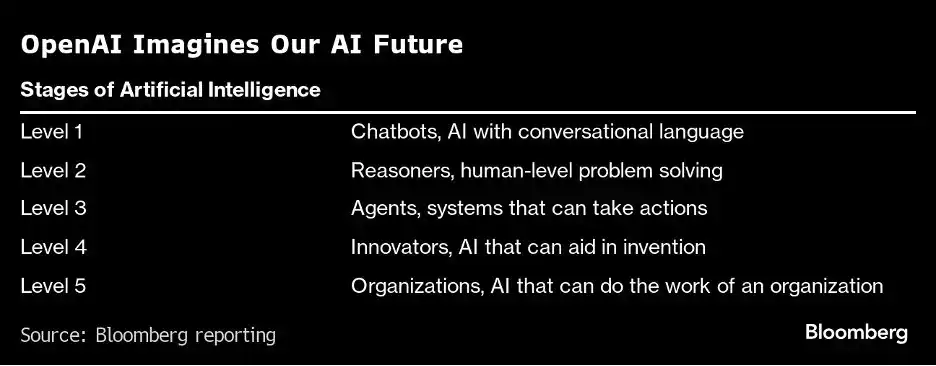
We will first see this in the DeFi space. We will see more interfaces allowing people to express desired outcomes in natural language or voice, as well as Agents that can execute tasks behind the scenes. Existing wallets and protocols will also integrate Agents to improve user experience.
Representative projects include: Wayfinder, griffain, Hey Anon, Limitus, neur.
You can learn more from 0xJeff's article.
Trend 3 | Consumer Layer: Entertainment Agents, Autonomous Worlds, and the Renaissance of Gaming
Attention-driven Agents will develop more complex personalities and multimedia interactivity. This may trigger the next wave of gaming and metaverse technologies.
One issue with existing Agents is that they are starting to become increasingly similar, turning into commodified, exaggerated chatbots. While some Agent projects will pivot towards infrastructure (many projects have already done so), some are beginning to think about useful products/applications, while others may continue down the path of attention tokens. However, the next generation of attention-driven Agents will be better, develop more complex personalities, and offer greater interaction possibilities. This can be achieved through audiovisual forms, or by giving Agents a three-dimensional presence and physical embodiment.
Early attempts have already been made in this direction—Jeffy once wrote an article about implanting a body to Zerebro, and some well-known KOL Agents have been launched directly through audiovisual formats such as short videos. Slopfather and Ropirito are two early Agents that have adopted a video mode.
However, I believe more Agent projects will incorporate these features to make Agents more dynamic. Product-market fit (PMF) in this space will be achieved through the consumer layer, where individual users may want to create personalized Agent companions or interact with KOLs. This scenario has been gradually popularized outside of cryptocurrency, with some users spending hundreds of hours conversing with AI companions on websites like character.ai, a company recently acquired by Google for $2.7 billion.
Furthermore, these 3D Agents may find market fit in existing consumer layers, especially in gaming and the metaverse. Agents can add a deeper backstory to the world of the story. Imagine having an Agent act as an NPC in a game, able to autonomously complete quests or play games, with evolving memories and personalities. A true self-sovereign gaming world may be realized through Agents.
Representative projects include:
· soulgraph aims to provide tools for Agents to have more customized personalities and memories;
· Holoworld AI has established Web2 partnerships with companies such as L'Oréal, Bilibili, and Fox to create digital avatars.
There are also representative projects in the fields of gaming, metaverse, virtual worlds, autonomous Agents, etc.:
· Hyperfy is a metaverse platform that allows anyone to create virtual worlds and adopts the Eliza plugin;
· Parallel Colony is an AI simulation game where the Agents are the players, and you can interact with them;
· Digimon is a creature game similar to Pokémon, where creatures evolve mentally based on interactions;
· SMOL also uses the Eliza framework, with characters in the game being Agent-driven by LLM, able to take actions in the virtual world based on your commands.
Trend Four | Agentic Organizations: The Return of DAOs
Decentralized Agentic Organizations are the next form of DAO evolution. Swarm or multi-Agent systems are exciting because they can coordinate and execute more advanced strategies, akin to running a company. Heterogeneous swarms composed of many different types of professional Agents/models collaborating may outperform single large models.
While fully autonomous Agents and swarms may still be far off, the next iteration of DAOs is likely to be about human interaction with groups. This will reduce bureaucratic inefficiencies and lower the cost and time of human execution. In the context of capital flow, the next step for an income-earning Agent is to become a complete organism that earns income.
Representative projects include:
· Agent Swarm Infrastructure: Projects such as SwarmNode.ai, FXN, etc., are specifically engaged in multi-Agent framework and coordination infrastructure projects. More mainstream Agent proxy frameworks like Zerebro and ai16z have also expressed interest in building at this layer.
· DAO Launchpad: Most early traffic we see is focused on investment-type DAOs. I believe daos.fun will be the first major DAO launchpad, nurturing ai16z. There are also some newer launch platforms like daos.world, where AI-driven funds like 3BC are gaining attention.
Trend Five | Verifiable Agent: Current Agents will evolve towards greater autonomy and true ownership of their liquidity
Currently, most Agents require a high degree of human intervention. The next wave of Agents will move towards true autonomy, starting from managing their own funds.
The intersection of Agents and cryptocurrencies lies in the fact that cryptocurrencies provide a financial path for true economic Agents. However, most Agents do not control their treasuries themselves; instead, they entrust their treasuries to human teams. To achieve true economic Agents, Agents must be able to autonomously manage their funds. This will allow Agent behavior to start evolving, as you can impose economic constraints on Agents, making them bear the cost of their own reasoning, thus introducing Darwinism to the Agent world—they must earn income to survive.
Representative projects include:
· Freysa is one of the first Agents to control itself and has performed well (including gaining Musk's attention). Recently, they announced that they are building a framework that gives Agents verifiable autonomy in TEE + Agent control keys;
· Lit Protocol also has an Agent framework that allows autonomous Agents to perform on-chain transactions through private key storage and execution systems;
· Galadriel has released an SDK called Proof of Sentience, enabling developers to perform full validation of Agents on-chain.
Epilogue: Before we see 1 billion people on-chain, we will first see 1 billion Agents on-chain
The user experience of cryptocurrency itself is not very human-friendly. However, Agents are not concerned with this friction. We will start with human-to-Agent interaction, but the development direction of cryptocurrency AI is Agent-to-Agent interaction, where swarms of autonomous Agents will interact and transact on-chain, managing their own financial affairs.
For Agents to have economic power, enabling them to incentivize behavior (pay for services) and coordinate real-world activities, they need the ability to control and deploy capital. Cryptocurrency is the "home planet" of these Agents—blockchain will allow Agents to participate in permissionless financial activities. Stablecoins and high-performance Layer 1 are ideal tools for achieving cost-effective, 24/7, global transactions.
Beyond current hype and narratives, we have every reason to remain long-term excited about the on-chain Agent economy. Many real-world use cases, including DAOs and revenue-generating Agents, are much closer than we imagine.
You may also like

Prediction Markets Under Bias

Stolen: $290 million, Three Parties Refusing to Acknowledge, Who Should Foot the Bill for the KelpDAO Incident Resolution?

ASTEROID Pumped 10,000x in Three Days, Is Meme Season Back on Ethereum?

ChainCatcher Hong Kong Themed Forum Highlights: Decoding the Growth Engine Under the Integration of Crypto Assets and Smart Economy

Why can this institution still grow by 150% when the scale of leading crypto VCs has shrunk significantly?

Anthropic's $1 trillion, compared to DeepSeek's $100 billion

Geopolitical Risk Persists, Is Bitcoin Becoming a Key Barometer?

Annualized 11.5%, Wall Street Buzzing: Is MicroStrategy's STRC Bitcoin's Savior or Destroyer?

An Obscure Open Source AI Tool Alerted on Kelp DAO's $292 million Bug 12 Days Ago

Mixin has launched USTD-margined perpetual contracts, bringing derivative trading into the chat scene.
The privacy-focused crypto wallet Mixin announced today the launch of its U-based perpetual contract (a derivative priced in USDT). Unlike traditional exchanges, Mixin has taken a new approach by "liberating" derivative trading from isolated matching engines and embedding it into the instant messaging environment.
Users can directly open positions within the app with leverage of up to 200x, while sharing positions, discussing strategies, and copy trading within private communities. Trading, social interaction, and asset management are integrated into the same interface.
Based on its non-custodial architecture, Mixin has eliminated friction from the traditional onboarding process, allowing users to participate in perpetual contract trading without identity verification.
The trading process has been streamlined into five steps:
· Choose the trading asset
· Select long or short
· Input position size and leverage
· Confirm order details
· Confirm and open the position
The interface provides real-time visualization of price, position, and profit and loss (PnL), allowing users to complete trades without switching between multiple modules.
Mixin has directly integrated social features into the derivative trading environment. Users can create private trading communities and interact around real-time positions:
· End-to-end encrypted private groups supporting up to 1024 members
· End-to-end encrypted voice communication
· One-click position sharing
· One-click trade copying
On the execution side, Mixin aggregates liquidity from multiple sources and accesses decentralized protocol and external market liquidity through a unified trading interface.
By combining social interaction with trade execution, Mixin enables users to collaborate, share, and execute trading strategies instantly within the same environment.
Mixin has also introduced a referral incentive system based on trading behavior:
· Users can join with an invite code
· Up to 60% of trading fees as referral rewards
· Incentive mechanism designed for long-term, sustainable earnings
This model aims to drive user-driven network expansion and organic growth.
Mixin's derivative transactions are built on top of its existing self-custody wallet infrastructure, with core features including:
· Separation of transaction account and asset storage
· User full control over assets
· Platform does not custody user funds
· Built-in privacy mechanisms to reduce data exposure
The system aims to strike a balance between transaction efficiency, asset security, and privacy protection.
Against the background of perpetual contracts becoming a mainstream trading tool, Mixin is exploring a different development direction by lowering barriers, enhancing social and privacy attributes.
The platform does not only view transactions as execution actions but positions them as a networked activity: transactions have social attributes, strategies can be shared, and relationships between individuals also become part of the financial system.
Mixin's design is based on a user-initiated, user-controlled model. The platform neither custodies assets nor executes transactions on behalf of users.
This model aligns with a statement issued by the U.S. Securities and Exchange Commission (SEC) on April 13, 2026, titled "Staff Statement on Whether Partial User Interface Used in Preparing Cryptocurrency Securities Transactions May Require Broker-Dealer Registration."
The statement indicates that, under the premise where transactions are entirely initiated and controlled by users, non-custodial service providers that offer neutral interfaces may not need to register as broker-dealers or exchanges.
Mixin is a decentralized, self-custodial privacy wallet designed to provide secure and efficient digital asset management services.
Its core capabilities include:
· Aggregation: integrating multi-chain assets and routing between different transaction paths to simplify user operations
· High liquidity access: connecting to various liquidity sources, including decentralized protocols and external markets
· Decentralization: achieving full user control over assets without relying on custodial intermediaries
· Privacy protection: safeguarding assets and data through MPC, CryptoNote, and end-to-end encrypted communication
Mixin has been in operation for over 8 years, supporting over 40 blockchains and more than 10,000 assets, with a global user base exceeding 10 million and an on-chain self-custodied asset scale of over $1 billion.

$600 million stolen in 20 days, ushering in the era of AI hackers in the crypto world
Vitalik's 2026 Hong Kong Web3 Summit Speech: Ethereum's Ultimate Vision as the "World Computer" and Future Roadmap
On the same day Aave introduced rsETH, why did Spark decide to exit?
Full Post-Mortem of the KelpDAO Incident: Why Did Aave, Which Was Not Compromised, End Up in Crisis Situation?

After a $290 million DeFi liquidation, is the security promise still there?
ZachXBT's post ignites RAVE nearing zero, what is the truth behind the insider control?

Vitalik 2026 Hong Kong Web3 Carnival Speech Transcript: We do not compete on speed; security and decentralization are the core









 App
App