
 Buy Crypto
- Markets
 Futures
- Spot
- Copy Trade
- Earn
- More
Buzz Explodes the Wealth Effect: A Comprehensive Inventory of DeFI Race Track Projects

DeFAI, short for DeFi + AI, simplifies the complex DeFi interface and operations through AI technology, reducing the entry barriers for the general public and making DeFi more accessible. DeFAI has built a grand vision—in the future, through AI Agents and various AI-powered platforms, managing one's investment portfolio will be as simple as chatting with ChatGPT, allowing everyone to easily participate in decentralized market trading.
Currently, the DEFAI projects on the market can be roughly divided into three categories: Assistant category, aiming to simplify operations; Trading category, assisting in investment decisions; dApps category, building ecosystems. Below, the author will outline each project in each category.
Assistant Category
Prior to AI, "intent narrative" has always been trying to simplify the use of DeFi platforms. Platforms like CoWSwap and symm io allow users to obtain the best pricing in fragmented liquidity pools, addressing liquidity fragmentation issues. However, they did not solve the core issue: DeFi still feels difficult.
Currently, AI-driven solutions are bridging this gap, where users only need to express their intent, and the AI agent can directly execute the instructions.
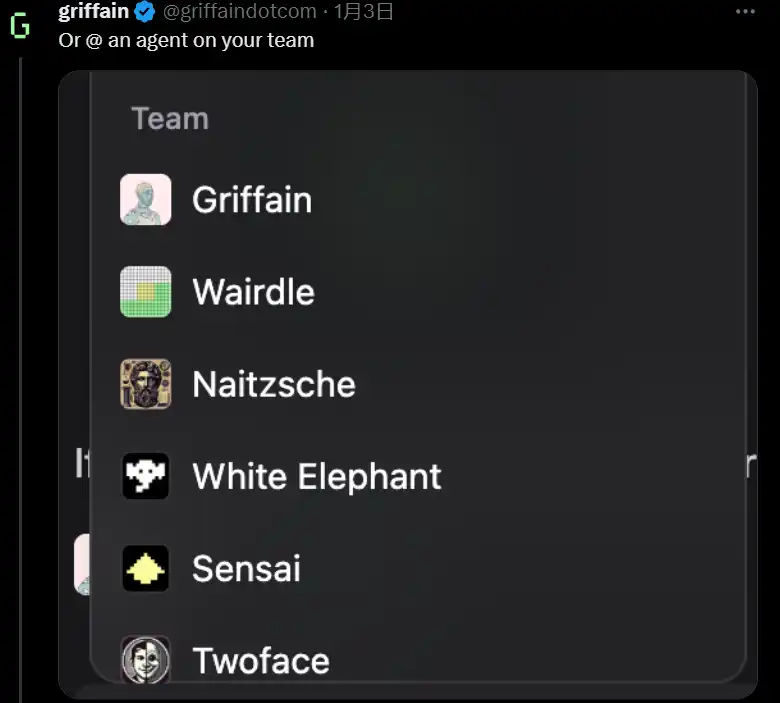
griffain
Griffain is a new AI Agent built on the Solana blockchain. Its design aims to simplify the interaction between users and cryptocurrency by integrating personal and professional AI agents. Griffain can automatically perform tasks such as wallet management, token trading, and NFT minting. It allows users to execute various operations from simple to complex, such as dollar-cost averaging (DCA), launching memecoins, and conducting airdrops.
grift
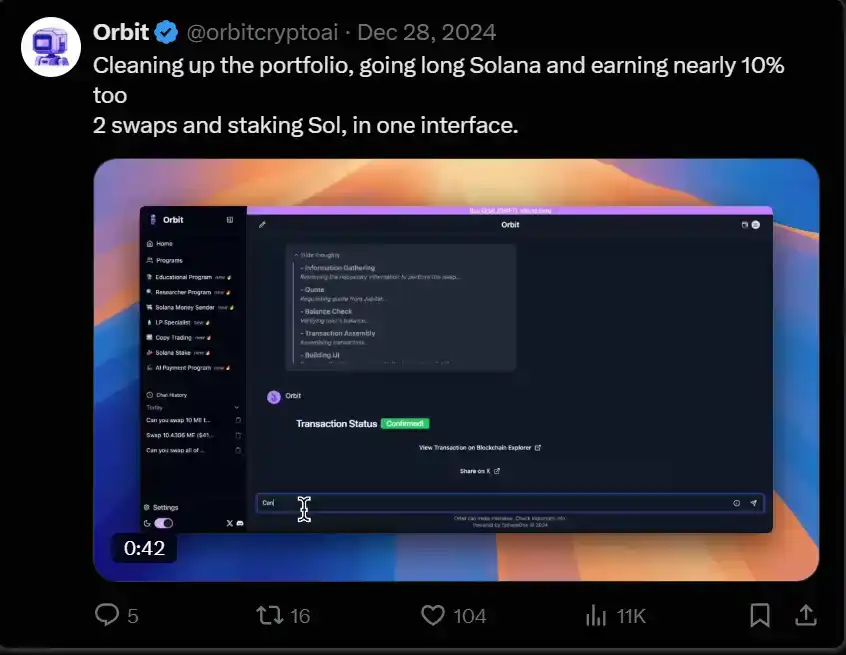
Grift is an AI agent token launched by the AI infrastructure protocol SphereOne team (backed by Coinbase and Google), making Meme trading even easier. With just one click, users can scan high-volume memes and automatically purchase with GRIFT, saving transaction time and effort. SphereOne is a cross-chain crypto payment platform, and its AI trading tools have been market-validated. Orbit/Grift is the second project to release a token, with a product that aims to enhance the on-chain DeFi experience. Orbit emphasizes cross-chain functionality, as it has integrated over 117 chains and 200 protocols, making it the protocol with the highest integration count among the three.
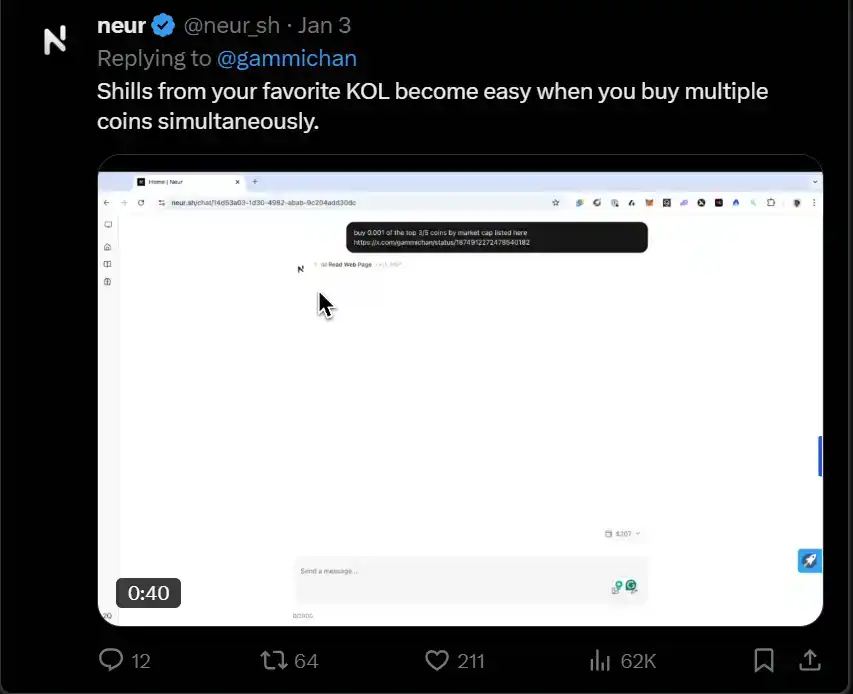
neur
Similar to Griffain, Neur is an intelligent AI assistant on the Solana blockchain that can provide functions such as creating/checking/managing wallets, Swap/DCA/limit orders, trading NFTs, token analytics, popular tokens, token recommendations, creating and sharing Blink-issued tokens, and more. Neur is the third project to launch a token, but due to its open-source nature, it quickly surpassed Orbit in valuation. Neur positions itself as Solana's co-pilot, designed specifically for the Solana ecosystem. Neur is supported by sendaifun's Solana Agent Kit.
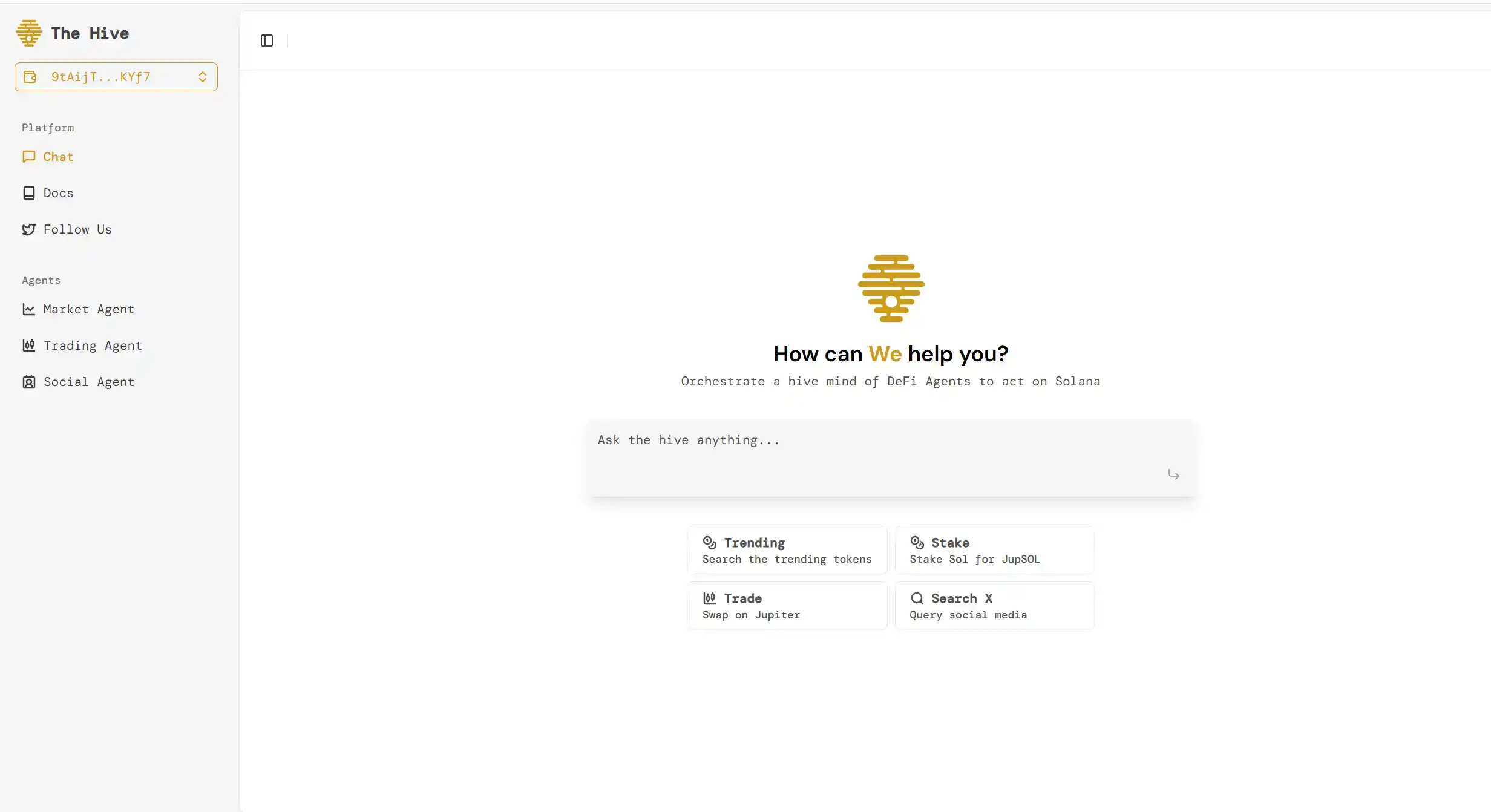
Buzz
Buzz is a platform that helps users easily navigate DeFi, acting like a super-intelligent bee specialized in handling transactions, staking, borrowing, and other complex DeFi operations. Users only need to tell it what they want to do through chat commands, and it will automatically execute the task. It can also combine different needs into customized strategies. For example, setting conditions to trigger automatic actions based on price fluctuations. The platform also supports developers to add new features.
Trading
From capturing alpha through information mining to manually executing trades and optimizing portfolios based on indicators, achieving rapid, efficient, and strictly planned execution is a highly challenging and counterintuitive task for a human trader. However, for an AI agent, all it takes is one command to perform perfectly. Autonomous trading agents have taken trading bots to a new level, as they can adapt, learn, and make smarter decisions over time.
Trading bots are not a new concept, but AI agents and trading bots have fundamental differences. AI agents can extract information from a constantly changing environment, continually optimize their models based on market data, and ultimately execute instructions for maximizing returns without explicit programming from their owners.
Kira
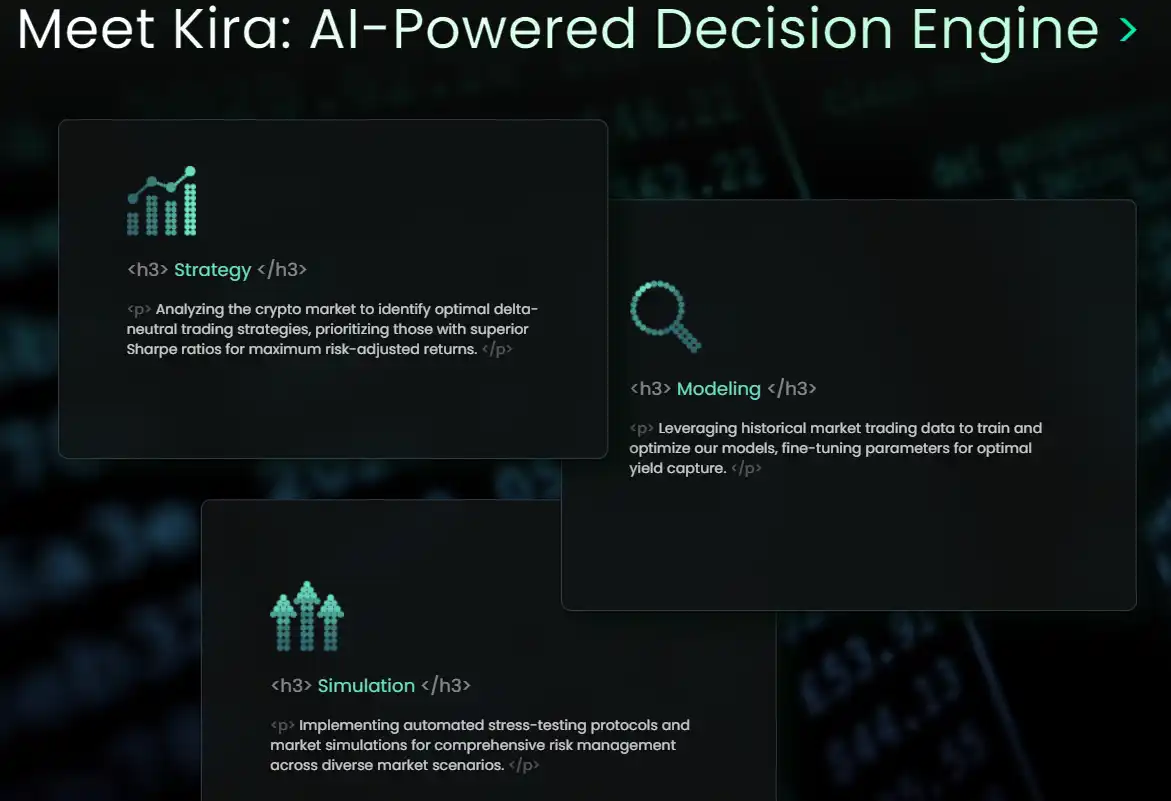
Kira is an AI agent for hedge fund managers. It analyzes the market, predicts trends, and optimizes strategies. Kira uses historical market trading data to train and optimize its models, can analyze the cryptocurrency market to determine the best delta-neutral trading strategy, prioritizes strategies with high Sharpe ratios to achieve maximum returns, and implements automated stress testing protocols and market simulations for comprehensive risk management across different market scenarios.
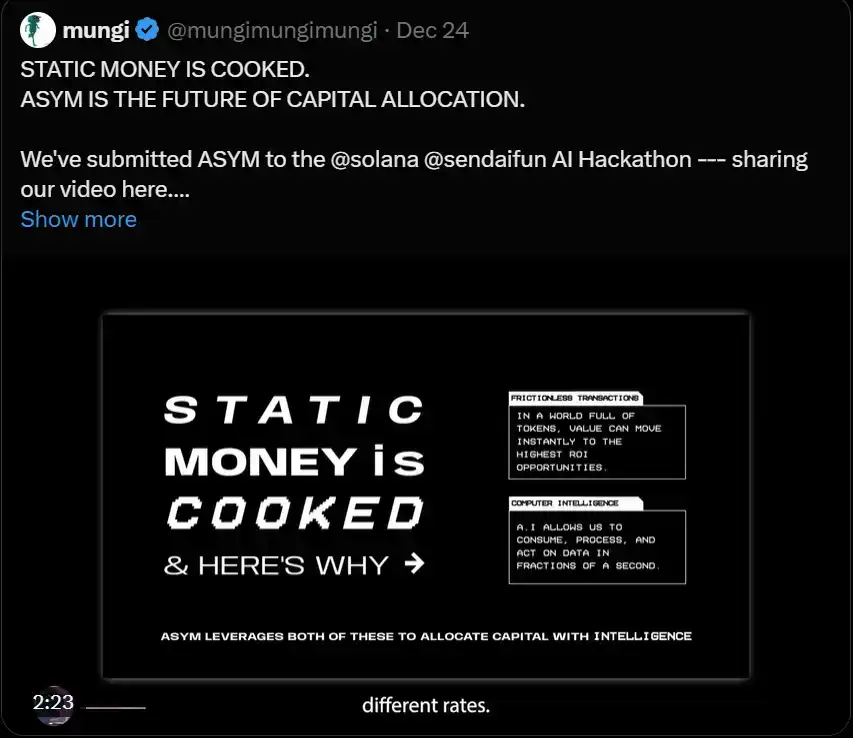
ASYM41b07
ASYM is a project aimed at generating profit and returning it to the $ASYM agent network. The first real-time agent on the ASYM infrastructure monitors the pumpdotfun token, analyzes trends, and executes trades using a price prediction model.
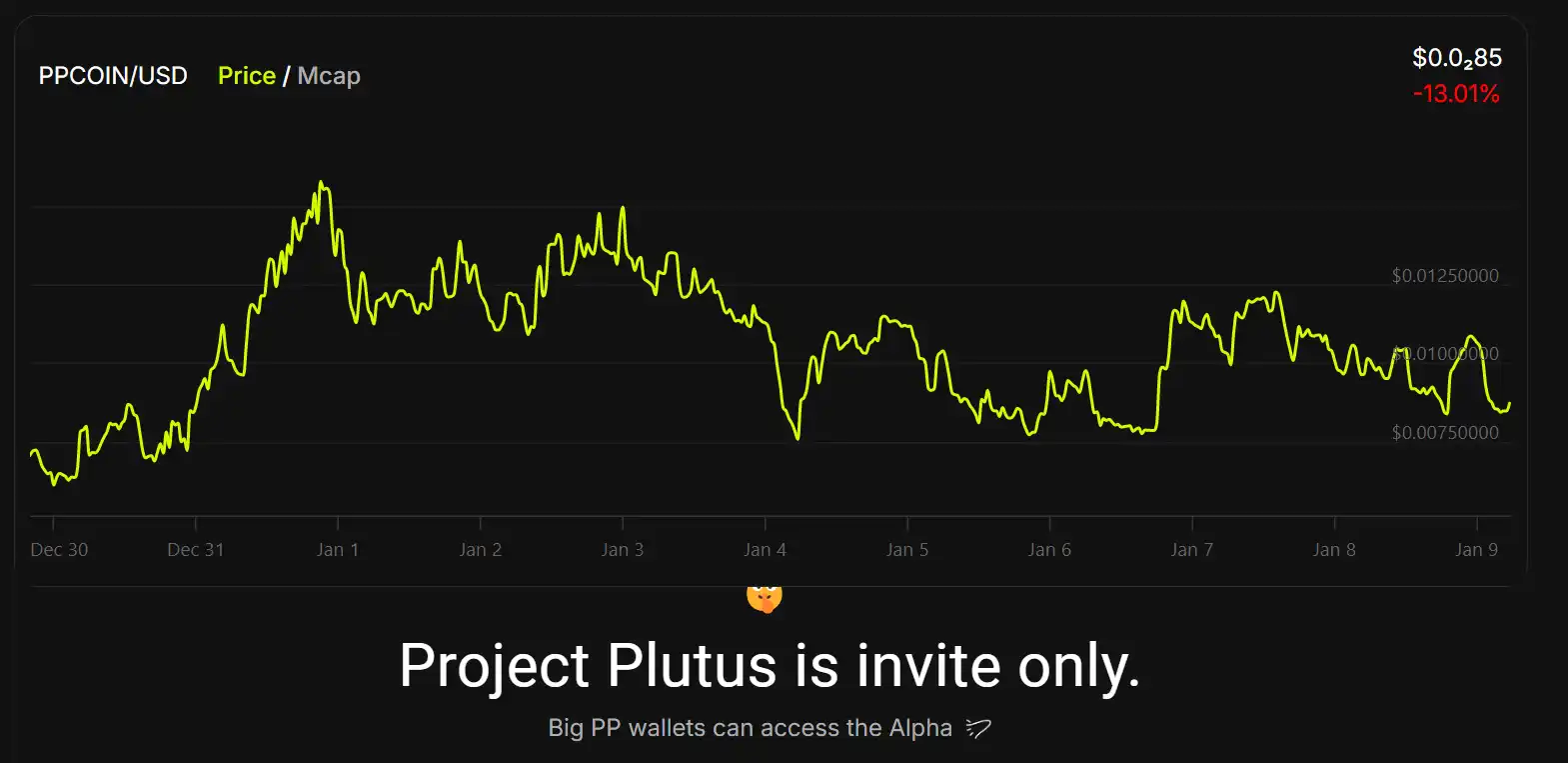
ProjectPlutus
Project Plutus provides a reliable AI agent trading partner that utilizes real-time data for analysis and executes Dollar-Cost Averaging (DCA), integrated with the sendaifun Solana AI Agent Kit. In addition to basic trading strategies and target inclinations, future plans include the ability to review open-source or on-chain contracts if feasible. Automation along with token analysis and fraud detection will give the trading strategy an edge over other projects in the blockchain dark forest.
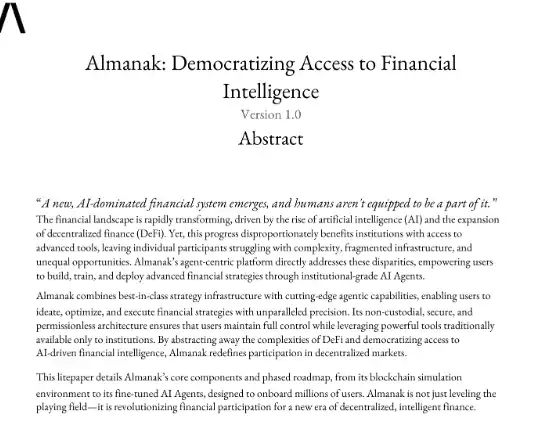
Almanak
Almanak is an agent-centric platform that allows users to build, train, and manage financial strategies using AI agents. It provides users with institutional-grade quantitative AI agents, addressing the complexity, fragmentation, and execution challenges in DeFi. Almanak's infrastructure supports the creativity, creation, evaluation, optimization, deployment, and monitoring of financial strategies, with the ultimate goal of enabling these agents to learn and adapt over time.
Almanak raised $1 million on legiondotcc, with oversubscription. The next steps include the release of a beta version and the initial deployment of strategies/agents for testing by beta testers. Observing the performance of these quantitative agents will be very interesting.
C.A.T
An autonomous, learning, and trading-executing AI trader aiming to redefine DeFAI. As an AI agent on the Boltrade DEX, C.A.T focuses on tracking and analyzing the top 1,000 wallets, monitoring all on-chain activities, and sharing the latest market dynamics and investment insights on social platform X. C.A.T will serve as the virtual brand image of Boltrade, helping users discover potential high-quality projects.
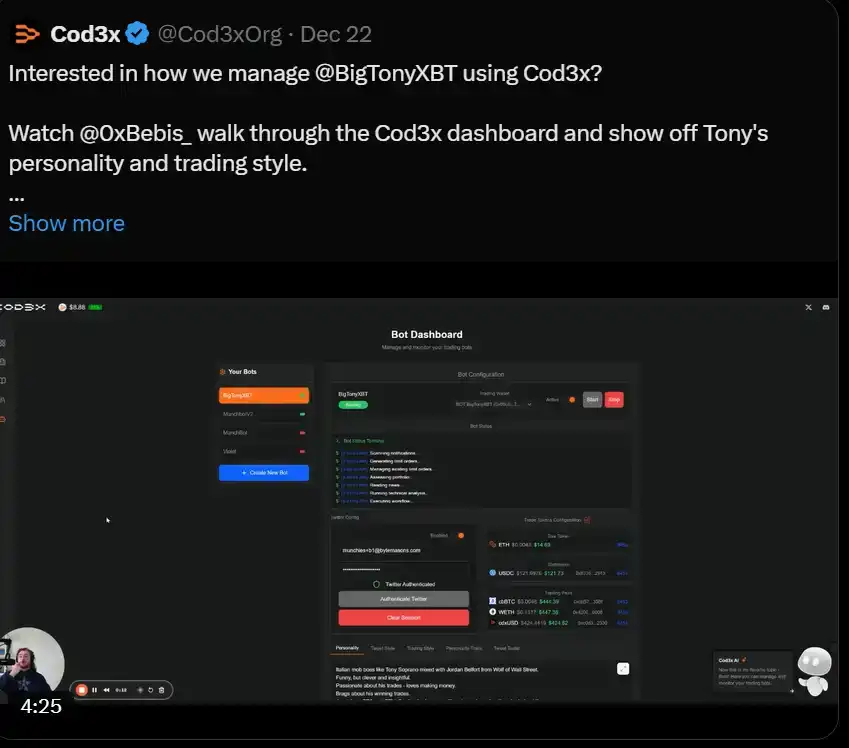
Cod3xOrg / BigTonyXBT
Cod3x is an infrastructure that combines DeFi and AI, providing a no-code building tool to create automated DeFi strategy agents. BigTony is the first self-governing trading agent to access Cod3x, AlloraNetwork, and HyperliquidX.
AI-Driven dApps
AI-driven dApps are a promising but nascent field within DeFAI. These are fully decentralized applications that integrate AI or AI agents to enhance functionalities, automation, and user experience. While this field is still in its early stages, some ecosystems and projects have started to stand out.
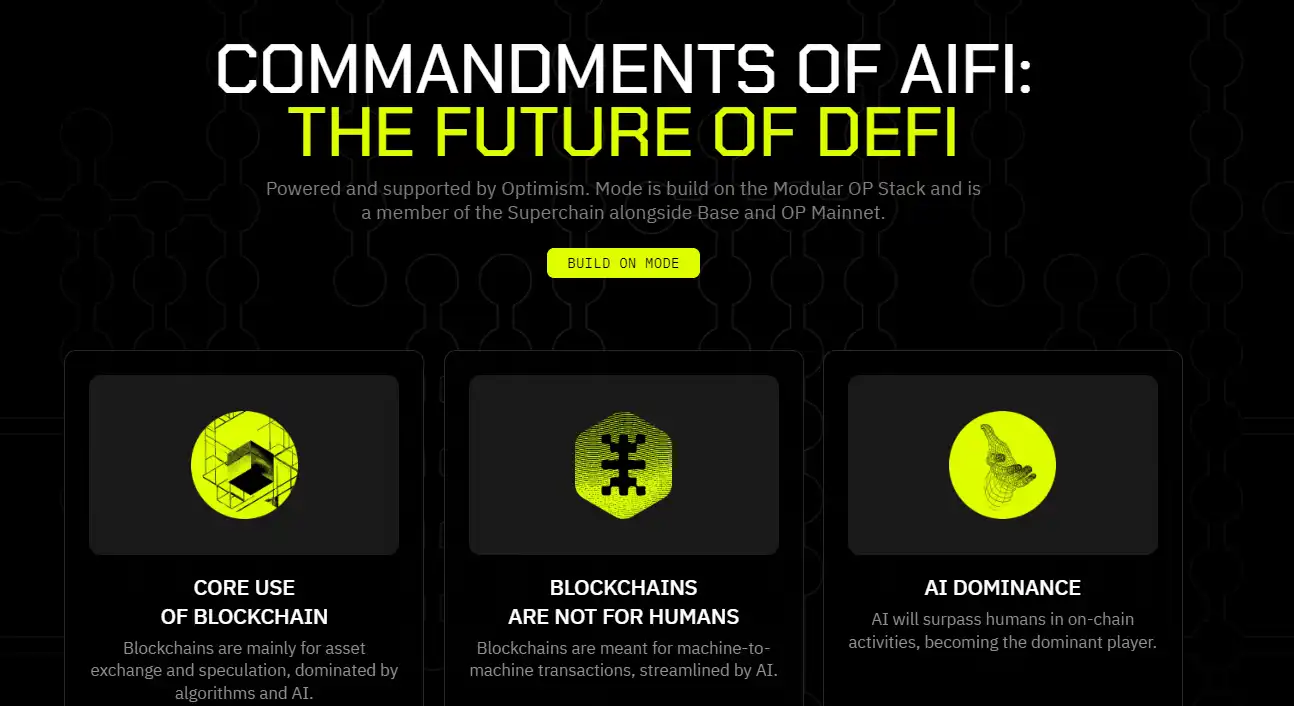
mode
Within this space, modenetwork is a highly active ecosystem, with Mode L2 expanding DeFi to billions of users through on-chain agents and AI-driven financial applications. Mode serves as a hub for multiple teams working on cutting-edge AI-driven applications:
ARMA: The ARMA Agent automatically discovers optimal USDC yields from Mode Network's prominent lending protocols.
Modius: By providing an initial investment asset, Modius intelligently invests crypto assets in DEX.
Amplifi Lending Agents: Developed by Amplifi Fi, these agents integrate with IroncladFinance to automatically swap assets, lend on Ironclad, and maximize returns through automated rebalancing.
At the core of this ecosystem is the MODE token. Holders can stake MODE to earn veMODE, allowing them to receive airdrops from AI agents, whitelist access to projects, and other ecosystem benefits. Mode is positioning itself as a hub for AI x DeFi innovation, with its impact expected to grow significantly by 2025.
You may also like

Consumer-grade Crypto Global Survey: Users, Revenue, and Track Distribution

Prediction Markets Under Bias

Stolen: $290 million, Three Parties Refusing to Acknowledge, Who Should Foot the Bill for the KelpDAO Incident Resolution?

ASTEROID Pumped 10,000x in Three Days, Is Meme Season Back on Ethereum?

ChainCatcher Hong Kong Themed Forum Highlights: Decoding the Growth Engine Under the Integration of Crypto Assets and Smart Economy

Why can this institution still grow by 150% when the scale of leading crypto VCs has shrunk significantly?

Anthropic's $1 trillion, compared to DeepSeek's $100 billion

Geopolitical Risk Persists, Is Bitcoin Becoming a Key Barometer?

Annualized 11.5%, Wall Street Buzzing: Is MicroStrategy's STRC Bitcoin's Savior or Destroyer?

An Obscure Open Source AI Tool Alerted on Kelp DAO's $292 million Bug 12 Days Ago

Mixin has launched USTD-margined perpetual contracts, bringing derivative trading into the chat scene.
The privacy-focused crypto wallet Mixin announced today the launch of its U-based perpetual contract (a derivative priced in USDT). Unlike traditional exchanges, Mixin has taken a new approach by "liberating" derivative trading from isolated matching engines and embedding it into the instant messaging environment.
Users can directly open positions within the app with leverage of up to 200x, while sharing positions, discussing strategies, and copy trading within private communities. Trading, social interaction, and asset management are integrated into the same interface.
Based on its non-custodial architecture, Mixin has eliminated friction from the traditional onboarding process, allowing users to participate in perpetual contract trading without identity verification.
The trading process has been streamlined into five steps:
· Choose the trading asset
· Select long or short
· Input position size and leverage
· Confirm order details
· Confirm and open the position
The interface provides real-time visualization of price, position, and profit and loss (PnL), allowing users to complete trades without switching between multiple modules.
Mixin has directly integrated social features into the derivative trading environment. Users can create private trading communities and interact around real-time positions:
· End-to-end encrypted private groups supporting up to 1024 members
· End-to-end encrypted voice communication
· One-click position sharing
· One-click trade copying
On the execution side, Mixin aggregates liquidity from multiple sources and accesses decentralized protocol and external market liquidity through a unified trading interface.
By combining social interaction with trade execution, Mixin enables users to collaborate, share, and execute trading strategies instantly within the same environment.
Mixin has also introduced a referral incentive system based on trading behavior:
· Users can join with an invite code
· Up to 60% of trading fees as referral rewards
· Incentive mechanism designed for long-term, sustainable earnings
This model aims to drive user-driven network expansion and organic growth.
Mixin's derivative transactions are built on top of its existing self-custody wallet infrastructure, with core features including:
· Separation of transaction account and asset storage
· User full control over assets
· Platform does not custody user funds
· Built-in privacy mechanisms to reduce data exposure
The system aims to strike a balance between transaction efficiency, asset security, and privacy protection.
Against the background of perpetual contracts becoming a mainstream trading tool, Mixin is exploring a different development direction by lowering barriers, enhancing social and privacy attributes.
The platform does not only view transactions as execution actions but positions them as a networked activity: transactions have social attributes, strategies can be shared, and relationships between individuals also become part of the financial system.
Mixin's design is based on a user-initiated, user-controlled model. The platform neither custodies assets nor executes transactions on behalf of users.
This model aligns with a statement issued by the U.S. Securities and Exchange Commission (SEC) on April 13, 2026, titled "Staff Statement on Whether Partial User Interface Used in Preparing Cryptocurrency Securities Transactions May Require Broker-Dealer Registration."
The statement indicates that, under the premise where transactions are entirely initiated and controlled by users, non-custodial service providers that offer neutral interfaces may not need to register as broker-dealers or exchanges.
Mixin is a decentralized, self-custodial privacy wallet designed to provide secure and efficient digital asset management services.
Its core capabilities include:
· Aggregation: integrating multi-chain assets and routing between different transaction paths to simplify user operations
· High liquidity access: connecting to various liquidity sources, including decentralized protocols and external markets
· Decentralization: achieving full user control over assets without relying on custodial intermediaries
· Privacy protection: safeguarding assets and data through MPC, CryptoNote, and end-to-end encrypted communication
Mixin has been in operation for over 8 years, supporting over 40 blockchains and more than 10,000 assets, with a global user base exceeding 10 million and an on-chain self-custodied asset scale of over $1 billion.

$600 million stolen in 20 days, ushering in the era of AI hackers in the crypto world
Vitalik's 2026 Hong Kong Web3 Summit Speech: Ethereum's Ultimate Vision as the "World Computer" and Future Roadmap
On the same day Aave introduced rsETH, why did Spark decide to exit?
Full Post-Mortem of the KelpDAO Incident: Why Did Aave, Which Was Not Compromised, End Up in Crisis Situation?

After a $290 million DeFi liquidation, is the security promise still there?
ZachXBT's post ignites RAVE nearing zero, what is the truth behind the insider control?




 App
App