
 Buy Crypto
- Markets
 Futures
- Spot
- Copy Trade
- Earn
- More
BTC "V-Reversal" Bull Market Trend Continues? | Trader Observation

Amid last week's continued questioning of the Fed's pause in rate cuts, consecutive bearish non-farm payroll data emerged, showing the strong resilience of the U.S. economy. The U.S. dollar index hit consecutive new highs, and the employment issue seems to have eased, reducing the demand for rate cuts by the Fed. From major financial institutions like Citibank and Goldman Sachs to individual traders, bets on a 2025 Fed rate cut are being reduced.
The price of BTC also experienced a huge "wipeout" state, fluctuating up and down by ten thousand points. Many in the market joked that "the price stays the same, but the position is gone." Market sentiment also showed significant fluctuations, rapidly shifting from greed to panic and back to greed. Yesterday's positive PPI data and unresolved inflation issues further increased expectations of a Fed rate cut.
Less than a week since Trump took office, tonight at 21:30 GMT+8, U.S. CPI data will be released. Will a 2025 rate cut be put on the agenda? Has the Trump narrative already been priced in, or is there still significant potential? Let's see what traders think.
Macro Analysis School
Today, the market is focusing on BTC's trading volume, referring to the C-wave third wave mentioned in the market. The third wave is often accompanied by a sharp decline and panic selling in the market, leading to a surge in short-term trading volume. Therefore, by looking at the increase in BTC trading volume, we can determine if the third wave has completed!
As the market overall declines, BTC dominance draws liquidity from ETH altcoins, accelerating the market's risk-off decline.
The BTC trading volume increased by 25%, compared to the overall market's trading volume increase of 150%, indicating that the volume increase is not significant enough, suggesting that the third wave phase has not yet been completed. Altcoin trading volume increased by 277%. Today, BTC fell below a key level, causing ETH and many mainstream altcoins to break key support levels. The altcoin market likely experienced a large-scale liquidation leading to a surge in trading volume.
On the funding side, the market's net inflow increased by $400 million, currently at $212.5 billion.
USDT: Official data shows $137.49 billion, with an increase of $0.03 billion compared to last Saturday. Despite a significant market downturn, net outflows paused in the Asian-European markets, which is a small positive sign. At the same time, USDT liquidity doubled, likely due to a widespread liquidation causing a surge in trading volume.
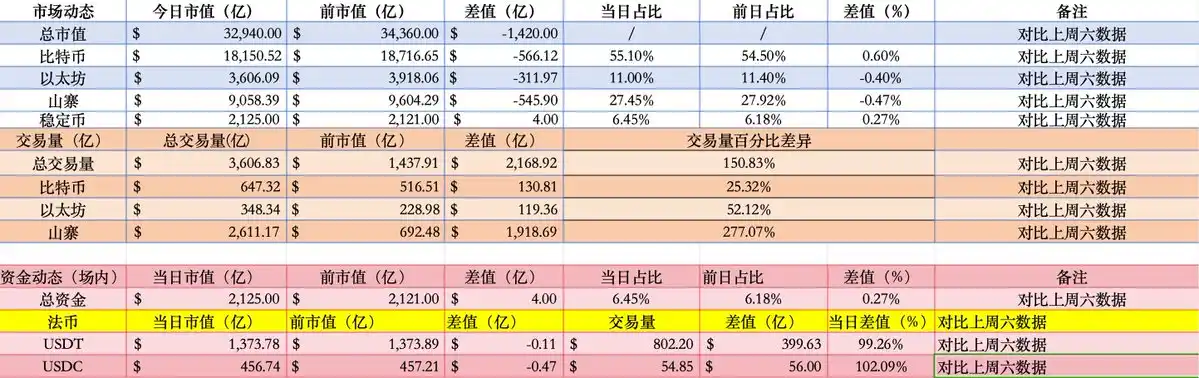
Overall, in terms of fund flows, funds that ended trading in a downtrend did not see a widespread exodus. Instead, they chose to stay in the market or return to trading, indicating that we are not currently in a panic sell-off phase.
During Monday's U.S. session, funds did not exhibit FOMO and saw net outflows for four consecutive days, even as the price rose from 89,000 to 97,000. This is also why I do not consider 89,200 as a significant bottom. The drop to 89,000 consumed a considerable amount of retail funds from non-U.S. regions, with URPD data showing that many short-term bottom buyers took profits.
According to SoSoValue data, Bitcoin spot ETFs saw a total net outflow of $210 million yesterday (January 14, U.S. Eastern Time), marking the fourth consecutive day of outflows. The Bitcoin spot ETF with the highest net inflow yesterday was the WisdomTree ETF BTCW, with a daily net inflow of $10.2372 million, bringing its total historical net inflow to $239 million, followed by the VanEck ETF HODL, which saw a daily net inflow of $5.4596 million. The total net asset value of Bitcoin spot ETFs currently stands at $108.981 billion, with an ETF net asset ratio (market value as a percentage of total Bitcoin market value) of 5.7% and a cumulative net inflow of $35.722 billion.
Since there was no second wave of risk aversion on Tuesday, it either means investors have already priced in enough expectations for the CPI or positive sentiment has offset the potential negative impact of the CPI. In fact, for the CPI data, I don't think this round of data is particularly significant.
Because the likelihood of the Fed not cutting rates in January is almost 100%, the December inflation data is unlikely to change the Fed's decision. Even in March, there is a high probability that the Fed will not cut rates. According to the dot plot, there may be two rate cuts in 2025, possibly both in the second half of the year, with little chance of a rate cut in the first half of the year.
So, a single CPI data point is not even as important as the nonfarm data. After all, the current inflation has already been somewhat anticipated by the Fed. Of course, lower inflation data is more beneficial to the market. However, even if December's inflation drops to 2%, the Fed may not immediately cut rates.
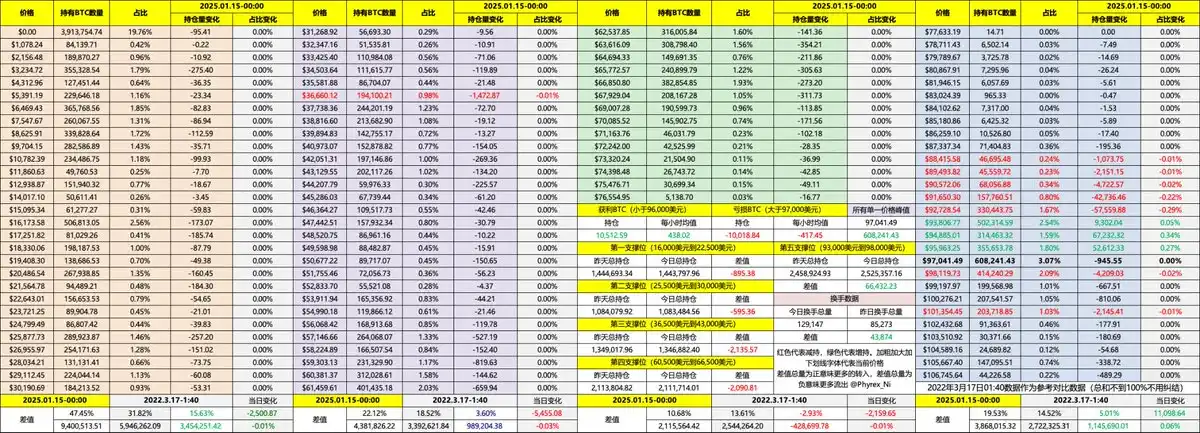
Returning to BTC data, while turnover has increased, with the rebound in BTC price, panic has not occurred. Currently, those exiting are mostly short-term profit investors. Early investors, including those at a loss, do not show significant signs of selling off. This indicates that at least for now, investor sentiment remains relatively stable.
Technical Analysis Enthusiast
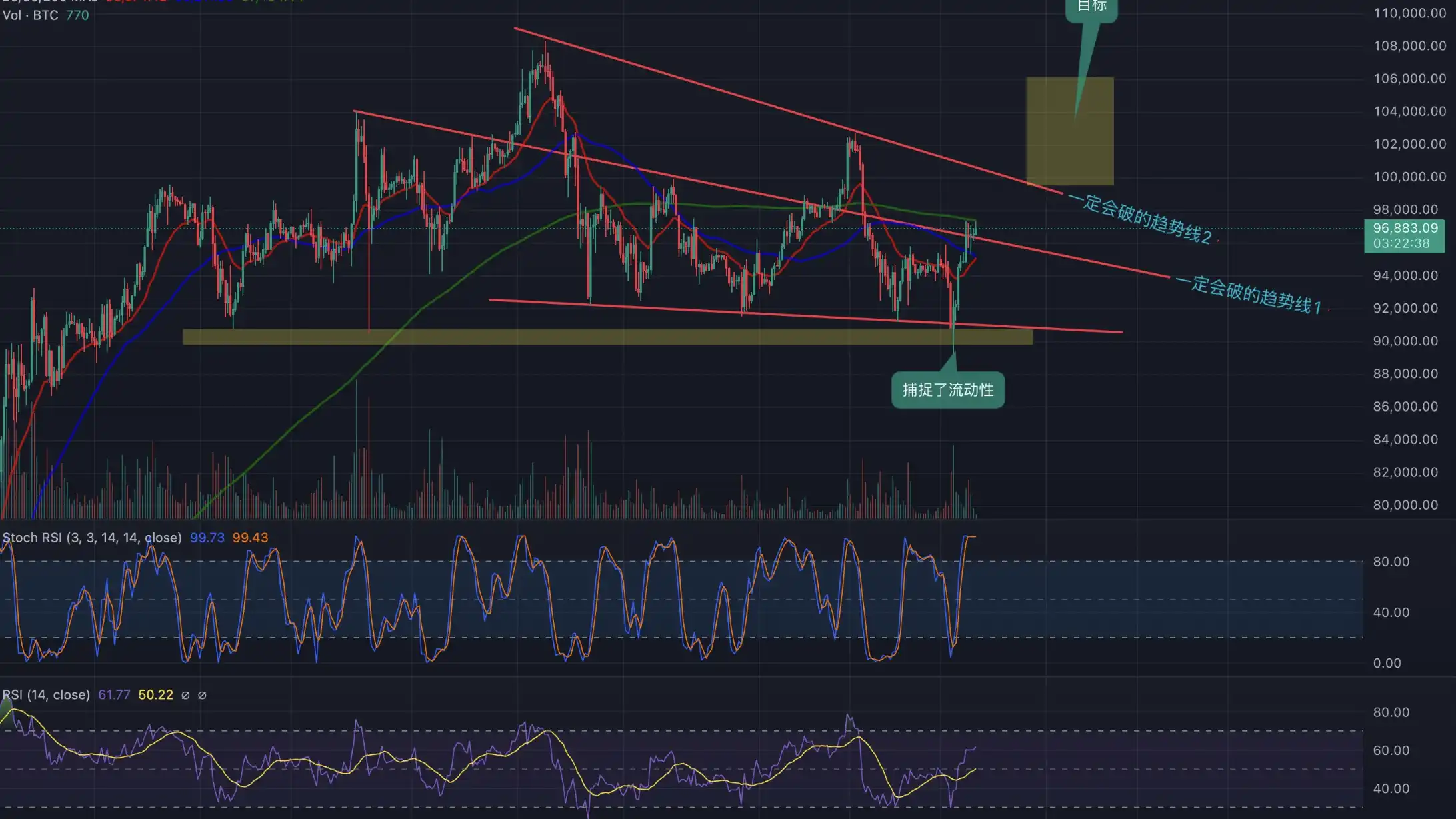
BTC has broken through the first trendline, and we expect a breakthrough of the second. In the short term, we are waiting for the moving average to catch up with the price before resting and continuing to rise.
Adding more BTC long positions here.
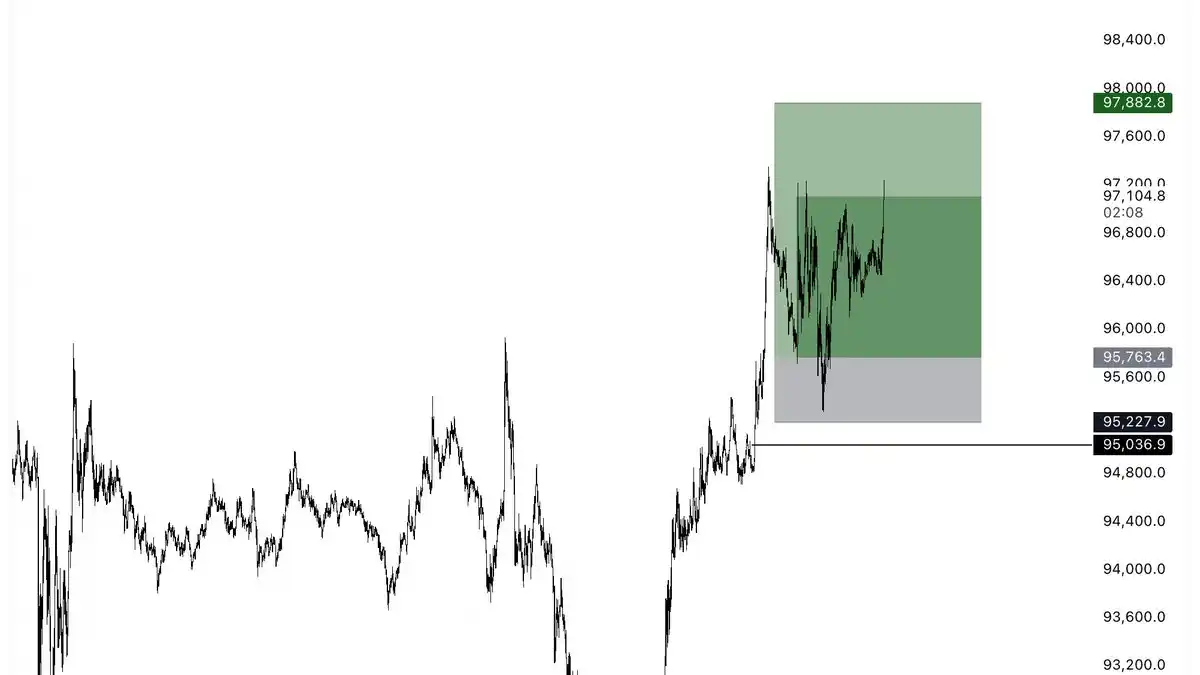
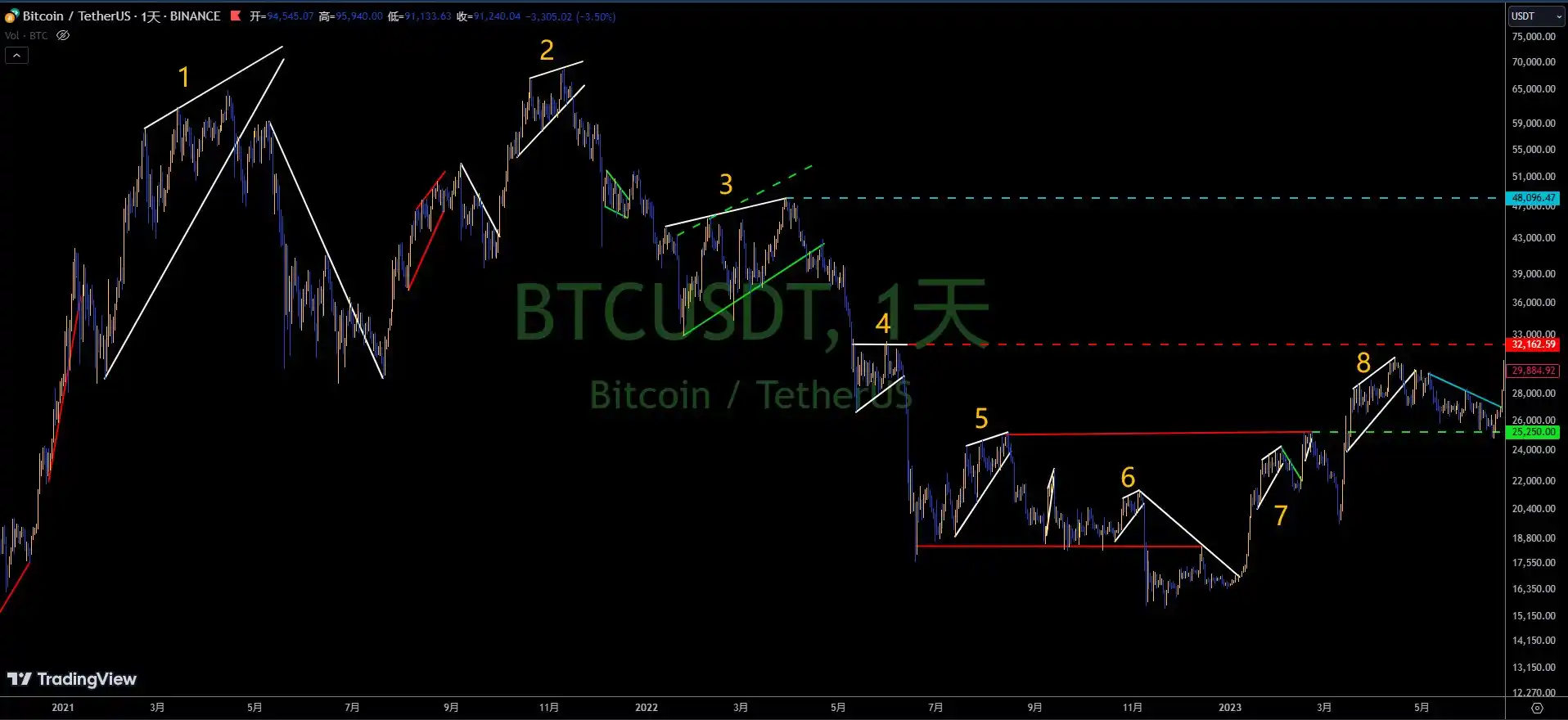
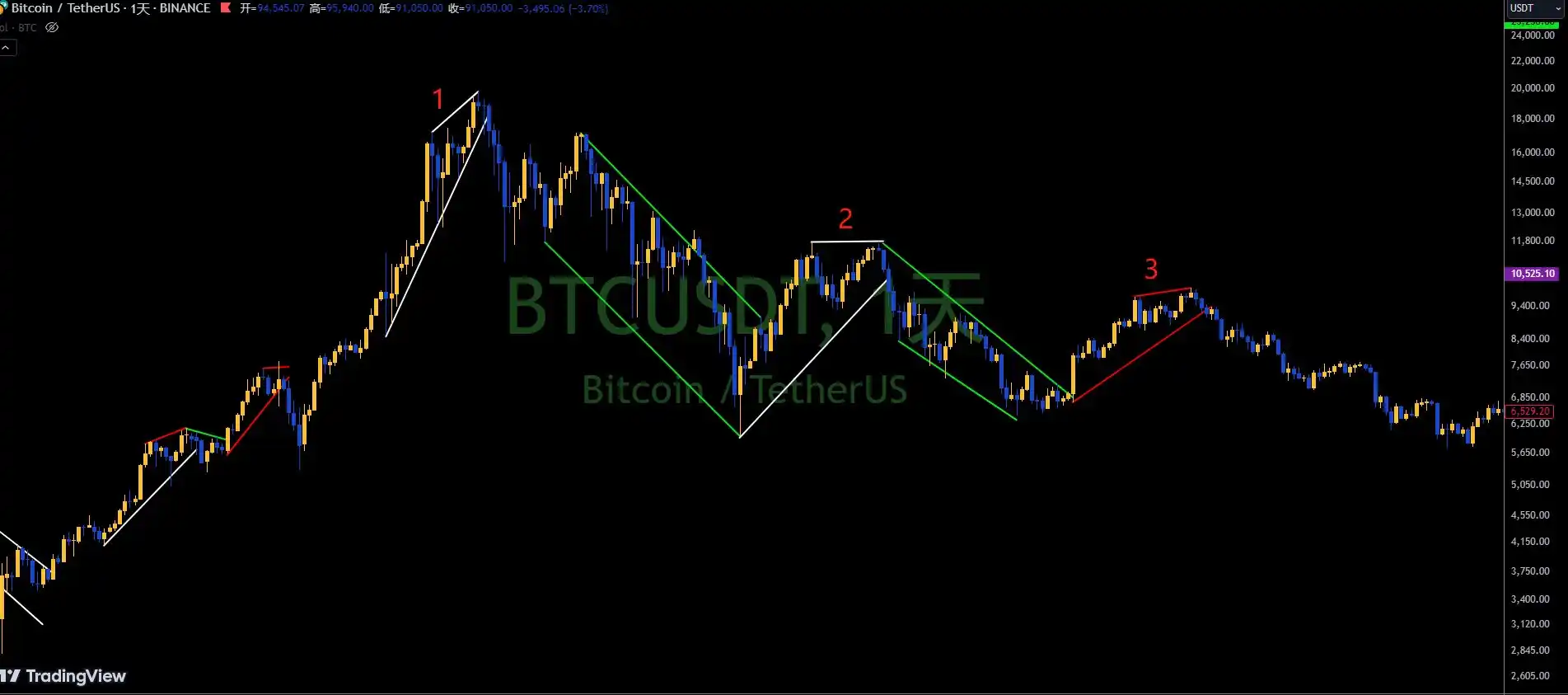
Reviewing history, history is the best teacher. This kind of structure has a high probability of occurrence, and there are often major retracements afterward, at least retracing 50% to 0.618% of the previous large wave. The most brutal year was 5.19 when it retraced back to the starting point of the rise. That was an extreme situation requiring various factors to support it. We are only talking about normal situations, and the previously mentioned 85,000 was calculated based on this.
Data Analysis Enthusiast
The probability of ETH price exceeding 4K by the end of the month is only 10.62%.

As the price continues to rise, the premium is moving back towards 0, indicating that spot demand is still entering the market. Only when the premium fully recovers to a positive value and reaches a high level, the entire BTC market can be considered in a safe mode.
Therefore, the current price increase and synchronous recovery of the premium actually represent spot demand entering the market while futures longs gradually take profit and futures shorts gradually add to their positions;
When the premium returns to around 0, it indicates that futures longs have almost completed their profit-taking. If shorts do not further increase their positions, the premium will not rise, but if shorts continue to add to their positions, then the premium will turn positive;
In short, when the premium returns to zero, minor trend reversals or continuations are likely to occur;
In a long trend, each time the premium returns to zero, it is either a consolidation or a sign of a bearish trend reversal, and similarly, in a short trend, each time the premium approaches 0, it is either a rebound to consolidate or a sign of a bullish trend reversal;
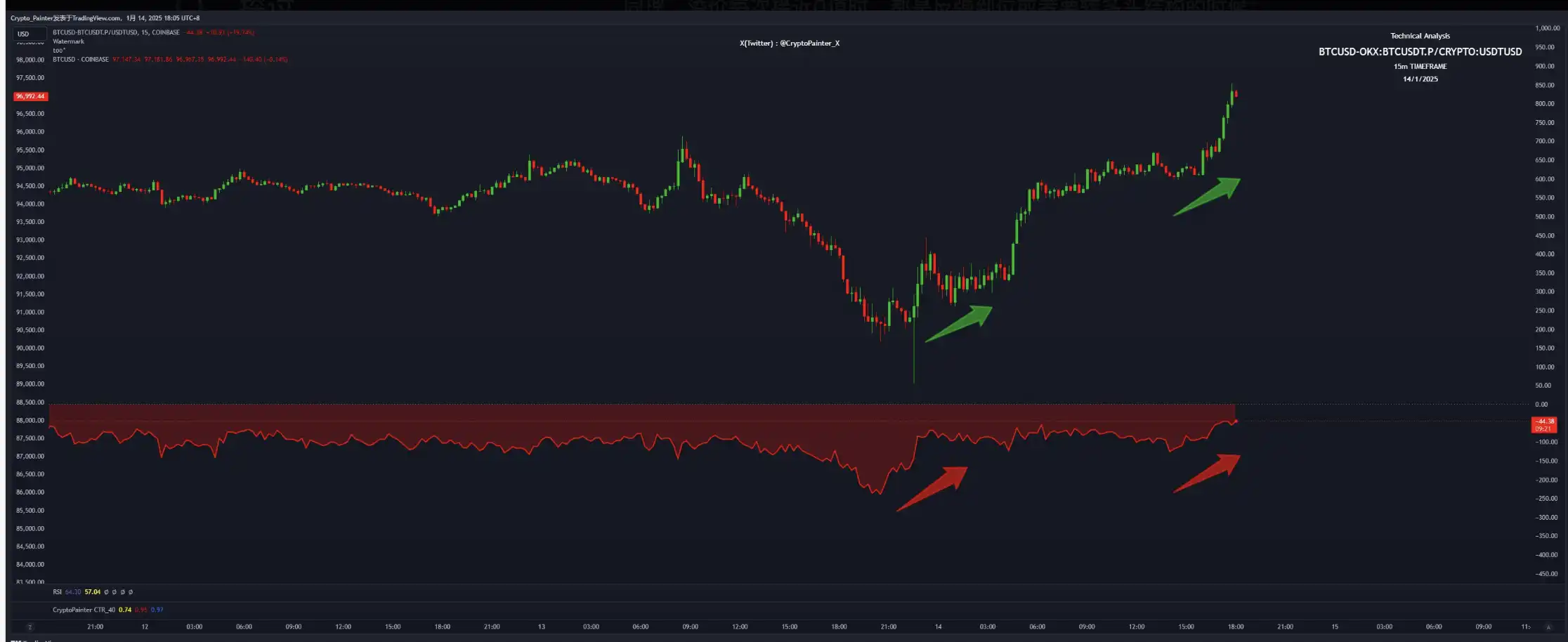
Moreover, based on the key break of $90,000, it can be seen that market demand has weakened, which is why there is the behavior of key support being breached. The current price range has the conditions to become a "distribution range." Like the ranging market in 2024, signs of distribution do not necessarily mean the market will bearish. Strengthened demand could still drive prices higher;
On-chain Whale Activity
The "whale" who profited $33.67 million from buying low and selling high in $ETH withdrew 10,000 ETH from Binance on January 13, worth $30.76 million, at an average cost of $3075.57 per ETH; currently, they hold a total of 55,166.12 ETH, valued at a staggering $169 million.
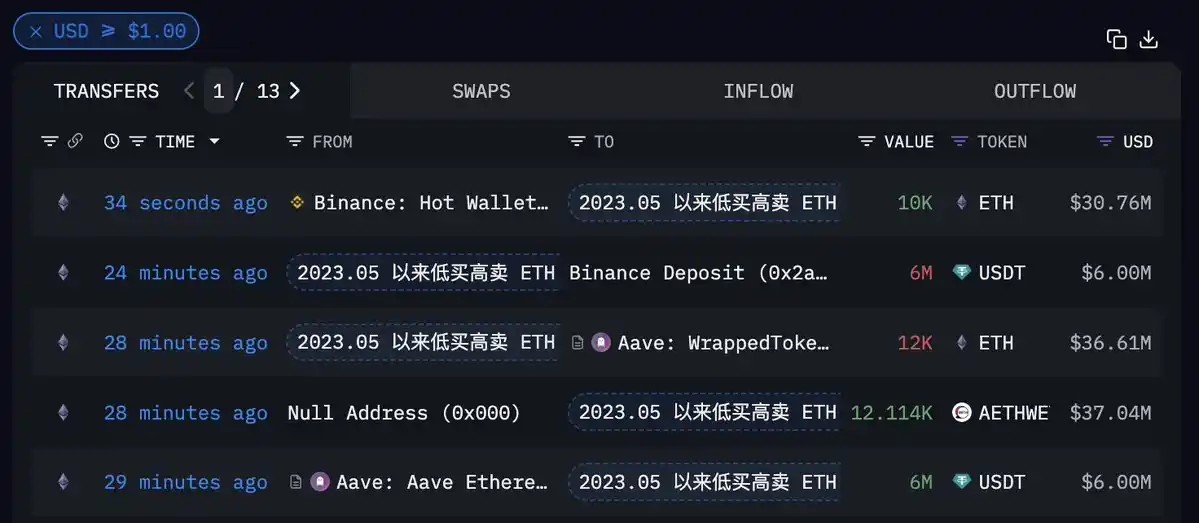
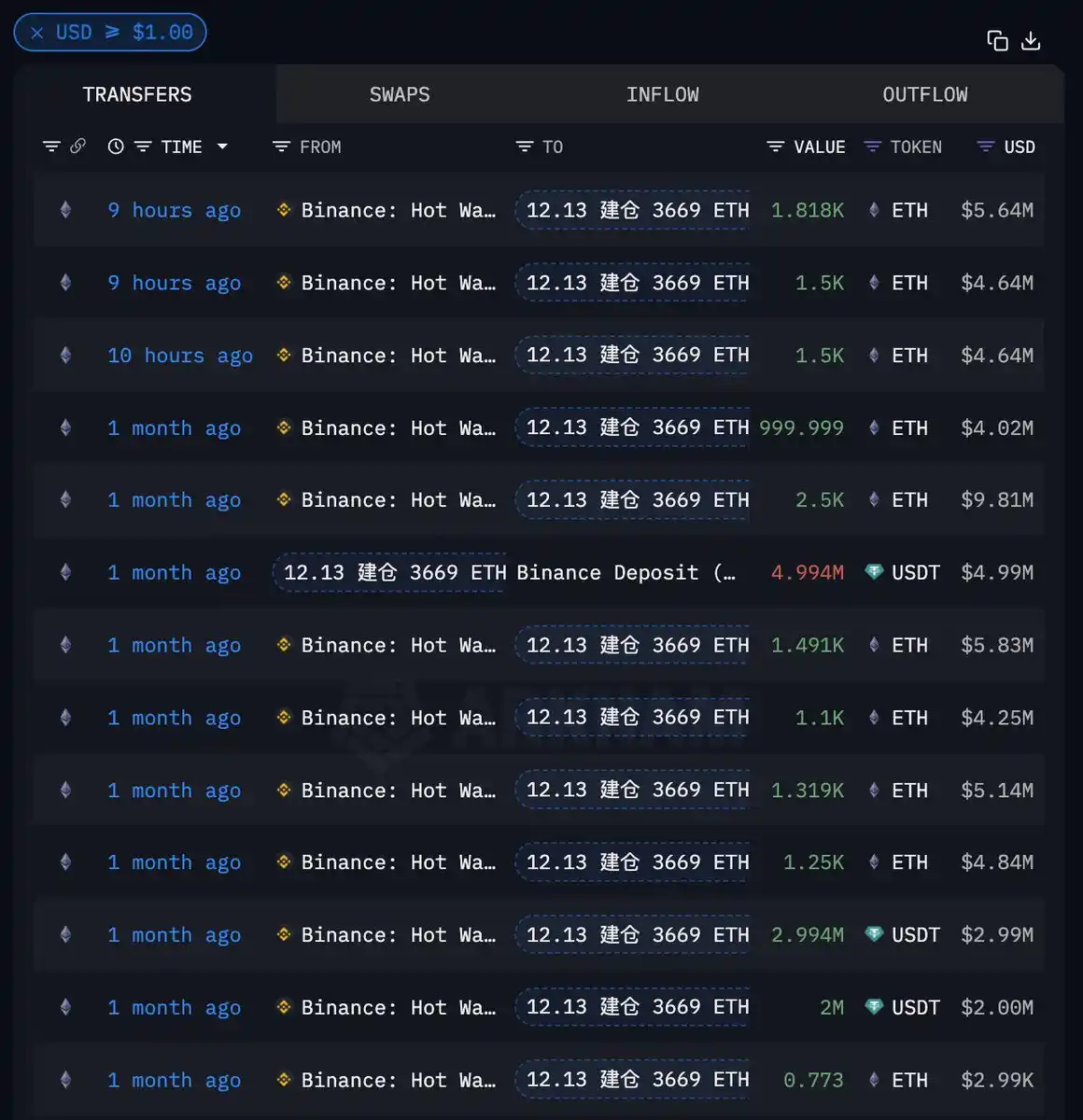
After a month, the "12.13 Positioning 3669 ETH to a New Address" once again added 4817 ETH to its position during Monday's market plunge, worth $14.92 million; since December 5, 2024, this address has accumulated a total of 13,479 ETH, valued at $42.78 million, with a cost basis of $3622, currently sitting on an unrealized loss of $5.9 million
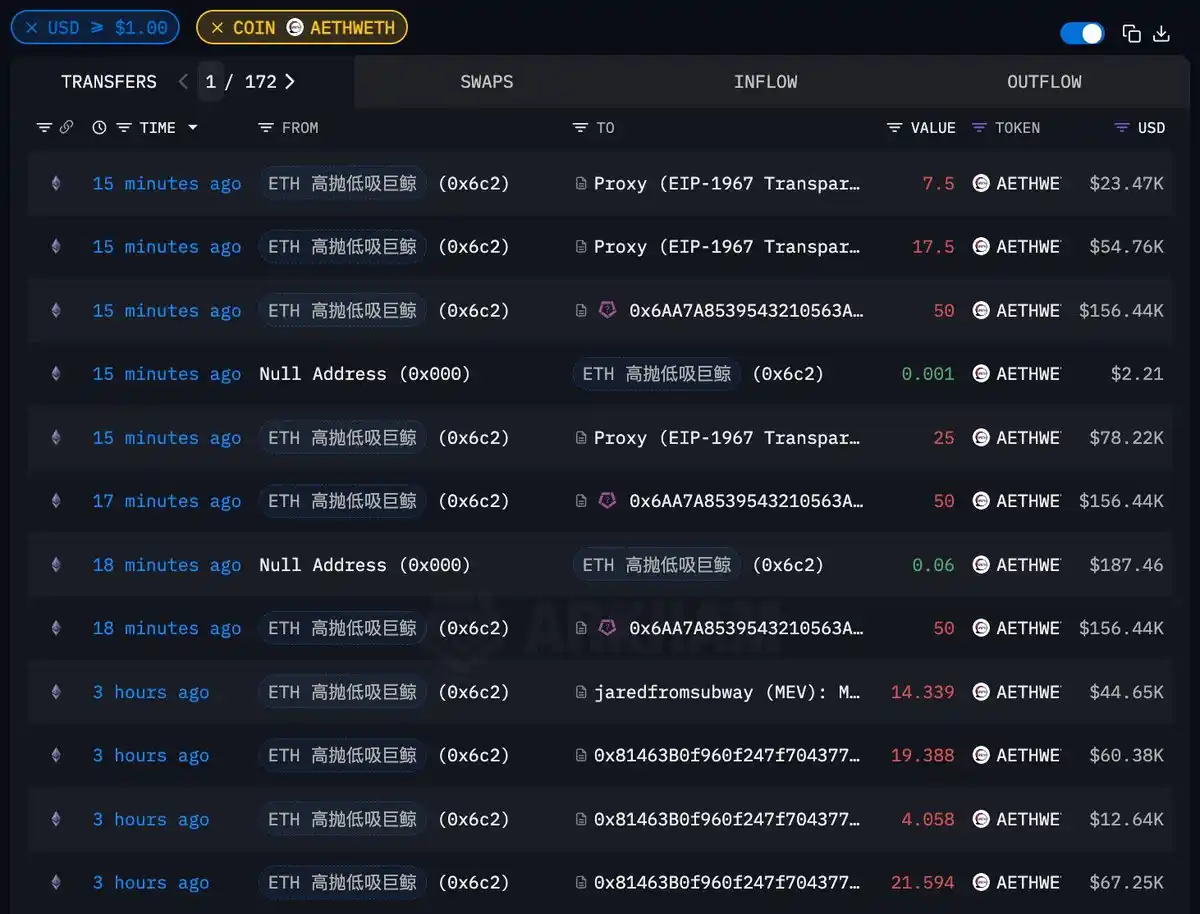
An ETH swing trader with a win rate of 83.3% reduced their position by an average of $3106.53, selling 5872.63 ETH (which was part of the additional position taken during last night's market crash), incurring a small loss of $530,000; the two addresses currently hold 11,252.98 ETH (approximately $35.39 million) with a cost basis of $3196.85
You may also like

Consumer-grade Crypto Global Survey: Users, Revenue, and Track Distribution

Prediction Markets Under Bias

Stolen: $290 million, Three Parties Refusing to Acknowledge, Who Should Foot the Bill for the KelpDAO Incident Resolution?

ASTEROID Pumped 10,000x in Three Days, Is Meme Season Back on Ethereum?

ChainCatcher Hong Kong Themed Forum Highlights: Decoding the Growth Engine Under the Integration of Crypto Assets and Smart Economy

Why can this institution still grow by 150% when the scale of leading crypto VCs has shrunk significantly?

Anthropic's $1 trillion, compared to DeepSeek's $100 billion

Geopolitical Risk Persists, Is Bitcoin Becoming a Key Barometer?

Annualized 11.5%, Wall Street Buzzing: Is MicroStrategy's STRC Bitcoin's Savior or Destroyer?

An Obscure Open Source AI Tool Alerted on Kelp DAO's $292 million Bug 12 Days Ago

Mixin has launched USTD-margined perpetual contracts, bringing derivative trading into the chat scene.
The privacy-focused crypto wallet Mixin announced today the launch of its U-based perpetual contract (a derivative priced in USDT). Unlike traditional exchanges, Mixin has taken a new approach by "liberating" derivative trading from isolated matching engines and embedding it into the instant messaging environment.
Users can directly open positions within the app with leverage of up to 200x, while sharing positions, discussing strategies, and copy trading within private communities. Trading, social interaction, and asset management are integrated into the same interface.
Based on its non-custodial architecture, Mixin has eliminated friction from the traditional onboarding process, allowing users to participate in perpetual contract trading without identity verification.
The trading process has been streamlined into five steps:
· Choose the trading asset
· Select long or short
· Input position size and leverage
· Confirm order details
· Confirm and open the position
The interface provides real-time visualization of price, position, and profit and loss (PnL), allowing users to complete trades without switching between multiple modules.
Mixin has directly integrated social features into the derivative trading environment. Users can create private trading communities and interact around real-time positions:
· End-to-end encrypted private groups supporting up to 1024 members
· End-to-end encrypted voice communication
· One-click position sharing
· One-click trade copying
On the execution side, Mixin aggregates liquidity from multiple sources and accesses decentralized protocol and external market liquidity through a unified trading interface.
By combining social interaction with trade execution, Mixin enables users to collaborate, share, and execute trading strategies instantly within the same environment.
Mixin has also introduced a referral incentive system based on trading behavior:
· Users can join with an invite code
· Up to 60% of trading fees as referral rewards
· Incentive mechanism designed for long-term, sustainable earnings
This model aims to drive user-driven network expansion and organic growth.
Mixin's derivative transactions are built on top of its existing self-custody wallet infrastructure, with core features including:
· Separation of transaction account and asset storage
· User full control over assets
· Platform does not custody user funds
· Built-in privacy mechanisms to reduce data exposure
The system aims to strike a balance between transaction efficiency, asset security, and privacy protection.
Against the background of perpetual contracts becoming a mainstream trading tool, Mixin is exploring a different development direction by lowering barriers, enhancing social and privacy attributes.
The platform does not only view transactions as execution actions but positions them as a networked activity: transactions have social attributes, strategies can be shared, and relationships between individuals also become part of the financial system.
Mixin's design is based on a user-initiated, user-controlled model. The platform neither custodies assets nor executes transactions on behalf of users.
This model aligns with a statement issued by the U.S. Securities and Exchange Commission (SEC) on April 13, 2026, titled "Staff Statement on Whether Partial User Interface Used in Preparing Cryptocurrency Securities Transactions May Require Broker-Dealer Registration."
The statement indicates that, under the premise where transactions are entirely initiated and controlled by users, non-custodial service providers that offer neutral interfaces may not need to register as broker-dealers or exchanges.
Mixin is a decentralized, self-custodial privacy wallet designed to provide secure and efficient digital asset management services.
Its core capabilities include:
· Aggregation: integrating multi-chain assets and routing between different transaction paths to simplify user operations
· High liquidity access: connecting to various liquidity sources, including decentralized protocols and external markets
· Decentralization: achieving full user control over assets without relying on custodial intermediaries
· Privacy protection: safeguarding assets and data through MPC, CryptoNote, and end-to-end encrypted communication
Mixin has been in operation for over 8 years, supporting over 40 blockchains and more than 10,000 assets, with a global user base exceeding 10 million and an on-chain self-custodied asset scale of over $1 billion.

$600 million stolen in 20 days, ushering in the era of AI hackers in the crypto world
Vitalik's 2026 Hong Kong Web3 Summit Speech: Ethereum's Ultimate Vision as the "World Computer" and Future Roadmap
On the same day Aave introduced rsETH, why did Spark decide to exit?
Full Post-Mortem of the KelpDAO Incident: Why Did Aave, Which Was Not Compromised, End Up in Crisis Situation?

After a $290 million DeFi liquidation, is the security promise still there?
ZachXBT's post ignites RAVE nearing zero, what is the truth behind the insider control?




 App
App