
 Buy Crypto
- Markets
 Futures
- Spot
- Copy Trade
- Earn
- More
AICC Plunges Over 75% in 3 Days: VC Involvement in AI Agent Token Sparks Sell-off

Original Title: "AICC Event Update: When VC Gets Involved in AI Agent Token"
Original Author: Wenser, Odaily Planet Daily
In just 3 days, Aiccelerate dao, under the guise of an "accelerator for the integration of cryptocurrency and artificial intelligence," completed a turnaround from being highly anticipated to being attacked by the masses. It is truly remarkable how fast-paced and emotionally sensitive the cryptocurrency market can be. As of the time of writing, the AICC token is currently trading at $0.084, with a market capitalization of $92.5 million, representing a more than 75% drop from its peak market cap of over $400 million.
At the same time, the actions of the "all-star team" behind the project have been controversial, with varying community reactions. Odaily Planet Daily will summarize and review the events related to AICC in this article for readers to reflect and reference.
A "Pump and Dump Coin Release Drama": AICC's Overnight Success
On January 10, a tweet from Aiccelerate dao once again ignited the market's anticipation for the AI Agent token. However, unlike previous tokens that leaned more towards a community-driven approach, this project appeared to be more of a "pump-and-dump VC scheme."
On January 9, the project announced that the DAO would focus on advancing decentralized, open-source AI development and supporting high-potential projects across different ecosystems. Additionally, Aiccelerate positioned itself as a DAO that balances investment and development. Its primary mission is to drive innovation in what it calls the "AI Agent" space. The DAO aims to create a collaborative community of top developers across multiple frameworks, who will contribute to a series of agents and tools designed to advance the organization's goals. The developer advisor list includes ai16z founder Shaw, Virtuals Protocol core contributor EtherMage, EigenLayer Developer Relations Lead Nader Dabit, and Story Protocol co-founder Jason Zhao, as well as Abstract core contributor Cygaar; investor advisors include Mechanism Capital's Andrew Kang and Marc Weinstein, Coinbase Ventures' Justin Lee, and Delphi Digital's Anil Lulla, among others; research advisors include daos.fun founder Baoskee, ai16z's Skely, and more; external relations advisors include Bankless DAO founder David Hoffman, co-founder Ryan Sean Adams, and well-known crypto KOL Threadguy.
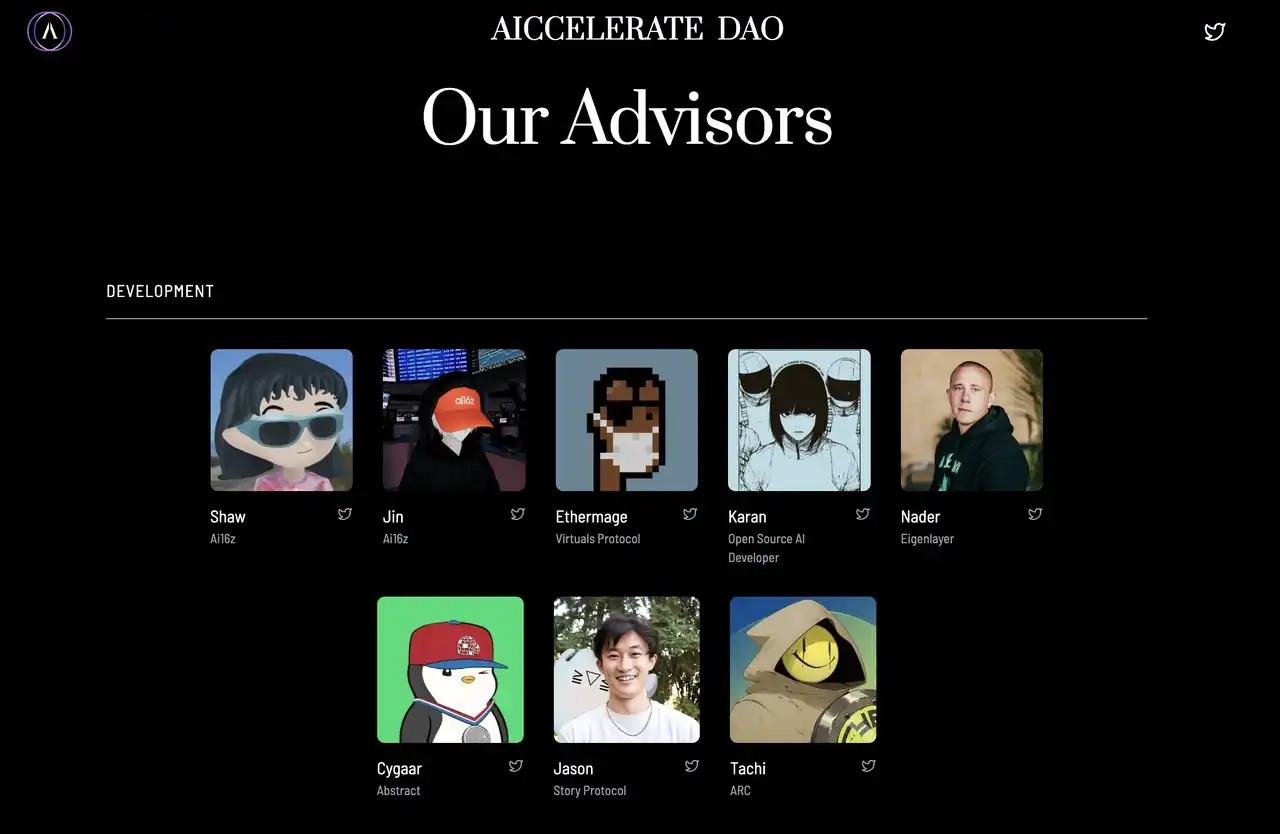
Developer Advisory List
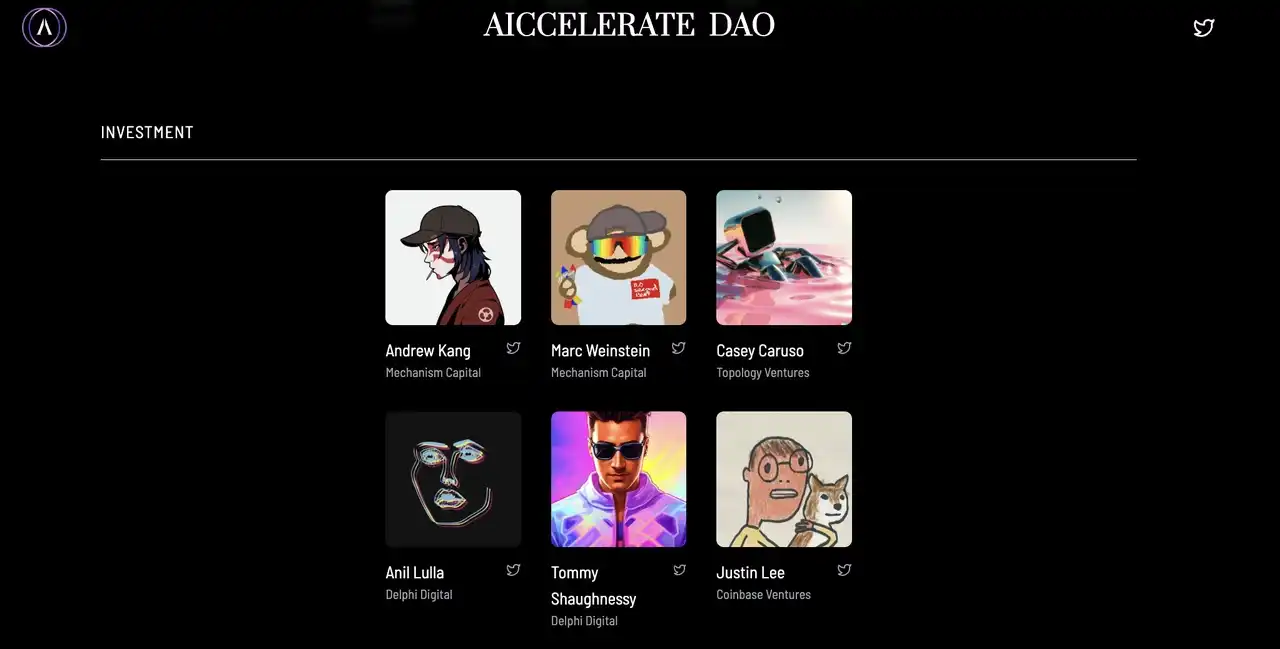
Investor Advisory List
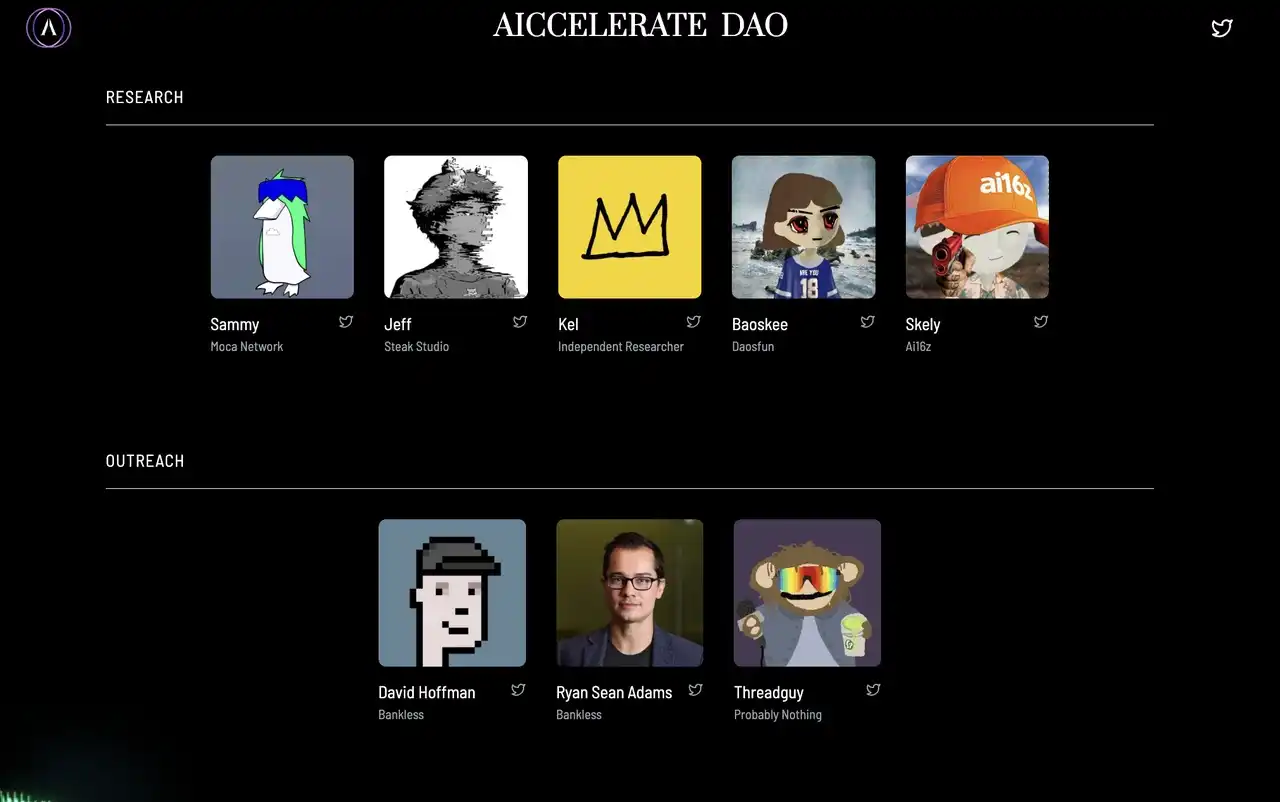
Researcher and Outreach Advisory List
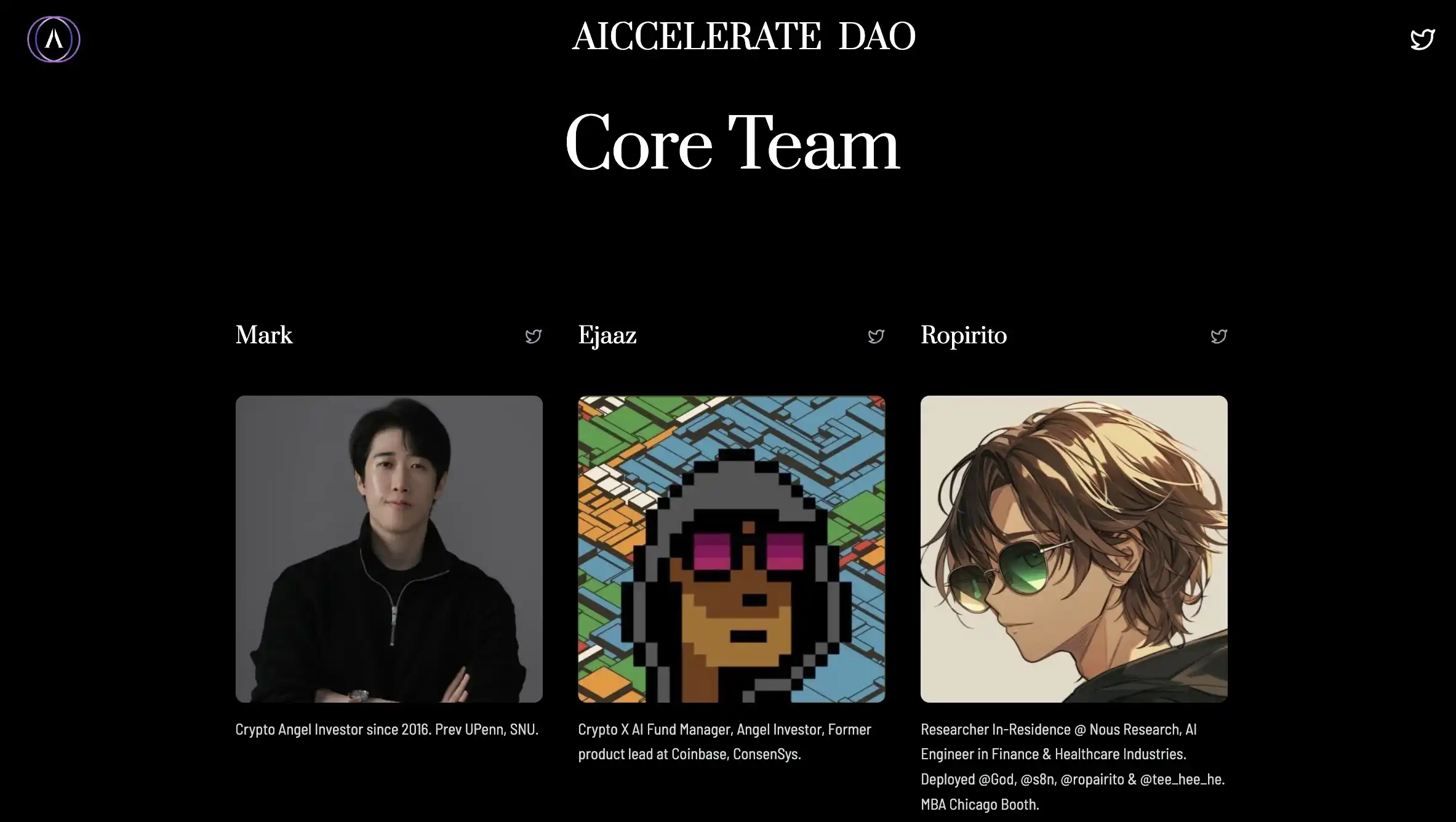
AICC Core Team List
Prior to this, the off-exchange price of AICC tokens, which were used for fundraising, once surged to over a thousand U.S. dollars, but they remained illiquid. Thanks to the high profile of the core team and the advisory team in the cryptocurrency industry, as well as their past performance, market expectations for the token have been continuously rising, with many believing in a minimum of a 20x return.
However, people underestimated the FOMO sentiment in the market regarding tokens in the AI sector, which has been the only recent hot topic.
Around 10 a.m. on January 11th, after the end of the fundraising, AICC quietly began trading on-chain and its market cap once exceeded 400 million U.S. dollars. One hour later, its price had soared to $0.21, with a market cap of 230 million U.S. dollars, and later exceeded 370 million U.S. dollars again, becoming another "fast-track full circulation token" in the AI sector. According to media reports, AICC raised a total of 943 SOL, valued at approximately 175,000 U.S. dollars, with about 75,000 U.S. dollars coming from the project's "VIPs" — the co-founders and advisory team; the remaining approximately 100,000 U.S. dollars came from other insiders, each of whom had previously pledged to invest a maximum of 2 SOL.
As a result, AICC's price has increased by over 1,000 times compared to the fundraising price. Additionally, according to information provided by @0x_ultra's data platform, the top 5 profit-taking addresses of AICC have collectively made profits of over 1.31 million U.S. dollars, with these 5 addresses having only invested 4.5 SOL in total. Based on this calculation, the profit margin has reached approximately 7,907 times. Furthermore, according to statistics from the data panel, the number of profit-taking sell-off addresses for AICC has reached as high as 62 people, accounting for 25.9% of the total of 239 people.
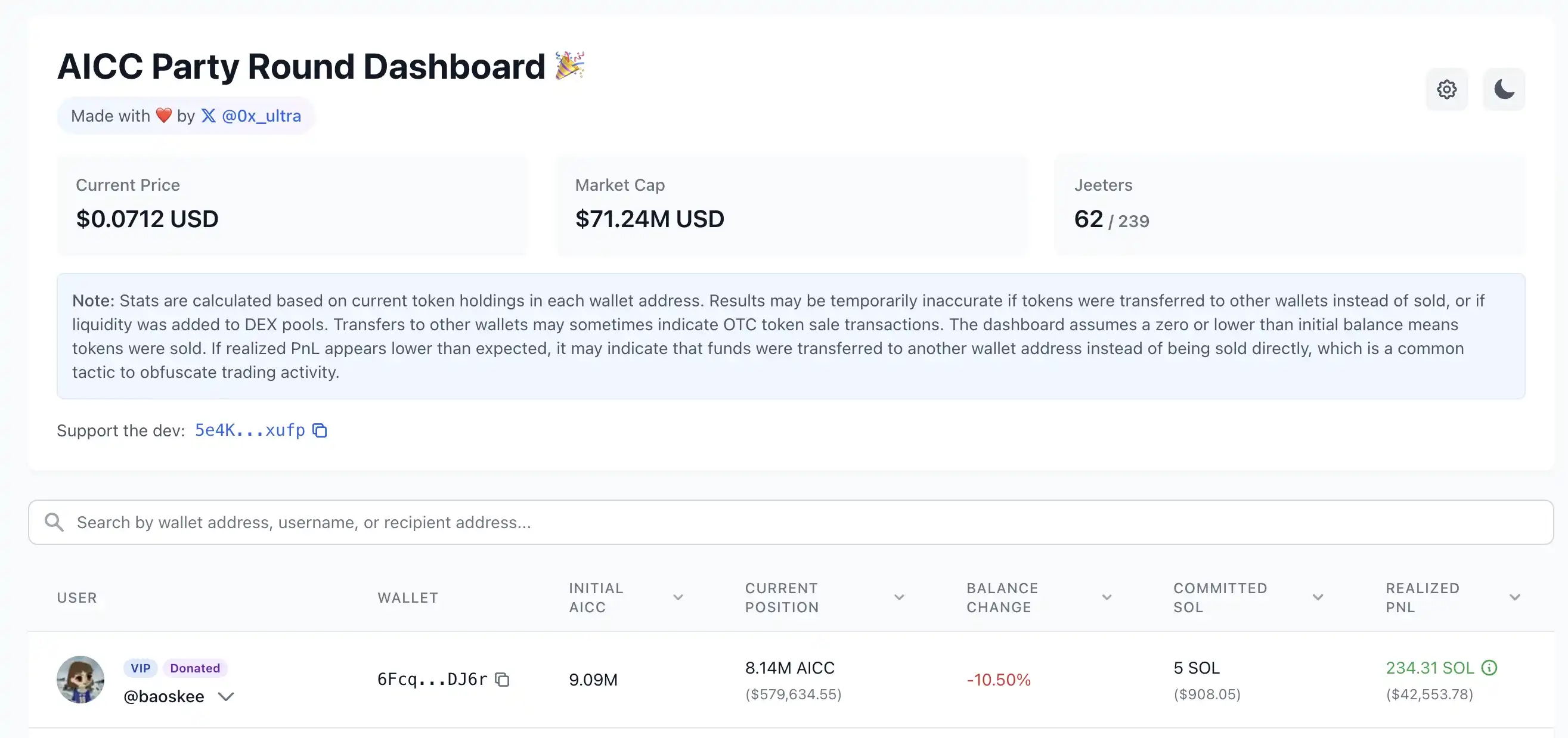
AICC Token Rug Pull Data Statistics Dashboard
Meanwhile, the rapid rug pull sell-off by "insiders" quickly shifted the market's focus to the key issue of token distribution.
The Crypto Community Behind AICC: VIP Rug Pull, Advisor Response, Ecosystem Donations
With the rapid price surge of AICC, many have made profits, and the parties involved have provided their varied responses, showcasing a true "crypto community" portrait.
VIP Rug Pull: Human Nature Cannot Withstand a Thousandfold Gain Temptation
After the launch of the AICC token, Bankless Ventures quickly sold 10% of the token allocation. Faced with community scrutiny and criticism, the public faces of Bankless, founder David Hoffman and co-founder Ryan Sean Adams, had to give a positive response:
Initially, David Hoffman stated: "(I) agreed Bankless Ventures should not have sold tokens — this was an impulsive mistake, and we have repurchased all the sold tokens, returning to the full amount, and are discussing a self-imposed vesting schedule."
Subsequently, David Hoffman posted another image (narrated from the perspective of co-founder Ryan Adams) in response to the "AICC Rug Pull incident". Ryan stated that he and the other co-founder of Bankless, David Hoffman, personally invested 5 SOL each in Aiccelerate, and additionally, Bankless Ventures, under the fund's name, also invested 2 SOL, with the investment lead being GP Ben Lakoff. Later, Bankless Ventures sold 8% of the fund's shares (now repurchased). Ryan mentioned that both he and David were unaware of the sale event, and Ben himself was unaware of Aiccelerate's situation, and the sale was only based on trading considerations. It was a huge mistake, the first time this has happened, and Ben is also very sorry about it. Ryan finally clarified again that he and David have never sold their personal shares.
「I didn't know they would do this, and when I found out, I immediately expressed disgust for this behavior,」 Aiccelerate dao project co-founder Ejaaz Ahamadeen mentioned Bankless Ventures' sale on X.
Although the wash trading incident has been clarified, trust in Bankless from both the market and the community has plummeted to an all-time low.
Advisor Response: a16z Founder Lambasts AICC for Vampire Attack, Claims Being Exploited and Deleted Post
In this AICC token issuance controversy, Shaw, the founder of ai16z who has recently been in the spotlight due to the AI Agent wave, is undoubtedly at the epicenter of the storm.
Previously, Shaw wrote that he had donated half of the AICC tokens to the ai16z DAO and 20% to other contributors. 「Seeing 5 SOL turn into 2 million dollars is truly insane,」 but he still acknowledged these criticisms and stated, 「I hope Daos.fun will in the future have some form of ownership or lockup so that the launch will feel more equitable.」
However, perhaps due to the overly harsh criticism from the ai16z DAO community and other crypto communities, Shaw posted another long article around 3 am today with a general meaning of: as the creator of the largest DAO organization on daos.fun, Shaw had never endorsed any other projects on daos.fun before, only supported 2 projects—one he found interesting (Note by Odaily Star Daily: this should be the METAV Ai pool project that raised more than 30,000 SOL), and the other created by community partners AICC. In addition, he expressed anger at the AICC token launch because the entire project felt like a vampire attack, with his name and DAO brand being exploited. Despite this, AICC is still a fair game, complying with daos.fun's platform rules; it just suffered an attack due to the whitelist distribution mechanism benefitting only a few. Therefore, he stated that he is stepping away from Meme coins because this culture is toxic, behind which are a group of fake progressives and woke-cancel culture babies. Finally, Shaw mentioned that from now on, he will only engage with AI personnel and true Builders. Currently, this tweet has been deleted.
It is evident that Shaw also suffered greatly in this AICC token issuance event: on the one hand, his reputation was damaged; on the other hand, he experienced inner trauma. And this naturally stems from his choice to support the AICC project.
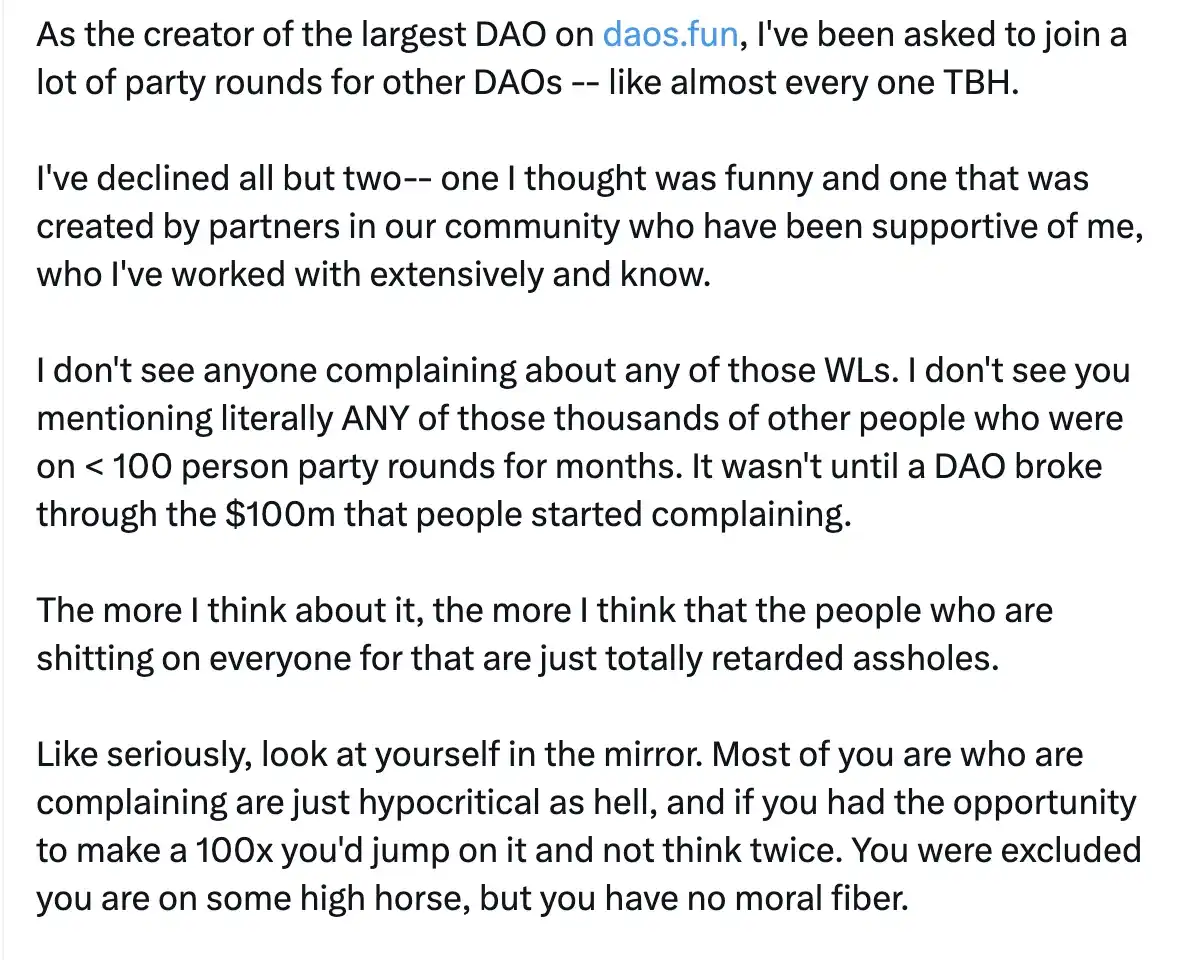
Shaw partially deletes tweet
Eco Donation: Story Co-founder, ARC Founders Choose to Give Back to the Project
Unlike other "VIPs" who engaged in profit-taking, Story co-founder Jason Zhao and ARC project founders chose to reinvest their gains back into their respective ecosystems.
Jason Zhao announced that he would donate all his AICC tokens (worth approximately $1.78 million) to support the development of Story and other open-source AI projects on the blockchain. He pledged to donate his first million dollars in AICC tokens to high-quality teams building open-source projects that not only advance AI but also align with Story's vision of an AI universal IP system. The donation will be milestone-based, fully transparent, and all tokens will be used for research purposes.
Tachi, founder of Playgrounds behind Arc (AI Rig Complex), also stated: "Today, the team has transferred 100% of the AICC tokens directly to the Arc Treasury to ensure that all tokens serve the long-term interests of the community. Additionally, the team plans to use 30% of the AICC tokens to create AICC/ARC liquidity pairs, which will generate fees returned to the Arc Treasury. These fees will help fund ecosystem initiatives, incentivize developer contributions, and further enrich the Complex. The remaining 70% of the AICC tokens have been locked in a custodial contract, benefiting the Arc Treasury and will be vested linearly next year."
Compared to other beneficiaries, the actions of these two undoubtedly demonstrate a higher level of sophistication and can be considered a mutually beneficial choice.
Official Response: Commitment to AI Agent Development, Token Fund Security
Faced with this series of dramatic events, the Aiccelerate dao's official response also reflects their stance.
Facing Community Questions, Addressing Issues Head-On
At around 1 a.m., Aiccelerate DAO posted: "We have noticed the community's questions and controversies and aim to address these issues directly. Transparency and trust are at the core of our values, and we are fully committed to building a sustainable product rather than seeking quick wins. To reinforce this commitment: 1. The core team will allocate individual vesting structures and are in discussions with advisors to carry out similar operations to ensure alignment with the DAO's long-term success; 2. We have been diligently working on developing the first AI agent (Research Agent) and creating a framework to support a broader vision, and will share more information in the coming weeks; 3. We want to emphasize once again that 100% of the DAO treasury funds will be used for DAO investments and the community. We will stay true to this for the long term, so please stay tuned for further updates."
DAO Funds Moved to Secure Wallet, No Tokens Sold or Lost
In the afternoon, Aiccelerate DAO officially announced that the DAO funds have been transferred to a secure wallet, with no tokens sold or lost. As part of preparing for the long journey ahead, actions will be taken to protect the treasury in a secure and compliant manner, reiterating that no funds were sold or lost and releasing related wallet addresses.
Conclusion: VC Dump Signals AI Agent Token Race Entering the Second Half
According to GMGN data, at the time of writing, the AICC price has dropped below $0.07 to $0.0677, with a roughly 45% decrease in the last 24 hours; the market cap has also fallen to $74.5 million, almost an 80% drop from the previous high market cap of $370 million.
In addition to being affected by the overall market downturn, AICC's turbulent development path has also been a major factor in its poor price performance. However, considering the narrative development trend for this year, if AICC and Aiccelerate DAO can still smoothly launch their AI Agent product and even a development framework in the future, there may still be some potential for a price rebound.
In any case, backed by the daos.fun platform and bringing together numerous crypto celebrities, KOLs, and industry figures, AICC's emergence has proven one thing: the AI Agent token race track is also shrinking for wild community projects, and second-half AI Agent and token projects need new narratives or growth points to gain market liquidity.
You may also like

Consumer-grade Crypto Global Survey: Users, Revenue, and Track Distribution

Prediction Markets Under Bias

Stolen: $290 million, Three Parties Refusing to Acknowledge, Who Should Foot the Bill for the KelpDAO Incident Resolution?

ASTEROID Pumped 10,000x in Three Days, Is Meme Season Back on Ethereum?

ChainCatcher Hong Kong Themed Forum Highlights: Decoding the Growth Engine Under the Integration of Crypto Assets and Smart Economy

Why can this institution still grow by 150% when the scale of leading crypto VCs has shrunk significantly?

Anthropic's $1 trillion, compared to DeepSeek's $100 billion

Geopolitical Risk Persists, Is Bitcoin Becoming a Key Barometer?

Annualized 11.5%, Wall Street Buzzing: Is MicroStrategy's STRC Bitcoin's Savior or Destroyer?

An Obscure Open Source AI Tool Alerted on Kelp DAO's $292 million Bug 12 Days Ago

Mixin has launched USTD-margined perpetual contracts, bringing derivative trading into the chat scene.
The privacy-focused crypto wallet Mixin announced today the launch of its U-based perpetual contract (a derivative priced in USDT). Unlike traditional exchanges, Mixin has taken a new approach by "liberating" derivative trading from isolated matching engines and embedding it into the instant messaging environment.
Users can directly open positions within the app with leverage of up to 200x, while sharing positions, discussing strategies, and copy trading within private communities. Trading, social interaction, and asset management are integrated into the same interface.
Based on its non-custodial architecture, Mixin has eliminated friction from the traditional onboarding process, allowing users to participate in perpetual contract trading without identity verification.
The trading process has been streamlined into five steps:
· Choose the trading asset
· Select long or short
· Input position size and leverage
· Confirm order details
· Confirm and open the position
The interface provides real-time visualization of price, position, and profit and loss (PnL), allowing users to complete trades without switching between multiple modules.
Mixin has directly integrated social features into the derivative trading environment. Users can create private trading communities and interact around real-time positions:
· End-to-end encrypted private groups supporting up to 1024 members
· End-to-end encrypted voice communication
· One-click position sharing
· One-click trade copying
On the execution side, Mixin aggregates liquidity from multiple sources and accesses decentralized protocol and external market liquidity through a unified trading interface.
By combining social interaction with trade execution, Mixin enables users to collaborate, share, and execute trading strategies instantly within the same environment.
Mixin has also introduced a referral incentive system based on trading behavior:
· Users can join with an invite code
· Up to 60% of trading fees as referral rewards
· Incentive mechanism designed for long-term, sustainable earnings
This model aims to drive user-driven network expansion and organic growth.
Mixin's derivative transactions are built on top of its existing self-custody wallet infrastructure, with core features including:
· Separation of transaction account and asset storage
· User full control over assets
· Platform does not custody user funds
· Built-in privacy mechanisms to reduce data exposure
The system aims to strike a balance between transaction efficiency, asset security, and privacy protection.
Against the background of perpetual contracts becoming a mainstream trading tool, Mixin is exploring a different development direction by lowering barriers, enhancing social and privacy attributes.
The platform does not only view transactions as execution actions but positions them as a networked activity: transactions have social attributes, strategies can be shared, and relationships between individuals also become part of the financial system.
Mixin's design is based on a user-initiated, user-controlled model. The platform neither custodies assets nor executes transactions on behalf of users.
This model aligns with a statement issued by the U.S. Securities and Exchange Commission (SEC) on April 13, 2026, titled "Staff Statement on Whether Partial User Interface Used in Preparing Cryptocurrency Securities Transactions May Require Broker-Dealer Registration."
The statement indicates that, under the premise where transactions are entirely initiated and controlled by users, non-custodial service providers that offer neutral interfaces may not need to register as broker-dealers or exchanges.
Mixin is a decentralized, self-custodial privacy wallet designed to provide secure and efficient digital asset management services.
Its core capabilities include:
· Aggregation: integrating multi-chain assets and routing between different transaction paths to simplify user operations
· High liquidity access: connecting to various liquidity sources, including decentralized protocols and external markets
· Decentralization: achieving full user control over assets without relying on custodial intermediaries
· Privacy protection: safeguarding assets and data through MPC, CryptoNote, and end-to-end encrypted communication
Mixin has been in operation for over 8 years, supporting over 40 blockchains and more than 10,000 assets, with a global user base exceeding 10 million and an on-chain self-custodied asset scale of over $1 billion.

$600 million stolen in 20 days, ushering in the era of AI hackers in the crypto world
Vitalik's 2026 Hong Kong Web3 Summit Speech: Ethereum's Ultimate Vision as the "World Computer" and Future Roadmap
On the same day Aave introduced rsETH, why did Spark decide to exit?
Full Post-Mortem of the KelpDAO Incident: Why Did Aave, Which Was Not Compromised, End Up in Crisis Situation?

After a $290 million DeFi liquidation, is the security promise still there?
ZachXBT's post ignites RAVE nearing zero, what is the truth behind the insider control?




 App
App